
جدول المحتويات
مقدمة
Heavy industry has long relied on plasma and oxy-fuel cutting for thick carbon steel processing, accepting rough edges and secondary grinding as unavoidable costs. Today, that paradigm is shifting. The global laser cutting machines market reached USD 6.85 billion in 2025 and is projected to grow at a 12% CAGR through 2034, with high-power fiber systems driving the fastest expansion. At the center of this transformation is thick carbon steel cutting—a process once considered beyond laser capability, now laser machines are widely used, such as in automotive and auto parts. At WSLLASER, we engineer high-power laser cutting and welding systems that enable heavy fabricators to process plate up to 200 mm with the precision and efficiency previously reserved for thin-gauge applications.
Ⅰ. Core Industry Applications
1. Shipbuilding and Marine Fabrication
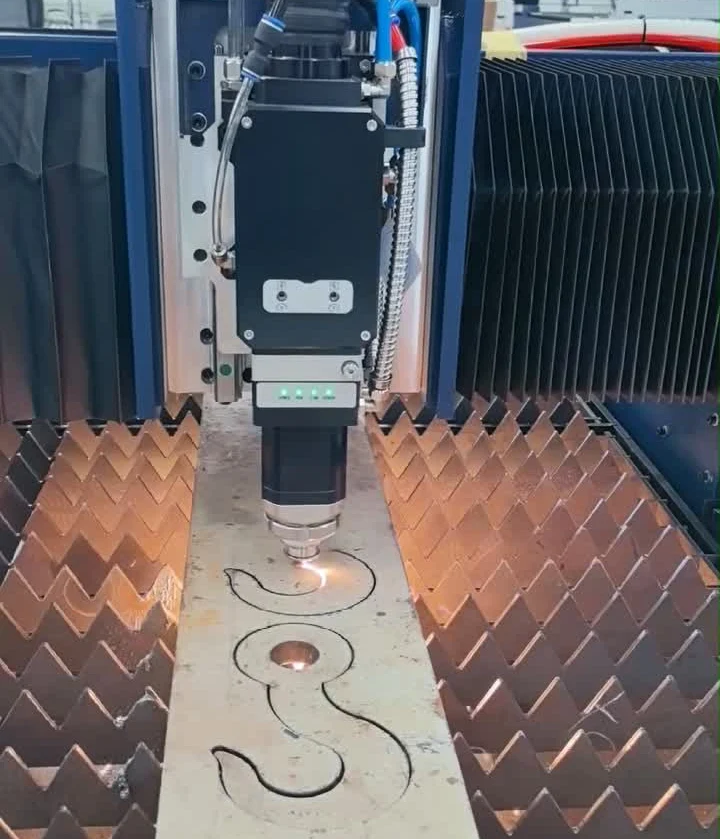
Ship hulls and structural components demand thick steel plates—often exceeding 30 mm in thickness—with precise edge geometry for welding preparation. High-power fiber lasers now cut carbon steel up to 70 mm thick at speeds that outperform plasma by significant margins. A 24 kW laser system cutting 20 mm mild steel achieves approximately 8 m/min, while a 300 A plasma cutter operates at roughly half that speed. In shipbuilding applications, this translates to up to 70% faster cutting speeds, significantly compressing production schedules for hull assembly and bulkhead fabrication. The narrow heat-affected zone preserves metallurgical integrity, reducing distortion that plagues thermal cutting methods.
| Application | Typical Thickness | Traditional Method | Fiber Laser Alternative | Speed Advantage |
|---|---|---|---|---|
| Ship hull plates | 20–40 mm | Plasma / Oxy-fuel | 20–30 kW fiber laser | Up to 70% faster |
| Deck structures | 10–25 mm | البلازما | 12–20 kW fiber laser | 2× throughput |
| Engine mounts | 15–30 mm | Machining + plasma | 20 kW fiber laser | Single-operation cut |
| Bulkhead frames | 12–20 ملم | البلازما | 12–20 kW fiber laser | Cleaner weld prep |
2. Construction Machinery and Structural Steel
The construction equipment sector processes high-strength carbon steel plates for crane booms, excavator arms, and structural frameworks. A large format laser cutting system with bed dimensions up to 3,000 mm × 24,500 mm enables full-sheet processing of oversized plates without secondary cutting or repositioning. Dual-drive gantry configurations maintain ±0.03 mm/m positioning accuracy across these extreme lengths, ensuring hole patterns and mating features align precisely during assembly. This capability eliminates the outsourcing dependency that introduces lead-time risk and dimensional inconsistency into project schedules.
3. Rail Transportation and Heavy Vehicle Manufacturing
Rail components, truck chassis, and heavy equipment frames require thick-gauge carbon steel with tight tolerance control. The integration of bevel-cutting heads on high-power fiber systems enables V, Y, X, and K groove preparation directly during the cutting cycle—eliminating secondary machining operations that previously added 25% or more to total part cycle time. For transportation OEMs producing thousands of identical structural members annually, this process consolidation delivers measurable throughput gains.
Ⅱ. Solving Heavy-Duty Engineering Bottlenecks
1. Overcoming the Plasma Quality Ceiling
Plasma cutting has served heavy industry for decades, but it imposes fundamental limitations. Cut edges exhibit significant bevel angle, heavy dross, and wide heat-affected zones that demand extensive grinding before welding. Fiber lasers produce near-vertical edges with minimal dross on carbon steel up to 25 mm using nitrogen, and clean, oxidation-ready surfaces on thicker plate using oxygen assist. The surface roughness achieved by laser cutting often satisfies welding specifications without secondary preparation, directly reducing labor hours per part.
| المعلمة | 300 A Plasma (20 mm CS) | 40 kW Fiber Laser (20 mm CS) |
|---|---|---|
| Cutting speed | ~4 m/min | ~8 m/min |
| Edge bevel | 3–5° | <1° |
| Dross level | Heavy, requires grinding | Minimal, often weld-ready |
| Heat-affected zone | 2–4 mm | 0.5–1.5 mm |
| Monthly output (single shift) | ~19,000 m | ~38,000 m |
2. Material Handling at Industrial Scale
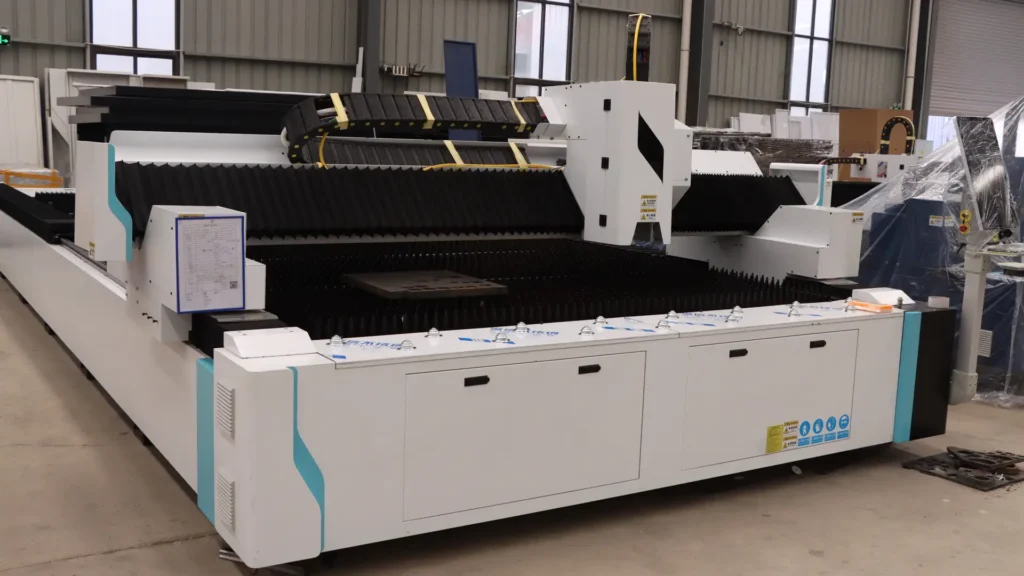
Processing thick plate introduces material handling challenges that standard machines cannot address. Heavy-duty exchange tables rated for 800+ kg/m² accommodate thick steel plates without deflection, while ground-rail gantry designs separate the motion system from the material table. This isolation prevents heavy plate loading from introducing vibration or thermal distortion into the cutting axis. The exchange table system alone increases daily throughput by 20–30% on thick plate work where individual sheets require 30–60 minutes to process, by allowing the next sheet to load while the current sheet cuts.
3. Pierce Strategy for Thick Plate Integrity
When cutting thick carbon steel with oxygen, the laser cannot simply begin moving—it must first burn through the full plate thickness at a stationary point. Modern systems employ a three-stage pierce sequence: high power initiates the plasma channel, progressively reduced settings stabilize it, and minimum stable power establishes the cut-start condition. This controlled approach prevents blowback damage to the cutting head and ensures consistent penetration on plate exceeding 10 mm, where uncontrolled piercing is the leading cause of failed cut starts.
Ⅲ. Business Case & Operational ROI
1. Output Economics: Laser vs. Plasma
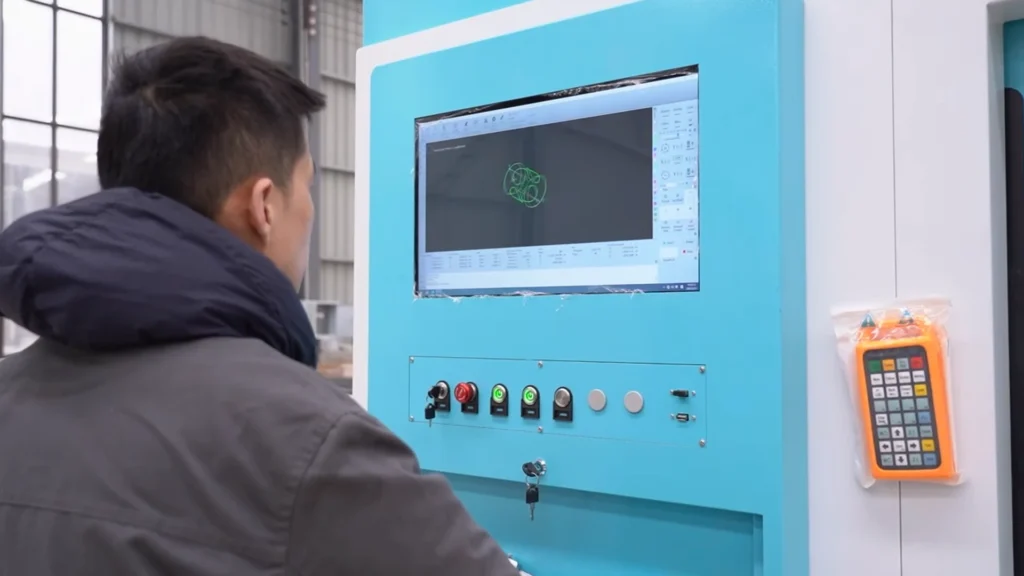
The business case for high-power fiber lasers rests on throughput differential rather than operating cost reduction. Both a 40 kW fiber laser and a 300 A plasma system cost approximately USD 20,000 per month to operate at full utilization. However, the fiber laser produces roughly 38,000 meters of cuts monthly on 20 mm carbon steel, while the plasma system yields only 19,000 meters. To match laser output, a fabricator requires two plasma machines, doubling monthly operating costs to USD 40,000. If the laser commands a USD 400,000 premium over two plasma cutters, the USD 20,000 monthly savings recover that differential in just 20 months.
| عامل التكلفة | Single 40 kW Laser | Two 300 A Plasma Units |
|---|---|---|
| Monthly operating cost | ~USD 20,000 | ~USD 40,000 |
| Monthly output (20 mm CS) | ~38,000 m | ~38,000 m |
| Capital cost difference | Baseline | USD 400,000 lower |
| Payback period (vs. plasma) | — | 20 months |
| Edge quality | جاهز للحام | يتطلب طحنًا |
2. China High Power Fiber Laser Cutting Machine Market Dynamics
China dominates global laser equipment manufacturing, with its domestic market reaching RMB 89.7 billion in 2024—56.6% of worldwide sales. Chinese manufacturers are aggressively developing ultra-high-power systems from 20 kW to 60 kW to meet heavy plate cutting demands in shipbuilding, construction, and energy sectors. In 2024, laser cutting equipment exports from China reached RMB 14.1 billion, with the top five exporting regions being Shandong, Guangdong, Jiangsu, Hubei, and Shanghai. The demand for 10 kW+ laser heads surged 75% between 2023 and 2024, reflecting accelerated adoption of high-power platforms for thick material processing. For procurement managers evaluating equipment investments, the china high power fiber laser cutting machine segment offers compelling price-performance ratios backed by expanding global service networks.
3. Labor and Secondary Operation Savings
Beyond raw cutting speed, fiber lasers reduce total part cost through eliminated secondary operations. Plasma-cut thick plate typically requires edge grinding, hole reaming, and dimensional correction before welding—operations that add 15–25% to total processing time. Laser-cut parts arrive at the weld cell with square edges, accurate holes, and minimal dross, compressing the overall fabrication cycle. For a shop producing 500 heavy structural components monthly, this reduction in secondary labor can free one full-time operator for redeployment to value-added tasks.
Ⅳ. Key Machine Specs for Heavy Industry
1. Power Selection by Thickness
Selecting the correct laser power requires matching rated capacity to daily workload rather than maximum brochure specifications. A machine running at its rated capacity ceiling for thick plate has no margin to compensate for surface variation, focus drift, or lens contamination.
| طاقة الليزر | Max Carbon Steel (O₂) | Max Stainless Steel (N₂) | Primary Application |
|---|---|---|---|
| 6 كيلوواط | 25 ملم | 20 ملم | Light structural, general fabrication |
| 12 كيلوواط | 40 ملم | 40 ملم | Heavy structural, truck chassis |
| 20 كيلوواط | 70–80 mm | 100 mm | Shipbuilding, pressure vessels |
| 30 كيلوواط | 80 mm | 100+ mm | Heavy ship hulls, mining equipment |
| 60 kW | 200 mm | 150 mm | Extreme heavy fabrication, defense |
2. Bed Size and Mechanical Stability
For heavy plate fabrication, bed dimensions must accommodate the largest raw plates without secondary cutting. Standard large format laser cutting system configurations range from 2,500 mm × 13,000 mm to 3,000 mm × 24,500 mm. Dual-drive gantry synchronization prevents skew and accumulated positioning error over long travel distances, while rack-and-pinion transmission systems maintain stable motion under heavy cutting loads. Load-bearing and transmission separation designs ensure that lifting 30-ton plate loads does not deflect the cutting axis.
| المواصفات | Standard Heavy | Extra-Large Format |
|---|---|---|
| Processing area | 2,500 × 6,000 mm | 3,000 × 24,500 mm |
| Table load capacity | 400 kg/m² | 800+ kg/m² |
| دقة تحديد المواقع | ±0.05 mm/m | ±0.03 mm/m |
| Gantry drive | Single | Dual synchronized |
| Max plate weight | 15 tons | 30+ tons |
3. Gas and Optics Infrastructure
Thick carbon steel cutting with oxygen requires specialized infrastructure. Nozzle diameters increase from 1.0 mm for thin sheet to 5.0 mm for 25 mm plate, with focus positions shifting from +3 mm to +11 mm below the surface. Oxygen pressure remains low (0.4–0.7 bar) to sustain the exothermic reaction without quenching it. High-power systems also require anti-reflective protection and active cooling for optical components, as back-reflection from molten metal pools can damage unprotected cutting heads. For additional guidance on matching machine specifications to your production requirements, explore our technical resources on the WSLLASER blog.
الأسئلة الشائعة
Q1: What is the practical thickness limit for fiber laser cutting of carbon steel? A: Commercially available systems now cut carbon steel up to 200 mm using 60 kW power. For most industrial applications, 20–30 kW systems handle 70–80 mm carbon steel efficiently with oxygen assist.
Q2: How does thick carbon steel cutting with fiber laser compare to plasma on operating costs? A: Monthly operating costs are comparable at approximately USD 20,000 for a fully utilized 40 kW laser or 300 A plasma. The critical difference is output: the laser produces twice the cutting distance per month, effectively halving the cost per meter.
Q3: What bed size do I need for heavy structural plate processing? A: For construction and shipbuilding plates, a large format laser cutting system with at least 2,500 mm × 13,000 mm bed size is recommended. Custom configurations up to 3,000 mm × 24,500 mm are available for extreme applications.
Q4: Is edge preparation still required after laser cutting thick plate? A: On carbon steel up to 25 mm cut with nitrogen, edges are often weld-ready. On thicker plate cut with oxygen, light grinding may be needed, but the total secondary labor is typically 60–70% less than plasma-cut equivalents.
Q5: What power level should I choose for a china high power fiber laser cutting machine? A: Match power to your daily workload. If 80% of your production is 10–25 mm carbon steel, a 12–20 kW system offers optimal balance. Reserve 30 kW+ systems for shops regularly processing plate exceeding 40 mm.
الخاتمة
Thick carbon steel cutting has transitioned from a plasma-dominated process to a fiber laser-capable discipline, driven by 20 kW to 60 kW platforms that deliver superior speed, edge quality, and operational economics. From shipbuilding hull plates to construction machinery frames, high-power fiber lasers are compressing production cycles, eliminating secondary operations, and achieving ROI within 20 months against legacy cutting methods. At WSLLASER, we engineer laser cutting and welding solutions that equip heavy fabricators with the power and precision to lead in an increasingly competitive industrial landscape.