
Table of Contents

Ⅰ. Introduction
Every modern manufacturing facility relies on peak equipment performance to stay competitive, making the laser head the most vital component on your production floor. The protective mirror inside a laser head acts as a crucial shield, separating delicate internal optical lenses from the harsh, spatter-filled environment of metal processing. When this protective window degrades, the entire laser head loses its focusing ability, leading to poor edge quality, excessive dross, and unpredictable machine downtime. At WSLLASER, as a dedicated manufacturer of advanced cutting and welding machinery, we understand that maximizing the lifespan of your equipment starts with precision optical care. While we focus on building robust machinery, our deep understanding of the excellent accessories provided by our top-tier suppliers allows us to guide you toward optimal operational practices. To explore more strategies for extending your machinery’s lifespan, you can visit our comprehensive laser cutting maintenance blog. This guide will explore the science behind optical degradation and explain exactly how to protect a mirror inside your laser head.
Ⅱ. Why Does the Protective Mirror Overheat?
Understanding the root causes of optical failure is the foundation of effective laser head maintenance. Many operations experience unexpected downtime simply because they fail to understand the severe thermal dynamics happening inside the laser head. We can summarize the degradation process into key physical phenomena supported by optical research.
- The Threat of Microscopic ContaminationContamination is the leading cause of protective window failure in any laser head. According to research on laser-induced damage thresholds published by SPIE, even microscopic particles of dust, moisture, or cutting spatter on the glass surface will absorb the immense energy of the laser beam. Instead of allowing the light to transmit flawlessly through the laser head, these particles heat up rapidly, transferring extreme, localized temperatures directly to the glass substrate and its anti-reflective coating.
- Understanding the Thermal Lens EffectWhen contamination allows the glass to heat unevenly, it triggers a critical physical phenomenon inside the laser head. Based on research regarding the mechanics of the thermal lens effect published by RP Photonics, inhomogeneous heating causes a transverse gradient of the refractive index. This means the hot center of the protective mirror expands differently than the cooler outer edges, physically bulging the glass. This Thermal lens effect shifts the focal point upward or downward dynamically during operation, causing the laser head to lose its precision. The beam becomes distorted, drastically reducing cutting power.
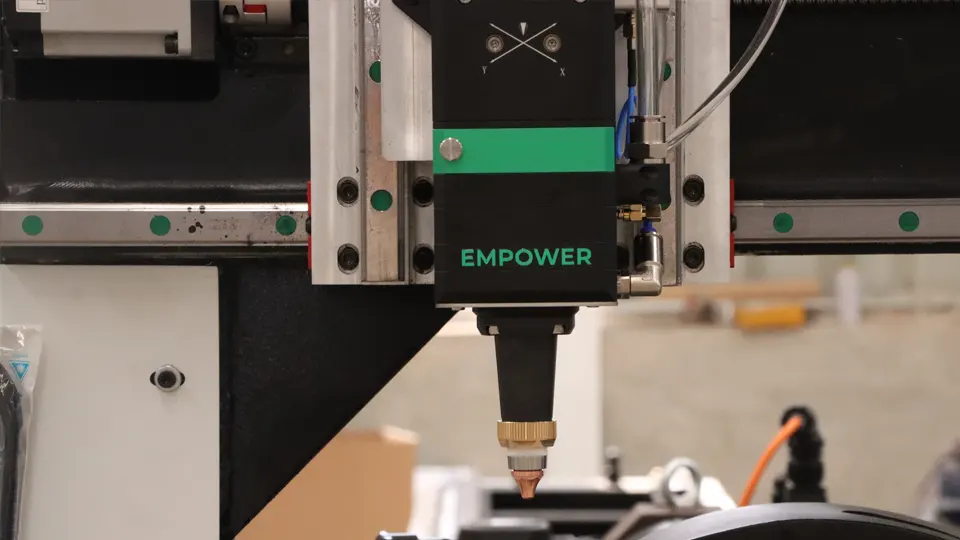
Table 1: Thermal Lens Effect vs. Normal State Parameters in a Laser Head
| Parameter | Normal Operation | With Thermal Lens Effect | Impact on Production |
| Focal Position | Stable at programmed depth | Shifts dynamically during cuts | Inconsistent edge quality, heavy dross |
| Beam Profile | Gaussian (sharp center) | Distorted and widened | Loss of cutting power, slower speeds |
| Mirror Temperature | Room temperature / Cool | Extremely high at the center | Risk of glass shattering inside laser head |
| Gas Dynamics | Smooth laminar flow | Disrupted by thermal variances | Reduced clearing of molten metal |
Ⅲ. Step-by-Step Troubleshooting Guide
Implementing advanced maintenance requires a systematic approach to identifying and resolving issues before they cause catastrophic damage to the internal components of the laser head. Knowing exactly how to protect a mirror is what separates profitable manufacturing operations from those constantly replacing expensive parts.
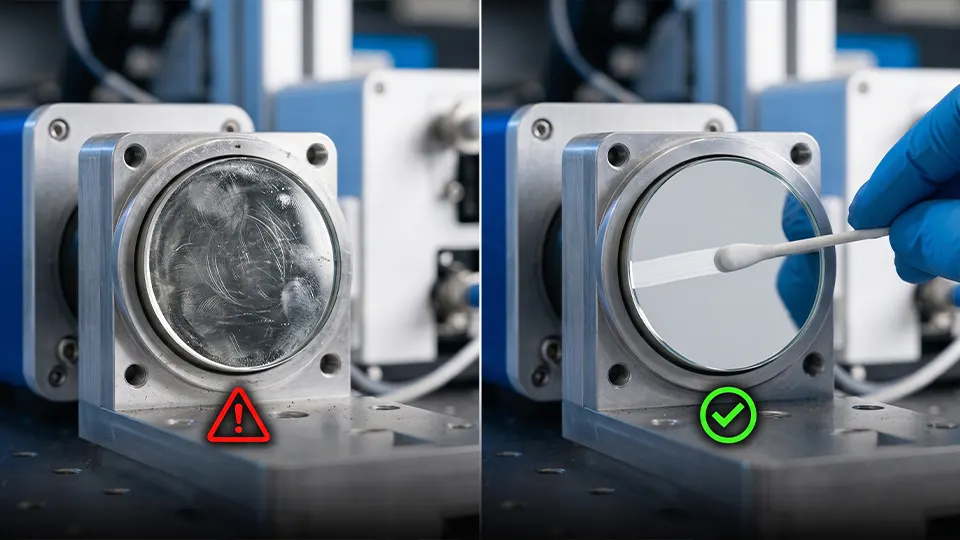
- Safe Optical Handling ProceduresBased on standard optical handling procedures outlined by Thorlabs, optics must never be handled with bare hands. Skin oils contain acids that will permanently etch into optical coatings once hit by a high-power beam. The absolute first rule when opening a laser head is to always use powder-free nitrile gloves or finger cots when extracting the drawer from the machine.
- Strict Inspection and Cleaning ProtocolsProper steps for cleaning dictate a directional wipe method. Never scrub the mirror in circles, as this redistributes abrasive particles and scratches the delicate anti-reflective coating. Instead, apply analytical-grade isopropyl alcohol to a lint-free swab, and wipe in one continuous motion from one edge to the other. Discard the swab immediately after one pass. Reinsert the clean mirror carefully back into the laser head to ensure an airtight seal.
Table 2: Laser Head Troubleshooting Matrix
| Symptom | Root Cause Diagnosis | Action Plan for Resolution |
| Dark spots on the lens | Spatter fused to the glass surface | Replace lens; check blowing gas pressure |
| Yellowing or Rainbow halo | Coating burned due to thermal shock | Discard lens; review cooling gas parameters |
| Frequent lens burning | Poor sealing allowing internal dust | Inspect and replace O-rings in the laser head |
| Laser head gets physically hot | Severe thermal lensing or internal reflection | Stop operation instantly; check focus collimator |
Ⅳ. Best Practices to Prevent Lens Overheating
Proactive strategies are essential for enhancing the longevity of your laser head. Equipment operators must integrate specific routines into their daily schedules to prevent the Thermal lens effect from ever developing. Here are the most effective strategies to secure your optical investments.
- Controlling Auxiliary GasesThe auxiliary gas (whether oxygen, nitrogen, or compressed air) not only blows away molten metal but also actively cools the protective window inside the laser head. Ensuring your gas lines are absolutely free of moisture and compressor oil is vital. According to assist gas purity standards set by TWI Global, oil aerosols blown into the laser head cavity will instantly ignite upon contact with the beam, ruining the optic. Using high-quality air dryers and filters is non-negotiable.
- Environmental and Maintenance SchedulingMaintaining a clean factory environment drastically improves the long-term reliability of a laser head. Always replace protective mirrors in a dust-free zone, never directly over a dirty cutting bed.
Table 3: Standard Operating Procedures for Laser Head Mirror Protection
| Frequency | Maintenance Task | Objective | Tools Required |
| Daily | Visual inspection of red light alignment | Ensure no gross contamination blocks the beam | Flashlight, white paper |
| Weekly | Check O-ring seals and drawer tightness | Prevent micro-dust from entering the laser head | Allen wrenches, clean gloves |
| Monthly | Inspect gas filtration system | Stop oil/water vapor from reaching optics | Filter element replacements |
| Quarterly | Full optical path calibration check | Ensure maximum beam transmission efficiency | Laser alignment tools |
Ⅴ. FAQ
Q1: What is the true cost of poor laser head maintenance?
Failing to maintain the protective window does not just cost you the price of a replacement lens. The real cost includes ruined raw materials, wasted labor hours, and potential damage to the internal collimating and focusing lenses inside the laser head, which are significantly more expensive to replace.
Q2: Exactly how to protect a mirror effectively during heavy-duty thick plate cutting?
To guarantee optical protection during thick plate processing, ensure your pierce heights are set correctly in the CNC software. Piercing too close to the material causes molten metal to blast directly upward into the laser head cavity. Using a multi-stage piercing technique reduces this blowback significantly.
Q3: Does the brand of the protective lens inside the laser head matter?
Absolutely. While WSLLASER supplies the heavy machinery, we always advise utilizing accessories from reputable, high-quality suppliers. A premium laser head relies on fused silica lenses with high-threshold anti-reflective coatings designed specifically to handle multi-kilowatt fiber lasers without degrading.
Table 4: ROI of Effective Laser Head Maintenance
| Impact Category | Reactive Approach (No Protection) | Proactive Laser Head Maintenance |
| Optics Replacement | High frequency (Weekly/Daily) | Low frequency (Monthly/Quarterly) |
| Machine Downtime | Unpredictable, halts production | Scheduled, minimal disruption |
| Product Yield | High reject rate due to poor edges | Consistent high-quality metallic finishes |
| Overall Profitability | Diminished by excessive maintenance costs | Maximized through continuous machine uptime |
Ⅵ. Conclusion
In the demanding world of precision manufacturing, prioritizing laser head maintenance is not just a routine task—it is a distinct competitive advantage. By understanding the underlying physics of the Thermal lens effect, adopting strict optical handling protocols, and ensuring a pristine auxiliary gas supply, operators can significantly extend the lifespan of their laser head components. Knowing how to protect a mirror requires discipline, but the resulting consistency in cut quality, speed, and machine reliability is well worth the effort. By treating your precision optics with absolute care, your cutting equipment will continue to deliver the flawless, high-speed performance your manufacturing business depends on.