
İçindekiler
Ⅰ. Giriş
Heavy plate processing stands at the center of industrial transformation across railway transit manufacturing and marine engineering. As global infrastructure demands escalate and environmental regulations tighten, manufacturers face mounting pressure to deliver thicker, stronger components with unprecedented precision while reducing production cycles. The shipbuilding steel plate market reached $18.4 billion in 2026 and is projected to grow to $28.06 billion by 2036, driven by new vessel construction and offshore platform development.
Traditional thermal cutting and mechanical welding methods are increasingly unable to meet modern tolerances, speed requirements, and sustainability mandates. Advanced laser technologies including high-power fiber laser cutting machines, laser hybrid welding systems, and industrial laser cleaning systems are redefining production workflows. These technologies enable manufacturers to process carbon steel plates exceeding 50 mm thickness, achieve weld-ready edge quality in a single pass, and prepare surfaces without abrasive media or chemical solvents.
This article examines three core developments: first, how fiber laser cutting is replacing plasma and oxyfuel methods for thick structural plate; second, how laser hybrid welding is accelerating panel assembly while reducing distortion; and third, how laser cleaning systems are eliminating hazardous surface preparation processes. For more insights on advanced laser manufacturing solutions, visit our teknik blog.
Ⅱ. Laser Applications in Railway Transit Manufacturing
1. Precision Cutting for Rail Car Frames and Undercarriages
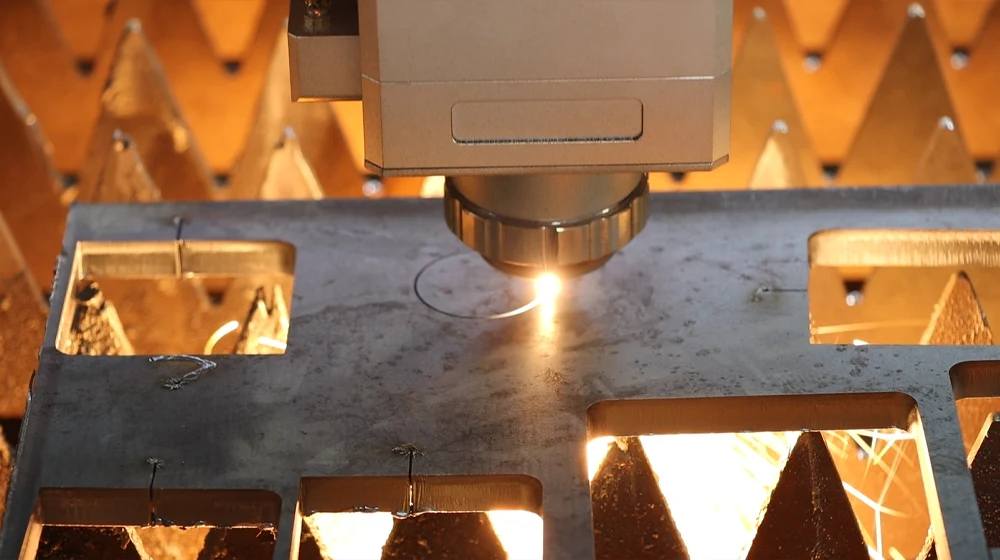
Railway vehicle manufacturing demands structural components that withstand dynamic loads, vibration, and decades of service. Heavy plate processing for rail car frames and undercarriage structures traditionally relied on plasma or flame cutting, followed by extensive grinding to achieve weld-ready edges. These conventional methods introduced heat-affected zones (HAZ), dimensional inconsistencies, and material waste.
Modern fiber laser cutting machines have transformed this workflow. Systems with 12 kW to 30 kW laser power process carbon steel plates up to 30 mm at speeds exceeding plasma alternatives, while maintaining positioning accuracy of ±0.03 mm. The non-contact cutting process eliminates mechanical stress, preserving the metallurgical integrity of high-strength steels essential for rail safety. Advanced nesting software optimizes material utilization by 15–30%, directly reducing per-part costs.
The rail sector specifically benefits from automated bevel cutting capabilities. Modern 3D bevel laser cutting heads operate at tilt angles up to ±45°, producing V, X, Y, and K groove configurations directly from CAD files. This eliminates secondary machining stations previously required for weld preparation, allowing components to proceed directly to assembly.
2. Laser Hybrid Welding in Railway Coach Assembly

Railway coach manufacturing involves joining large steel panels where joint strength and fatigue resistance are critical. Laser hybrid welding—which combines concentrated laser beam energy with conventional MIG/MAG arc welding in a single weld pool—has emerged as the preferred method. Research at the Bremen Institute of Applied Beam Technology (BIAS) demonstrates that laser-GMA hybrid welding effectively joins material thicknesses of 16 mm, 20 mm, and 28 mm, with application fields extending to railway vehicle manufacturing.
The productivity advantages are substantial. Hybrid laser welding achieves speeds of 3 to 8 meters per minute on thick-section steel, compared to 0.8 to 1.5 meters per minute for conventional MIG welding—productivity improvements up to 400%. Reduced heat input minimizes thermal distortion, enabling tighter dimensional tolerances that decrease downstream straightening. For railway manufacturers, this means faster coach assembly and enhanced structural integrity.
3. Surface Preparation with Laser Cleaning Systems
Before welding or coating, rail component surfaces must be free of mill scale, rust, and contaminants. Traditional sandblasting and chemical stripping generate substantial waste and create worker exposure risks. Laser cleaning systems address these challenges through non-contact, ablation-based surface treatment.
Research in Applied Surface Science confirms that nanosecond pulsed fiber lasers completely remove rust layers from structural steel without substrate damage at optimal energy densities. For railway applications, axle housings and frame components can be prepped for welding with minimal environmental impact. The process achieves SA2.5 surface cleanliness standards while producing negligible waste, aligning with modern sustainability requirements.
Table 1: Traditional vs. Laser-Based Heavy Plate Processing in Railway Manufacturing
| Processing Stage | Traditional Method | Laser-Based Method | Key Advantage |
|---|---|---|---|
| Plate Cutting | Plasma / Flame Cutting | Fiber Lazer Kesim Makinesi | ±0.03 mm accuracy, no HAZ |
| Weld Preparation | Manual Grinding | 3D Bevel Laser Cutting | Single-pass V/X/Y/K grooves |
| Panel Joining | MIG Welding | Laser Hybrid Welding | 3–5× speed increase |
| Surface Prep | Sandblasting / Chemical | Laser Cleaning System | Zero consumables, SA2.5 quality |
| Material Yield | Standard Nesting | AI-Driven Nesting | 15–30% waste reduction |
Ⅲ. Breakthrough Laser Applications in Marine Engineering
1. High-Power Fiber Laser Cutting for Hull Construction
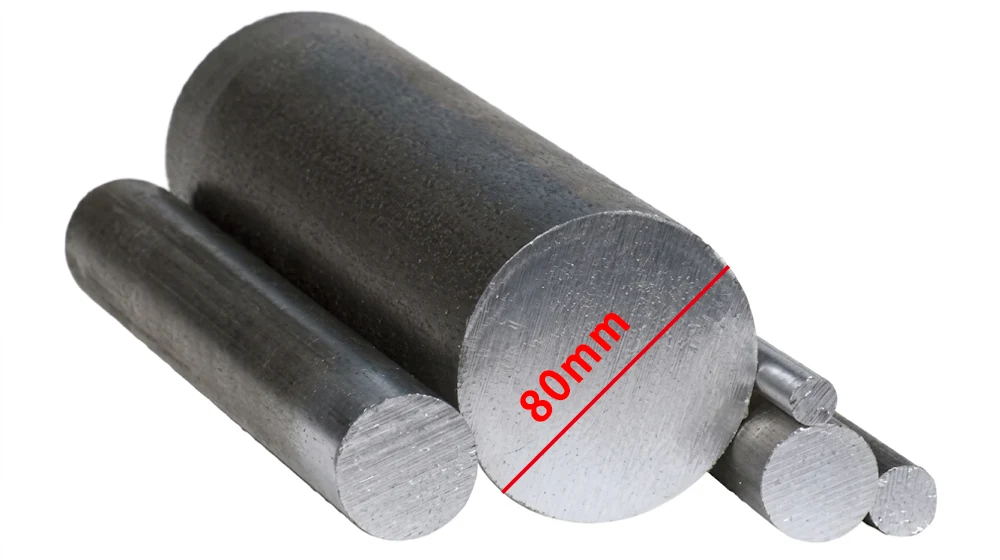
Shipbuilding represents one of the most demanding heavy plate processing applications, requiring cutting of thick steel plates with minimal distortion. Hull plates, deck structures, and bulkheads routinely exceed 20 mm thickness, with some sections reaching 50 mm or greater. The maritime industry faces additional pressure from IMO 2030/2050 emission regulations, demanding lighter hulls with improved hydrodynamic performance.
High-power fiber laser cutting machines have become the technology of choice. Systems at 30 kW and above cut thick steel faster than legacy thermal methods while delivering superior edge quality. A 40 kW dual-gantry system demonstrated cutting carbon steel up to 80 mm thickness—doubling previous capabilities. This trajectory continues upward, with 80 kW systems now available and 150 kW ultra-high-power configurations entering service.
The economic argument extends beyond speed. Fiber laser cutting produces clean, dross-free edges that eliminate secondary deburring. For shipyards, components leave the cutting table ready for immediate assembly, reducing work-in-process inventory and accelerating build schedules. The technology also processes marine-grade stainless steels and high-strength alloys essential for modern vessels.
2. Bevel Cutting and Weld Preparation
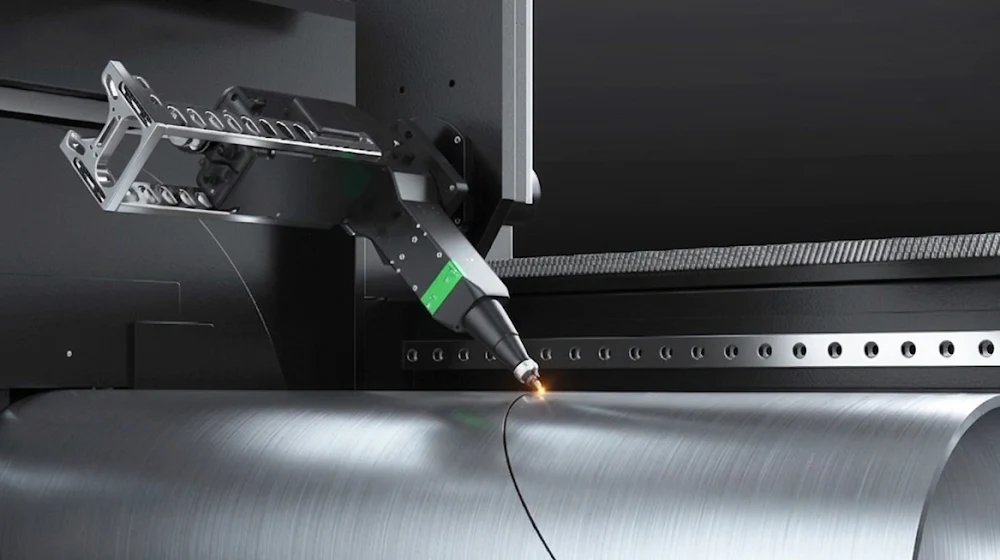
Welding is the primary ship assembly method, and effective joint preparation is essential. Joining thick plates requires precisely machined V, X, Y, or K shaped grooves. The traditional workflow—cutting square with plasma, then machining or grinding—introduced high labor costs and production bottlenecks.
Modern 3D bevel laser cutting heads integrated with high-power fiber laser systems solve this challenge. Operating from CAD files, these systems perform contour cutting and bevel geometry generation in a single pass. Gap tolerances of ±0.5 mm are achievable, providing exact control required for automated laser hybrid welding. This integration of cutting and preparation into one step eliminates material handling between stations.
3. Laser Hybrid Welding for Panel Assembly
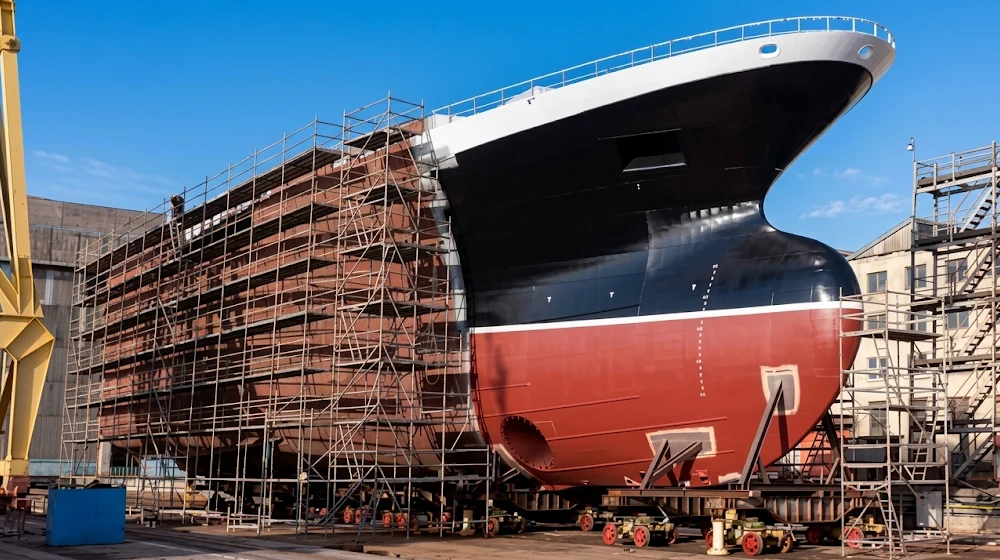
European shipbuilding has pioneered laser and laser-arc hybrid welding for panel line production. Fincantieri, building cruise vessels at its Monfalcone yard, installed seam welding equipment with a 17 kW CO₂ laser on the traditional panel line. Other leading yards including Aker Kvaerner Masa in Helsinki and Meyer Werft have incorporated laser hybrid welding systems for block assembly.
The technology delivers measurable benefits. European shipbuilding research estimates that hybrid laser welding reduces overall panel fabrication costs by 20 to 30% relative to conventional submerged arc welding, accounting for labor, consumables, rework, and floor space. Welding speeds 3 to 5 times faster than standalone MIG, combined with single-pass penetration up to 20 mm, enable shipyards to compress construction schedules while improving weld quality.
4. Laser Cleaning for Marine Surface Treatment
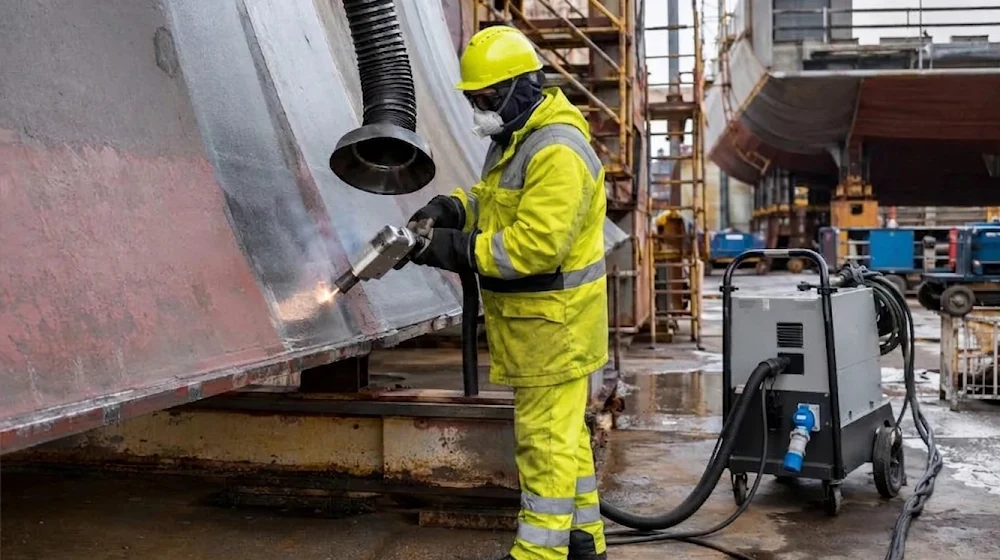
Surface preparation in shipbuilding encompasses hull plate pretreatment, pre- and post-welding cleaning, and coating removal. Traditional abrasive blasting and chemical cleaning generate substantial dust, contaminated waste, and environmental compliance challenges. Shipyards across the United States and Europe are transitioning to laser cleaning systems.
A documented case study on a container ship hull and ballast tank project demonstrated laser cleaning achieving SA2.5 surface quality with zero metal loss, while reducing costs by 50% compared to sandblasting. Waste volume dropped by 98.5%, with dramatically lower noise levels. The cleaned surface achieved an anchor profile of 30 to 50 microns, suitable for immediate epoxy coating. Research in Applied Sciences confirms laser cleaning improves the corrosion resistance of 20 steel by a factor of 1.218 compared to its original state.
For marine engineering, laser cleaning offers particular value in confined spaces such as ballast tanks, where traditional blasting equipment is difficult to deploy. Fiber-delivered beam systems with compact scanning heads access complex geometries while maintaining consistent parameters.
Table 2: Fiber Laser Cutting Power vs. Plate Thickness Capability
| Lazer Gücü | Carbon Steel Max | Stainless Steel Max | Tipik Uygulama |
|---|---|---|---|
| 6 kW | 20–25 mm | 12–16 mm | Light structural, rail components |
| 12 kW | 35–40 mm | 25–30 mm | Medium hull sections, deck plates |
| 20 kW | 50–60 mm | 35–40 mm | Heavy hull structures, bulkheads |
| 30 kW | 70–80 mm | 50–55 mm | Ultra-thick plate, offshore platforms |
| 40 kW+ | 80–100+ mm | 60+ mm | Specialized marine, defense applications |
Table 3: Cost-Benefit Analysis of Laser Hybrid Welding vs. Conventional Welding
| Maliyet Faktörü | Conventional SAW | Laser Hybrid Welding | Impact |
|---|---|---|---|
| Welding Speed | 0.8–1.5 m/min | 3–8 m/min | Up to 400% faster |
| Single-Pass Penetration | 8–12 mm | En fazla 20 mm | Fewer passes required |
| Heat Input | Yüksek | Reduced 30–50% | Less distortion |
| Overall Fabrication Cost | Baseline | 20–30% reduction | Labor, consumables, rework |
| Floor Space | Large stations | Compact cells | Better utilization |
| System Investment | Lower initial | $250K–$1M+ | ROI: 2–4 years |
Ⅳ. Future Trends and Technological Horizons
1. AI-Driven Process Optimization
The next generation of heavy plate processing equipment integrates artificial intelligence for real-time parameter adaptation. AI-driven process databases automatically match optimal cutting and welding parameters for specific material grades and thicknesses, reducing operator dependency. Machine learning algorithms analyze production data to predict maintenance requirements and optimize cutting paths. Vision-based nesting systems automatically identify cuts on remaining material, maximizing utilization beyond 95%.
2. Ultra-High-Power Laser Systems
The industry trajectory points toward increasingly high laser power. In 2026, 80 kW fiber laser systems are commercially available, with 150 kW configurations entering industrial service. These systems expand the addressable thickness range for heavy plate processing while maintaining precision. For shipbuilders and rail manufacturers, a single platform handles the full production spectrum—from thin gauge panels to ultra-thick structural sections—without process switching.
3. Sustainable Manufacturing Practices
Environmental compliance drives adoption of laser-based processes across heavy fabrication. Fiber laser technology offers photoelectric conversion efficiency of 35–40%, compared to approximately 10% for CO₂ lasers, significantly reducing energy consumption. Laser cleaning eliminates abrasive media, chemical solvents, and disposal costs. As regulatory frameworks tighten globally, manufacturers adopting these technologies gain compliance assurance and cost advantages. Explore the latest developments in laser manufacturing technology on our blog.
Table 4: Key Laser Technology Applications in Railway and Shipbuilding
| Industry Segment | Primary Application | Laser Technology | Key Benefit |
|---|---|---|---|
| Railway Frames | Structural plate cutting | Fiber Lazer Kesim Makinesi | Precision, minimal HAZ |
| Railway Coaches | Panel joining | Laser Hybrid Welding | Speed, low distortion |
| Railway Maintenance | Surface restoration | Laser Cleaning System | Eco-friendly, portable |
| Ship Hulls | Thick plate cutting | High-Power Fiber Laser | 80 mm+ capacity |
| Ship Assembly | Weld preparation | 3D Bevel Laser Cutting | Single-pass groove prep |
| Ship Repair | Rust/coating removal | Pulsed Laser Cleaning | SA2.5, zero metal loss |
| Offshore Platforms | Heavy structural fabrication | Ultra-High-Power Laser | 100 mm+ processing |
Sık Sorulan Sorular
Q1: What thickness range can modern fiber laser cutting machines handle for heavy plate processing?
A: Current industrial systems cover an extraordinary range. Entry-level 6 kW systems cut carbon steel up to 20–25 mm, while 30 kW to 40 kW systems handle up to 80 mm. Ultra-high-power 80 kW+ configurations push toward 100 mm and above, directly substituting plasma and flame cutting in shipyard applications.
Q2: How does laser hybrid welding improve productivity compared to conventional MIG welding?
A: Laser hybrid welding combines a high-power laser beam with MIG/MAG arc welding in a single weld pool. This achieves speeds of 3 to 8 meters per minute—3 to 5 times faster than standalone MIG welding—with deeper penetration and improved gap bridging. European research indicates overall panel fabrication cost reductions of 20 to 30% compared to conventional submerged arc welding.
Q3: Are laser cleaning systems effective for marine-grade surface preparation?
A: Yes. Industrial laser cleaning systems achieve SA2.5 surface cleanliness standards required for marine coatings. Research demonstrates complete rust removal without substrate damage while improving corrosion resistance. Case studies show 50% cost reduction versus sandblasting and 98.5% waste reduction.
Q4: What is the typical return on investment for upgrading to laser-based heavy plate processing?
A: Initial investments for hybrid laser welding range from $250,000 to over $1 million. However, productivity gains, reduced secondary operations, lower consumable costs, and improved material yield typically generate ROI within 2 to 4 years in high-volume environments. Fiber laser cutting systems deliver similar payback through elimination of grinding stations and faster cutting speeds.
Q5: Can laser cutting and welding systems integrate with existing manufacturing execution systems?
A: Modern equipment supports Industry 4.0 integration through OPC UA protocols. MES/ERP connectivity enables real-time production monitoring, automated parameter matching, predictive maintenance, and comprehensive traceability—essential for compliance in regulated industries.
Sonuç
Heavy plate processing is undergoing definitive transformation driven by advanced laser technologies. High-power fiber laser cutting machines have expanded precision-processing capabilities to thicknesses exceeding 80 mm, eliminating compromises of thermal cutting. Laser hybrid welding compresses assembly schedules while improving joint integrity in railway coach and ship panel production. Laser cleaning systems replace hazardous surface preparation with clean, environmentally compliant alternatives.
For manufacturers serving railway and marine markets, these technologies represent strategic repositioning. Processing thicker plates with tighter tolerances, welding larger panels with less rework, and preparing surfaces without environmental liability directly translates to competitive advantage. As laser power increases and AI-driven optimization matures, the gap between conventional and laser-based heavy plate processing will only widen. Organizations investing in these capabilities today will define tomorrow’s production standards.