

The decision between in house vs outsourcing laser cutting is rarely made with a calculator. Most manufacturers fall into outsourcing gradually. It starts with a few hundred dollars a month. A prototype here, a small batch there. The convenience is real. But as the product line grows, so does the cutting bill. Before long, the monthly outsourcing invoice is bigger than a machine payment would have been, and the shop is still waiting three days for parts it could have cut in three hours.
This article is for manufacturers who sense they have crossed a line but cannot prove it yet. It gives you the financial tipping point where buying a fiber laser cutting machine stops being an investment decision and becomes an operating necessity. The numbers are not hypothetical. They are built from the same cost structure we see across our customer base at WSL Lazer.
Ⅰ. The Slow Build of an Outsourcing Bill
1. How Outsourcing Creeps Up on You
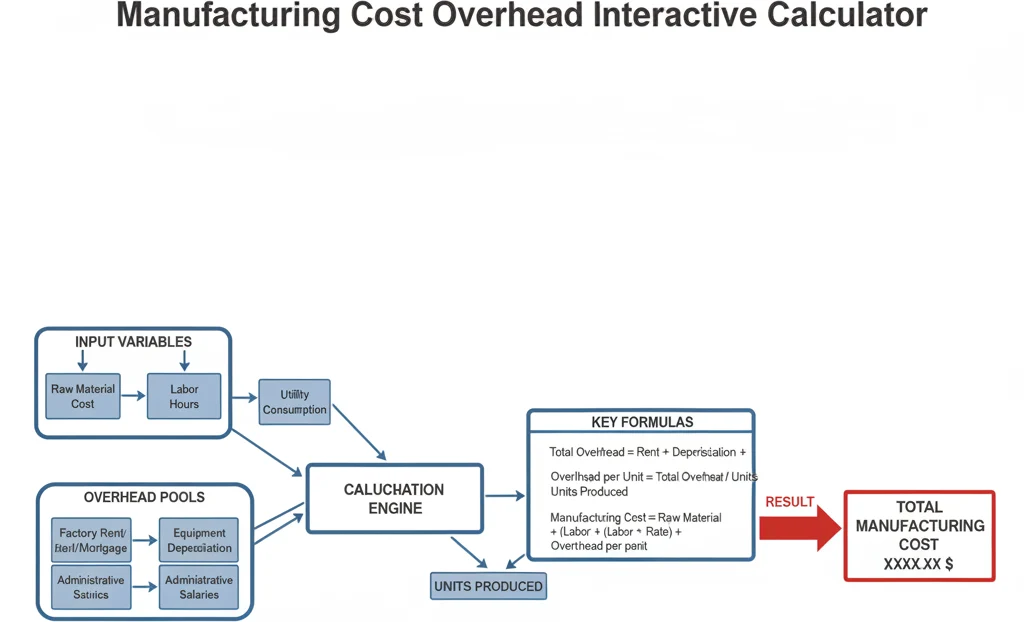
The typical pattern looks like this. A manufacturer starts with $2,000 per month in outsourced cutting. The volume is small, the supplier is responsive, and the arrangement works. Over the next two years, the product line expands. The cutting volume doubles, then doubles again. The monthly invoice reaches $8,000, then $12,000, then $15,000.
At $12,000 per month, the manufacturer is spending $144,000 per year on cutting services. That is the equivalent of a full machine payment plus operating costs for a mid-power fiber laser. The manufacturer has bought a machine for the supplier, without ever owning it. For any fabrication business evaluating the real cost of outsourcing laser cutting vs buying a machine, this is the moment the calculation starts to shift.
2. The Hidden Costs That Never Appear on the Invoice
The invoice shows the cutting cost per part. It does not show the other costs that ride along with outsourcing. Lead time, freight, quality disputes, and schedule disruption all add up in ways the invoice never captures.
| Hidden Cost | What It Looks Like | Annual Impact |
|---|---|---|
| Lead Time | 3–5 days per order, twice a month | 6+ production days lost per year |
| Freight | Delivery charges on every order | $2,000–$5,000 per year |
| Quality Disputes | Rework, sorting, return shipments | Unplanned labor and scrap |
| Schedule Disruption | Downstream stoppages when parts are late | $20,000+ per year in lost production |
A manufacturer that waits three days for cutting parts, twice a month, loses six production days per year to waiting. If the shop rate is $80 per hour and a stoppage costs a full shift, the annual cost of waiting alone can exceed $20,000. The invoice never shows this line item.
Ⅱ. In-House vs Outsourcing Laser Cutting: The Financial Tipping Point
1. The True Monthly Cost of Owning a Machine
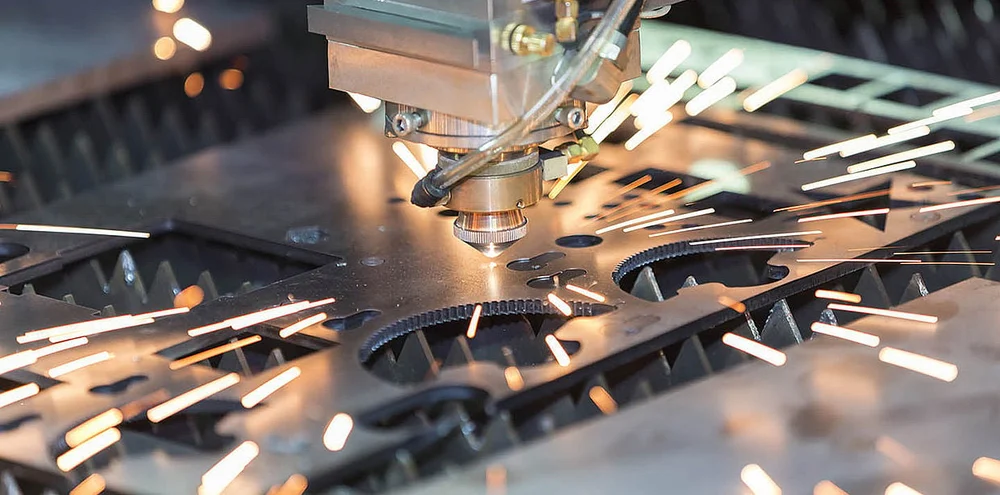
This is the classic “make or buy” decision for fabrication shops, and it starts with the fixed costs of running a machine in-house. An in-house fiber laser cutting operation has three main cost components: the machine payment, the operator, and the operating consumables.
| Cost Component | Typical Monthly Amount | What It Covers |
|---|---|---|
| Machine Payment | $2,000–$2,500 | Finance payment on a mid-power fiber laser |
| Operator | $3,000–$4,000 | Skilled operator including burden |
| Power, Gas, Consumables | $1,200–$1,800 | Electricity, assist gas, nozzles, protective windows |
| Total Fixed Monthly Cost | $6,200–$8,300 | The full burden of in-house cutting |
These figures assume a 6kW fiber laser running a single shift. The exact numbers shift with local labor rates and gas strategy, but the structure holds: owning a machine costs between $6,000 and $8,500 per month before it cuts the first part.
2. The Three-Tier Decision Matrix
The decision comes down to one number: your monthly outsourcing spend. If that number is known, the decision makes itself.
| Monthly Outsourcing Spend | Decision | Rationale |
|---|---|---|
| Below $3,000 | Keep Outsourcing | Machine idle time would destroy the return on investment |
| $3,000–$7,500 | Transition Zone | Look for hybrid models or part-time in-house work |
| Above $7,500 | Buy a Machine | The outsourcing bill already covers the full cost of owning a machine |
When the monthly outsourcing bill exceeds $7,500, the manufacturer is paying more for cutting than it would cost to own the machine. At that point, continuing to outsource is not a convenience. It is a direct transfer of profit to the supplier. The gas and electricity side of the in-house cost equation is covered in our lazer kesim gaz maliyeti kılavuzu.
Ⅲ. The Hybrid Model: The Lowest-Risk Entry Point
1. Buy the Machine, Fill It with Outside Work
Many manufacturers never make the jump because the full machine payment feels like a risk. The hybrid model removes most of that risk. The manufacturer buys the machine for its own production needs, and fills the spare cutting hours with outside work from other local businesses.
This transforms the machine from a cost center into a revenue source. The machine payment is covered by the manufacturer’s own avoided outsourcing costs. The outside work covers the operator and the consumables. The machine pays for itself faster, and the manufacturer gains a new profit stream without adding a new business unit. The economics of running a cutting business alongside manufacturing are covered in our laser cutting business guide.
2. What the Hybrid Model Requires
The hybrid model is not free money. It requires the manufacturer to quote outside work accurately, manage cutting schedules, and maintain the machine to production standards. These are skills that a pure manufacturer does not automatically have.
But they are learnable skills. And the payoff is significant: a machine that runs 200 hours per month instead of 100 hours per month halves the fixed cost per cutting hour. The spare capacity that was once a risk becomes an asset.
Ⅳ. What to Do in the Transition Zone
1. The $3,000 to $7,500 Zone
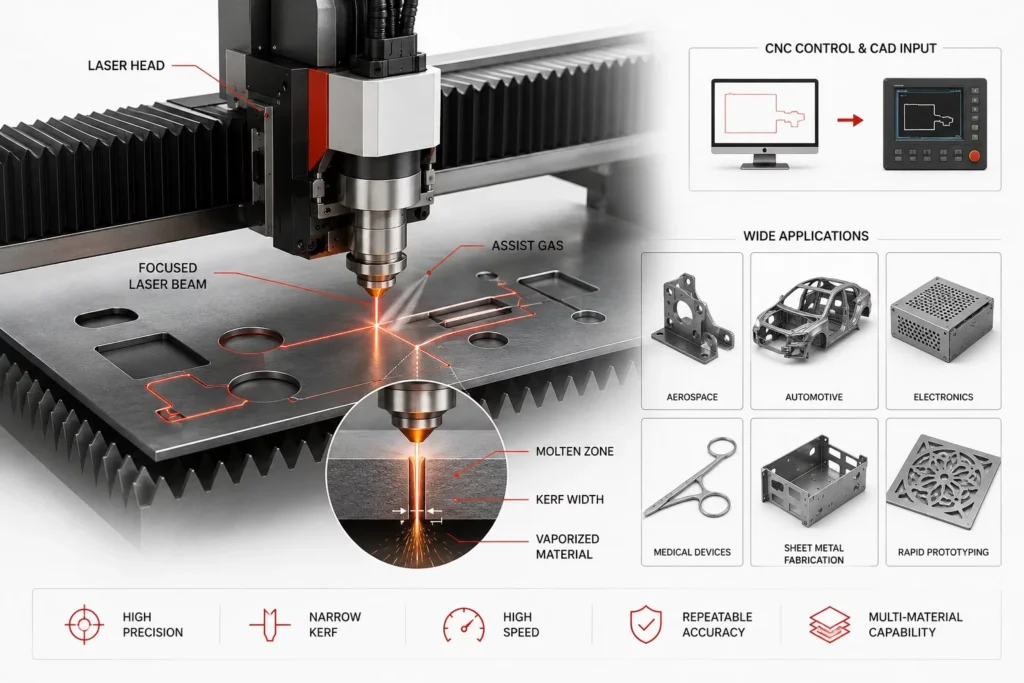
The transition zone is where most manufacturers get stuck. The outsourcing bill is significant, but not obviously large enough to justify a machine. The right move is not to wait. It is to run the numbers on specific scenarios.
If the monthly spend is $5,000 and growing, the manufacturer is already paying $60,000 per year for cutting. That is the full cost of a machine payment plus operating costs for a mid-size fiber laser. The question is not whether to buy. It is when to buy, and whether to buy new, used, or hybrid.
2. The Hidden Factor: Lead Time
Lead time is the invisible cost that tips many manufacturers into buying. A manufacturer that waits five days for cutting parts must carry more inventory, plan further ahead, and absorb more schedule disruption. If cutting parts arrive late, downstream welding and assembly stops.
For a manufacturer whose production schedule depends on cutting lead times, the in-house argument gets stronger even when the raw numbers look marginal. Owning the machine means owning the schedule. That control is worth real money, and it should be part of the calculation.
| Model | Payback Expectation | Main Risk |
|---|---|---|
| Pure Outsourcing | N/A | Cost grows with volume, no asset built |
| Hybrid In-House | 12–24 months | Requires quoting and scheduling skills |
| Full In-House | 18–30 months | Machine idle time if volume drops |
Ⅴ. FAQ: In-House vs Outsourcing Questions
1. How much outsourcing spend justifies buying a laser cutting machine?
The standard break-even point is $7,500 per month in outsourced cutting costs. Above that, the outsourcing bill covers the full cost of owning and operating a mid-power fiber laser. Below $3,000 per month, outsourcing usually remains the better choice.
2. What is the biggest hidden cost of outsourcing laser cutting?
Lead time. A five-day cutting lead time forces the manufacturer to plan further ahead, carry more inventory, and absorb more schedule risk. When cutting parts are late, downstream operations stop. The cost of a stopped production line often exceeds the entire cutting invoice for that order.
3. Can I buy a laser machine and run it with my existing staff?
Yes, if the staff is trained properly. A fiber laser cutting machine requires a skilled operator, but the skills are learnable. Many manufacturers train an existing welder or machinist to run the laser part-time, especially in the hybrid model where the machine is not running continuously.
4. What if my cutting needs are seasonal?
Seasonal demand is a real challenge for in-house cutting. The machine is most valuable when it runs consistently. If your cutting needs spike for three months and drop for nine, the hybrid model becomes more attractive: use the machine for your own work during peak season, and fill the rest of the year with outside cutting jobs.
5. Should I buy a used machine to reduce the risk?
A used machine can reduce the initial investment, but it carries its own risks. The bed condition, the laser source hours, and the previous maintenance history all affect the machine’s remaining life. For a first-time buyer, a new machine with a warranty is often the safer path into in-house cutting.
Ⅵ. Conclusion: The Tipping Point Is Real
The decision between in house vs outsourcing laser cutting is a financial calculation, not a gut feeling. The tipping point exists, and it is measurable. When the monthly outsourcing bill exceeds the full cost of owning a machine, the decision has already been made. The only question is how long the manufacturer will keep paying for someone else’s machine instead of their own.
Saat WSL Lazer, we help manufacturers find that tipping point with real numbers from their own production data. The machine is the tool. The decision is the math.
Kaynakça
- ISO 9013: Termal kesim — Termal kesimlerin sınıflandırılması, ANSI Web Mağazası.
- Sermaye Harcamaları ve İmalat Atölyeleri Kıyaslama Anketleri, İmalatçılar ve Üreticiler Derneği.
- Tedarik ve Şirket İçi Üretim, İmalat Teknolojileri Derneği.





