

The first thing every buyer notices about fiber laser cutting machine price is that it varies enormously. Two machines with the same 6kW label can differ by $20,000 or more. The difference is not marketing. It is the laser source, the cutting head, the bed construction, and the automation that surrounds the machine. This article breaks down the real price structure so you can compare quotes intelligently.
Tại WSL Laser, we publish price ranges and explain what drives them, because a buyer who understands the cost structure makes a better decision than one who only compares the final number.
Ⅰ. Fiber Laser Cutting Machine Price by Power and Configuration
1. The Standard Price Tiers
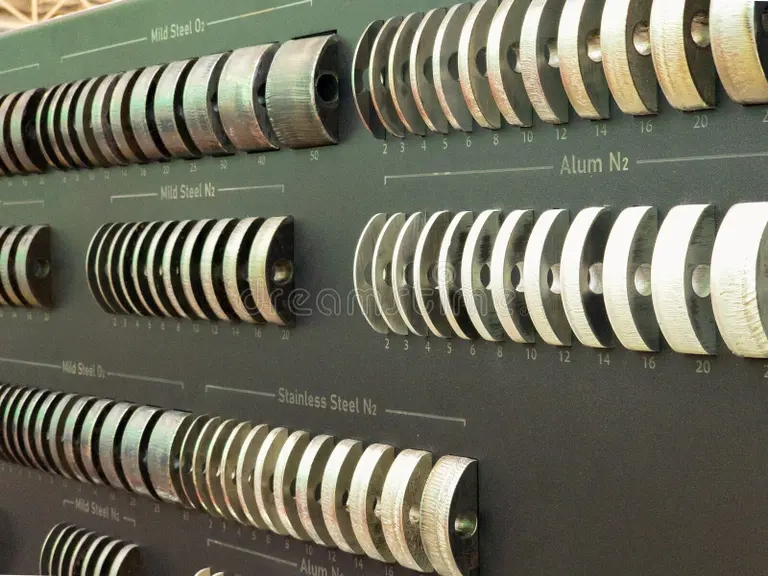
The table below shows typical FOB price ranges for new fiber laser cutting machines, based on current industrial market data. The ranges reflect standard configurations and do not include optional automation or special tooling.
| Công suất laser | Standard Bed Size | Typical Price Range (FOB) | Optimal Cutting Range (Mild Steel) |
|---|---|---|---|
| 1.5 kW – 2 kW | 3015 (5′ × 10′) | $18,000 – $25,000 | 1.0 – 6.0 mm (Thin gauge specialist) |
| 3 kW | 3015 / 4020 | $26,000 – $36,000 | 1.0 – 12.0 mm (Job shop workhorse) |
| 6 kW | 3015 / 4020 (Exchange) | $42,000 – $58,000 | 2.0 – 20.0 mm (Production batch cutting) |
| 12 kW – 15 kW | 4020 / 6025 (Exchange) | $75,000 – $110,000+ | 6.0 – 35.0 mm (Heavy plate & high-speed air) |
These ranges are starting points, not final quotes. The exact price depends on the laser source brand, the cutting head, the control system, and the table configuration.
2. What Drives the Price Within a Single Power Class
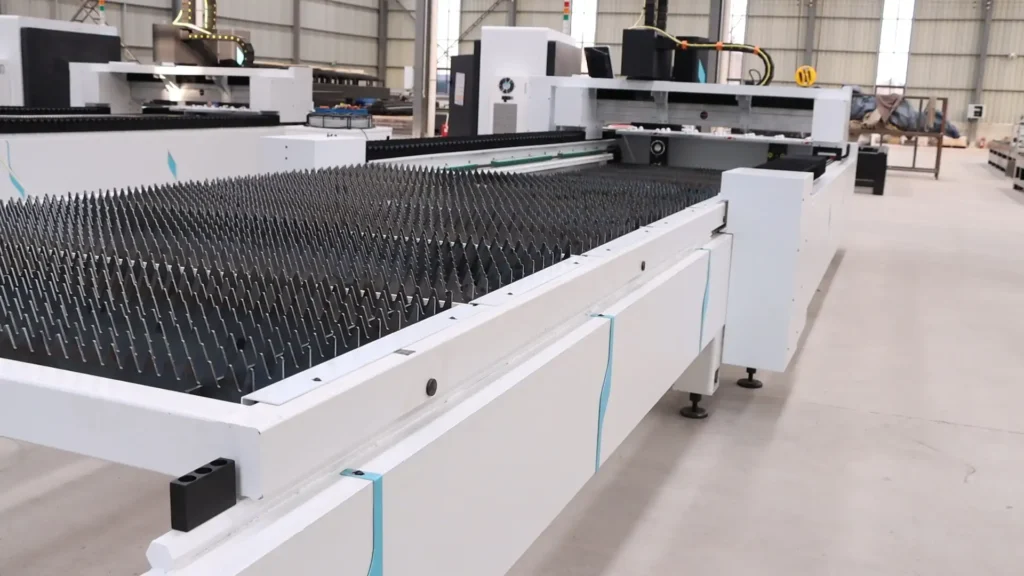
Two 6kW machines can differ by $20,000 or more. The difference lives in four components: the laser source, the cutting head, the bed construction, and the table configuration. The laser source alone can account for $5,000 to $15,000 of the price difference between a domestic brand and an imported brand.
If your shop primarily processes structural profiles and box tubing rather than flat plate, review our dedicated tube laser cutting machine price breakdown.
Ⅱ. Configuration Choices That Move the Price
1. Laser Source: Domestic vs. Imported
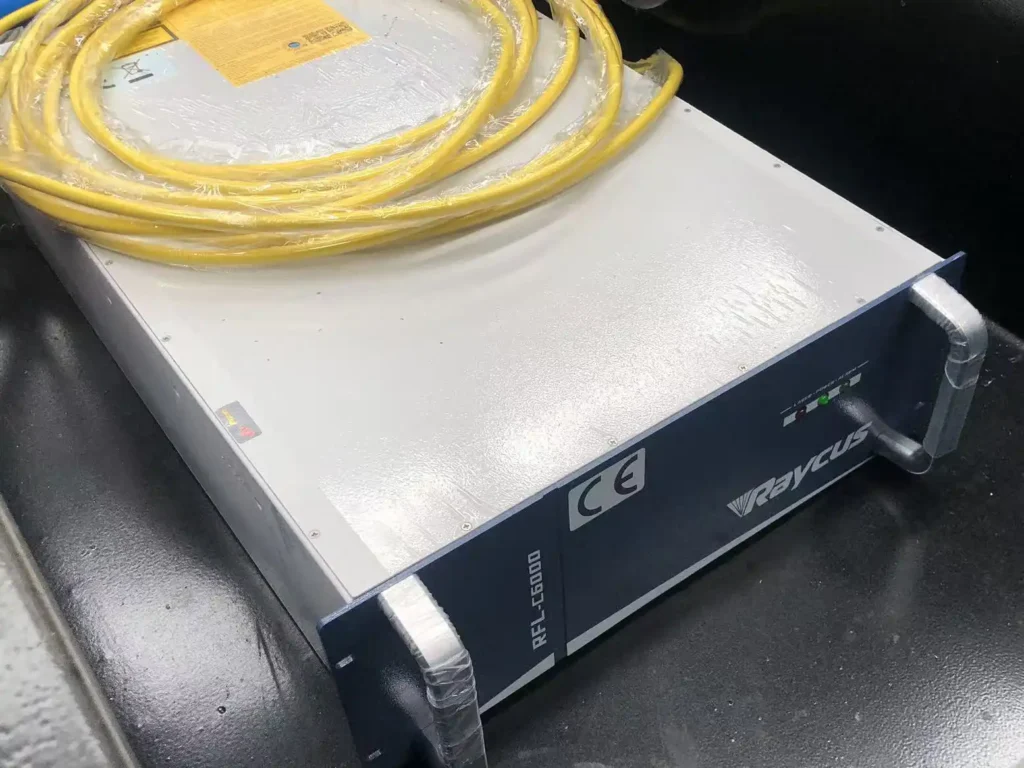
The laser source is the single most expensive component in the machine. Domestic sources from Raycus and Maxphotonics have closed much of the performance gap with imported sources from IPG, but a price premium of $5,000 to $15,000 remains.
The premium buys two things: better protection against back-reflection when cutting highly reflective materials like copper and brass, and longer diode lifespan before power degradation. For a shop cutting carbon steel and stainless steel, the domestic source is often sufficient. For a shop cutting copper, brass, or other reflective metals regularly, the imported source is the safer investment. The technical basis for this choice is covered in our laser cutting machine structure guide.
2. Single Table vs. Exchange Table
A single-table machine requires the operator to stop cutting, unload finished parts, and load a new sheet before production resumes. An exchange table keeps the laser cutting while the operator loads the second pallet.
The price difference is $8,000 to $12,000. What that money buys is 30 to 40 percent more effective cutting time, because the machine does not wait for material handling. For a shop running two shifts, the exchange table pays for itself in months. For a shop running one shift with predictable workloads, the single table may be sufficient.
| Configuration Choice | Price Difference | What It Buys |
|---|---|---|
| Domestic vs. Imported Laser Source | $5,000 – $15,000 | Back-reflection protection, longer lifespan |
| Single Table vs. Exchange Table | $8,000 – $12,000 | 30–40% more effective cutting time |
| Fixed Focus vs. Auto Focus Cutting Head | $3,000 – $6,000 | Faster changeover between materials |
| Manual vs. Automatic Nesting Software | $2,000 – $5,000 | Material utilization improvement |
Ⅲ. The Three-Year Total Cost of Ownership
1. What the Sticker Price Does Not Show
A cheap machine saves money on the invoice and costs money in operation. The two most common shortcuts are the machine bed and the guide rails. A bed that was not thermally annealed after welding will gradually deform as internal stress releases. Lightweight guide rails wear faster under high-speed motion.
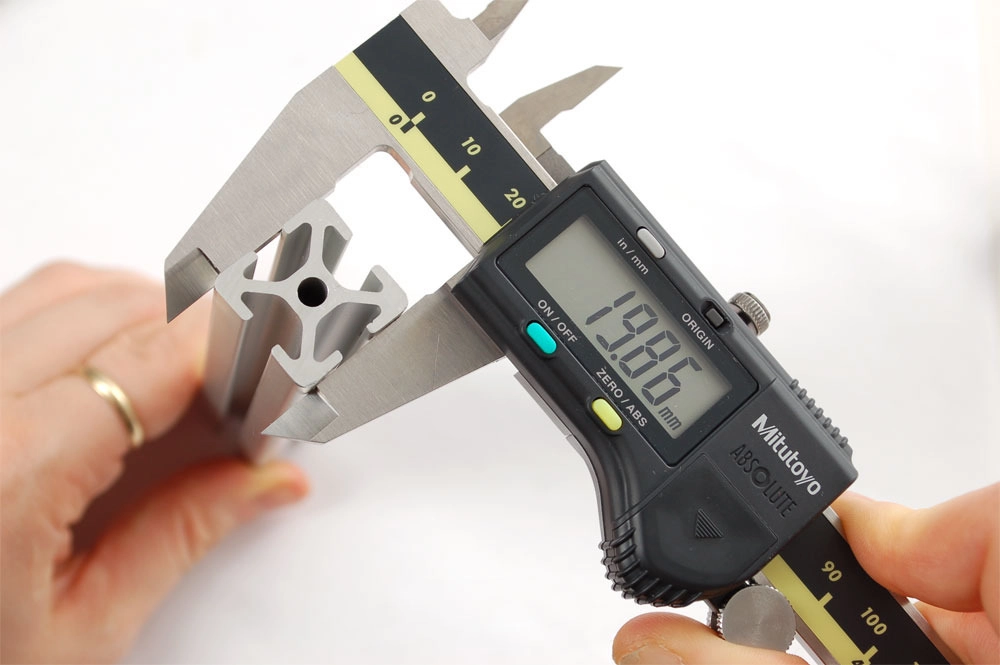
The result shows up 18 months after purchase: positioning accuracy drifts from ±0.05mm to ±0.3mm. The machine still cuts, but the parts no longer hold tolerance. Scrap rates rise, rework increases, and the shop spends more on grinding and sorting than it saved on the purchase price.
2. The Hidden Cost of Imprecision
For a shop cutting parts that require ±0.1mm accuracy, a machine that drifts to ±0.3mm produces scrap on every run. If the shop cuts 500 parts per month with a 5 percent scrap rate caused by machine drift, and the average part value is $20, the monthly scrap cost is $500. Over a year, that is $6,000. Over three years, $18,000, which exceeds the entire price difference between a cheap machine and a quality one.
| Cost Category | Budget Machine | Quality Machine |
|---|---|---|
| Purchase Price | Lower by $15,000 – $25,000 | Higher upfront |
| Accuracy at Year 3 | ±0.3 mm or worse | ±0.05 mm maintained |
| Annual Scrap Cost | $6,000+ | Tối giản |
| Annual Rework Cost | $4,000+ | Tối giản |
| Tổng chi phí trong 3 năm | Often higher | Lower overall |
The total cost of ownership calculation is the same one we break down in our Hướng dẫn so sánh giữa cắt laser nội bộ và thuê ngoài. The purchase price is only the first number.
Ⅳ. Financing and the Monthly Payment
1. What the Monthly Payment Looks Like
A $45,000 machine financed over 36 months carries a monthly payment of approximately $1,400, depending on the interest rate and down payment. A $100,000 machine runs about $3,100 per month over the same term.
The monthly payment is the number that matters for cash flow. If the machine generates more than its payment in cutting revenue each month, it pays for itself. The operating cost side of that equation is covered in our Hướng dẫn về chi phí khí dùng trong cắt laser.
2. Payment Methods Compared
| Payment Method | Upfront Cost | Monthly Commitment | Phù hợp nhất cho |
|---|---|---|---|
| Full Cash Purchase | 100% of machine price | $0 | Shops with strong cash reserves |
| 36-Month Lease | 10–20% down | Fixed monthly payment | First-time buyers, cash flow protection |
| Bank Financing | 20–30% down | Fixed monthly payment with ownership | Established shops with credit history |
| Rent-to-Own | Minimal upfront | Higher monthly payment | Shops with uncertain long-term volume |
Leasing preserves cash and keeps the upfront commitment low. For a first-time buyer, a 36-month lease with a buyout option is often the most practical path. The machine starts earning before the full purchase price is committed. The business logic of building a profitable cutting operation is covered in our Hướng dẫn kinh doanh cắt laser.
Ⅴ. FAQ: Fiber Laser Cutting Machine Price Questions
1. Why do two machines with the same laser power cost so differently?
The price difference comes from four components: the laser source brand, the cutting head quality, the bed construction, and the table configuration. A machine with an imported laser source, an auto-focus cutting head, an annealed heavy-plate bed, and an exchange table will cost significantly more than a machine with domestic components and a single table.
2. Is a cheaper laser source good enough for carbon steel cutting?
Yes, for carbon steel and stainless steel cutting, a domestic laser source performs well. The imported source becomes important when cutting highly reflective materials like copper and brass, where back-reflection protection matters, or when the machine runs continuously and long diode life is critical.
3. How much should I budget beyond the machine price?
Budget an additional 10 to 20 percent for the air compressor and dryer system, installation and rigging, operator training, and initial consumables. The operating cost of the machine, dominated by assist gas, is a separate ongoing expense.
4. Is a 6kW machine enough for my production?
A 6kW machine handles 2 to 20mm carbon steel at production speeds. If your work is mostly under 12mm, 6kW is sufficient. If your work regularly includes 20mm plate or thicker, a 12kW machine is justified. The selection logic follows the material thickness that represents 80 percent of your cutting volume.
5. What is the resale value of a fiber laser cutting machine?
A machine from a reputable manufacturer with a well-maintained bed and a documented service history holds its value. A cheap machine with a lightweight frame and unknown maintenance history sells at a steep discount, if it sells at all. The resale value difference can exceed the original price difference.
Ⅵ. Conclusion: Price Is the Starting Point, Total Cost Is the Decision
Fiber laser cutting machine price is the first number every buyer looks at, but it is not the number that decides the purchase. The decisive number is the total cost of ownership over three years: the purchase price, the operating cost, the scrap and rework, and the resale value. A machine that costs $20,000 more upfront but holds its accuracy for a decade is the better investment.
Tại WSL Laser, we help our customers compare machines on total cost, not sticker price. The price is the entry point. The total cost is the decision.
Tài liệu tham khảo
- ISO 9013: Cắt nhiệt — Phân loại các vết cắt nhiệt, Cửa hàng trực tuyến ANSI.
- Các cuộc khảo sát so sánh hiệu suất về chi tiêu vốn và xưởng gia công, Hiệp hội các nhà gia công và sản xuất.
- Thu mua và sản xuất nội bộ, Hiệp hội Công nghệ Sản xuất.





