

Securing the right fiber laser financing is not about taking on debt—it is about acquiring a productive asset without strangling workshop cash flow. Most small-to-midsize fabrication shops cannot write a $35,000 check outright. But when structured correctly, a machine that earns more each month than its financing payment becomes an immediate profit center rather than a financial burden.
This article explains the financing options available for fiber laser cutting machines, how to calculate the monthly payment, how leasing compares with a bank loan, and how the tax treatment of equipment purchases can change the entire calculation. At WSL Laser, we work with financing partners who understand fabrication equipment, and we help our customers structure the purchase in the way that fits their business.
Ⅰ. The Three Financing Options
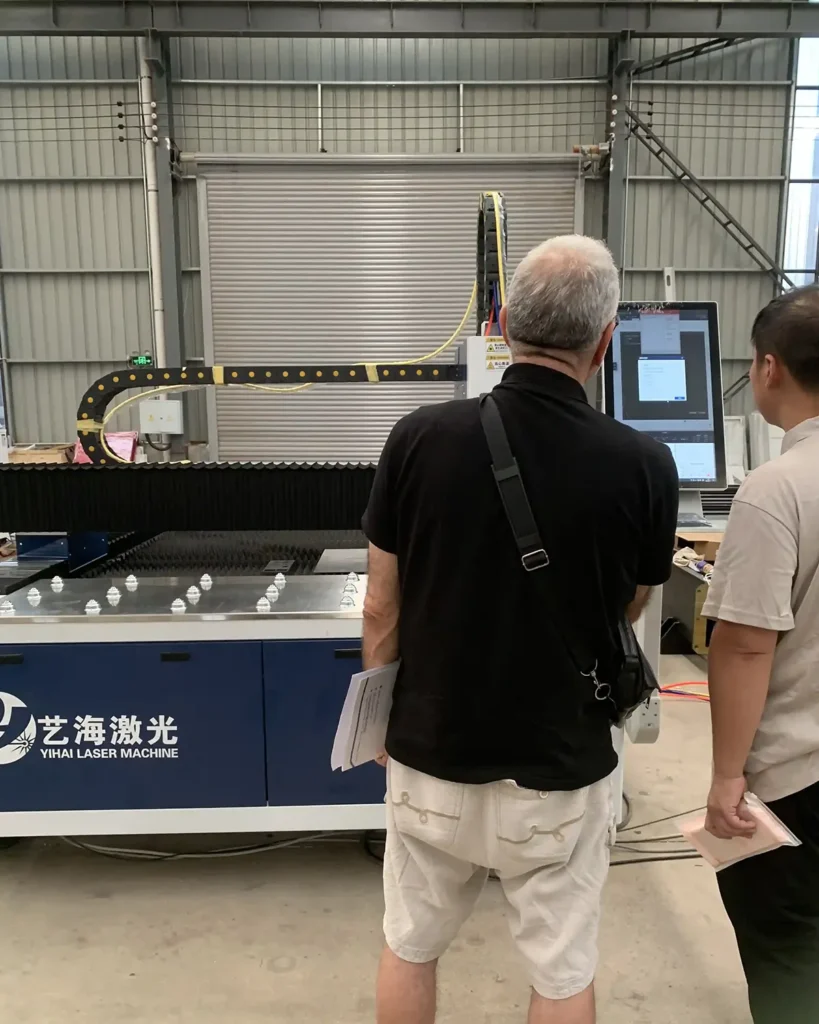
1. Bank Loan
A bank loan is the most straightforward form of equipment financing. The shop borrows the purchase price, agrees to a fixed interest rate and a fixed term, and makes monthly payments until the loan is repaid. At the end of the term, the shop owns the machine outright.
The advantage of a bank loan is ownership. The machine is an asset on the balance sheet from day one, and the shop can depreciate it for tax purposes. The disadvantage is the approval process. Banks require financial statements, tax returns, and a credit history. For a newer shop or a shop with uneven financials, approval can be difficult.
2. Equipment Lease
An equipment lease is a rental agreement with a purchase option at the end. The leasing company owns the machine during the lease term, and the shop makes monthly payments for the right to use it. At the end of the lease, the shop can usually buy the machine for a nominal fee or return it.
The advantage of a lease is accessibility. Leasing companies focus on the machine’s ability to generate revenue rather than the shop’s balance sheet. Approval is faster and more flexible. The disadvantage is that the total cost over the full term is usually higher than a bank loan, because the leasing company carries more risk.
3. Manufacturer Financing
Some machine manufacturers and distributors offer direct financing to their customers. This is essentially a partnership between the machine builder and a financing company. The rates are competitive, and the approval process is streamlined because the financing company knows the machine and its resale value.
| Financing Option | Typical Down Payment | Approval Difficulty | Ownership | Total Cost |
|---|---|---|---|---|
| Bank Loan | 20–30% | Élevé | Immediate | Le plus bas |
| Equipment Lease | 10–20% | Faible | At buyout | Highest |
| Manufacturer Financing | 10–20% | Modéré | At term end | Modéré |
Ⅱ. How the Monthly Payment Is Calculated
1. The Formula
The monthly payment on a financed machine is determined by three variables: the loan amount, the interest rate, and the term. A higher down payment reduces the loan amount. A longer term reduces the monthly payment but increases the total interest paid.
For a $35,000 machine with a 10 percent down payment, the financed amount is $31,500. At an 8 percent annual interest rate over 48 months, the monthly payment is approximately $770. Over 60 months, the same loan carries a monthly payment of approximately $640.
2. What the Payment Looks Like Across Machine Classes
| Prix de la machine | Down Payment (10%) | Financed Amount | Monthly Payment (48 mo, 8%) | Monthly Payment (60 mo, 8%) |
|---|---|---|---|---|
| $25,000 | $2,500 | $22,500 | $549 | $456 |
| $35,000 | $3,500 | $31,500 | $770 | $640 |
| $50,000 | $5,000 | $45,000 | $1,100 | $912 |
| $75,000 | $7,500 | $67,500 | $1,649 | $1,369 |
The monthly payment is the number that matters for cash flow. If the machine generates more than its payment in cutting revenue each month, it covers itself. The full cost of operating the machine is covered in our Guide des coûts des gaz utilisés pour la découpe au laser.
Ⅲ. Lease vs Loan: The Decision Framework
1. Cash Flow and Ownership
The primary difference between a lease and a loan is who owns the machine. With a loan, the shop owns the machine and builds equity with every payment. With a lease, the leasing company owns the machine, and the shop has the option to buy it at the end.
From a cash flow perspective, the lease is often easier to qualify for and may require a smaller down payment. But the total cost over the full term is higher. The shop that plans to keep the machine for its full service life is usually better off with a loan. The shop that wants to upgrade every few years may prefer a lease.
2. Tax Treatment
The tax treatment of the machine purchase can change the calculation significantly. In the United States, Section 179 of the Internal Revenue Code allows businesses to deduct the full purchase price of qualifying equipment in the year it is placed in service, up to a limit that exceeds the price of most fiber laser cutting machines.
For a $35,000 machine, the Section 179 deduction at a 21 percent corporate tax rate produces a first-year tax saving of approximately $7,350. For a shop that is profitable, this saving can cover the first year’s down payment and several months of payments. The specific tax treatment depends on the shop’s tax situation and should be confirmed with an accountant.
The same logic applies in other markets. Depreciation rules and investment incentives vary by country, but the principle is the same: equipment purchases are treated favorably for tax purposes because they create productive capacity.
Ⅳ. The Break-Even Calculation: How Many Hours Cover the Payment
1. The Monthly Payment vs. Hourly Revenue
The most useful way to evaluate a financing decision is to calculate how many hours of cutting work are required to cover the monthly payment. If the number is small, the machine is a low-risk purchase. If the number is large, the machine is a commitment that requires a stable order book.
For a $35,000 machine financed over 48 months with a monthly payment of $770, and a market billing rate of $80 to $120 per hour, the machine covers its payment in 7 to 10 hours of work per month. That is less than three hours per week.
| Prix de la machine | Mensualité | Hours to Cover Payment at $80/hr | Hours to Cover Payment at $120/hr |
|---|---|---|---|
| $25,000 | $549 | 7 hours | 5 hours |
| $35,000 | $770 | 10 hours | 7 hours |
| $50,000 | $1,100 | 14 hours | 9 hours |
| $75,000 | $1,649 | 21 hours | 14 hours |
2. The Full Picture
The payment is not the only cost. The machine also consumes electricity, assist gas, and consumables, and it requires an operator. But these costs are incurred only when the machine is running. The monthly payment is the fixed cost that must be covered whether the machine runs or not.
The break-even calculation answers the critical question: how much work does the machine need to generate to justify its existence? If the shop can fill those hours, the machine pays for itself. If it cannot, the machine becomes a burden. The full picture of machine operating costs is covered in our Guide des prix des machines de découpe au laser à fibre optique.
Ⅴ. Preparing for Financing
1. What Lenders Look For
Financing companies evaluate three things: the shop’s ability to repay, the machine’s value as collateral, and the shop’s track record. For an established shop with a steady order book, approval is routine. For a newer shop, the machine itself is often the primary collateral.
The documents typically required include business financial statements, tax returns, a personal guarantee from the owner, and a description of the machine and its application. Having these documents ready before the application speeds up the process.
2. The Down Payment Decision
A larger down payment reduces the monthly payment and the total interest paid. But it also ties up cash that could be used for other purposes. The right down payment is the one that keeps the monthly payment comfortable while preserving enough working capital to operate the business.
A common guideline is to finance no more than the amount the machine can cover with 20 to 30 percent of its monthly revenue capacity. This provides a margin of safety for slow months and unexpected expenses.
Ⅵ. FAQ: Fiber Laser Financing Questions
1. Can I get financing for a used fiber laser cutting machine?
Yes, but the terms are less favorable. Used equipment financing typically requires a larger down payment and carries a higher interest rate because the collateral value is lower. The comparison between new and used machines is covered in our Guide sur les machines de découpe au laser à fibre d'occasion.
2. What credit score do I need for equipment financing?
Most equipment financing companies look for a credit score of at least 650, though some specialize in working with businesses that have lower scores. A personal guarantee from the owner is usually required for small businesses.
3. Is leasing always more expensive than buying?
Over the full term, a lease usually costs more than a loan. But the difference is the price of flexibility. A lease requires a smaller down payment, has a faster approval process, and may offer a purchase option at the end. For a shop that values cash flow over total cost, the lease can be the better choice.
4. How does Section 179 affect the financing decision?
Section 179 allows a business to deduct the full purchase price of qualifying equipment in the year it is placed in service. For a $35,000 machine, this can produce a tax saving of $7,000 or more in the first year. The saving can offset the down payment and several months of payments. Confirm the details with your accountant.
5. What happens if I miss a payment?
Missing a payment can trigger a default, which gives the lender the right to repossess the machine. Most lenders work with borrowers who communicate proactively about cash flow issues. If a payment will be late, contact the lender before the due date.
Ⅶ. Conclusion: Financing Is a Tool, Not a Burden
Fiber laser financing is not about borrowing money. It is about acquiring a productive asset before the cash is available to buy it outright. A machine that covers its monthly payment with a few hours of work is not a debt. It is an income-generating asset that pays for itself.
À WSL Laser, we help our customers structure the purchase in the way that fits their business. The machine is the tool. The financing is the bridge. The profit is the goal.
Références
- IRS Publication 946: How to Depreciate Property, Internal Revenue Service.
- Equipment Leasing and Finance Association: Industry Data, Equipment Leasing and Finance Association.
- Enquêtes comparatives sur les dépenses d'investissement et les ateliers de fabrication, Association des fabricants et des constructeurs.
Lectures complémentaires sur l'investissement dans la découpe au laser
- Prix des machines de découpe au laser à fibre : guide sur le coût et le rapport qualité-prix
- Machines de découpe laser à fibre d'occasion ou neuves : guide d'achat 2026
- Découpe laser en interne ou en sous-traitance : quand opter pour l'achat ?
- Le secteur de la découpe laser : bénéfices, retour sur investissement et guide des ateliers de sous-traitance





