
Table of Contents
Introduction
In precision engineering and high-tech manufacturing, achieving tight tolerance machining is no longer optional—it is the baseline for competitive production. As industries demand increasingly complex geometries with minimal deviation, manufacturers are turning to advanced sheet metal processing solutions. Among these, the sheet metal laser has emerged as the definitive tool for precision cutting, delivering micron-level accuracy that traditional mechanical methods simply cannot match. At WSLLASER, we engineer laser cutting machines and laser welding systems that empower fabricators to meet these exacting standards while maintaining cost efficiency.
Ⅰ. The Technology Behind Micron-Level Precision
1. Fiber Laser vs. CO₂: The Wavelength Advantage
Fiber lasers operate at approximately 1.064 µm wavelength, while CO₂ lasers emit at 10.6 µm. This 10:1 wavelength ratio determines material compatibility, cutting speed, and achievable tolerances. According to industry benchmarks, fiber laser systems achieve positional tolerances of ±5 µm, enabling fabrication of components where 0.01 mm deviations cause functional failures. The shorter wavelength allows fiber lasers to focus to spot sizes tens of microns in diameter, making them the ultimate tool for precision cutting in metal fabrication.
2. Tolerance Benchmarks and Real-World Performance
Laser cutting tolerance defines the permissible deviation between programmed CAD dimensions and the actual cut part. Standard precision laser cutting achieves ±0.127 mm, with precision capabilities reaching ±0.050 mm for critical features. For ultra-precision applications using advanced fiber laser systems, tolerance benchmarks as tight as ±0.0127 mm are possible according to detailed laser cutting tolerances research. A 2024 study found that 92% of laser-cut parts met surface roughness specifications (Ra ≤ 1.6 µm) without secondary operations, significantly reducing post-processing labor by 40–60%.
| Tolerance Level | Measurement | Typical Application |
|---|---|---|
| Standard | ±0.127 mm (±0.005″) | General fabrication, structural components |
| Precision | ±0.050 mm (±0.002″) | Critical holes, mating features |
| Ultra-Precision | ±0.0127 mm (±0.0005″) | Aerospace, medical devices |
3. The Role of CNC Control in Maintaining Consistency
Modern precision laser cutting relies on high-resolution CNC controllers with 0.001 mm interpolation resolution—100 times finer than standard G-code. Combined with dynamic focus control that adjusts focal length based on material thickness in real time, these systems maintain consistent beam quality across production batches. Automated laser systems exhibit less than 0.2% dimensional variance, supporting compliance with ISO 2768 standards. This level of control establishes the CNC-guided tool for precision cutting as the gold standard in automated fabrication.
Ⅱ. Core Applications in High-Tech Industries
1. Aerospace Laser Cutting Services
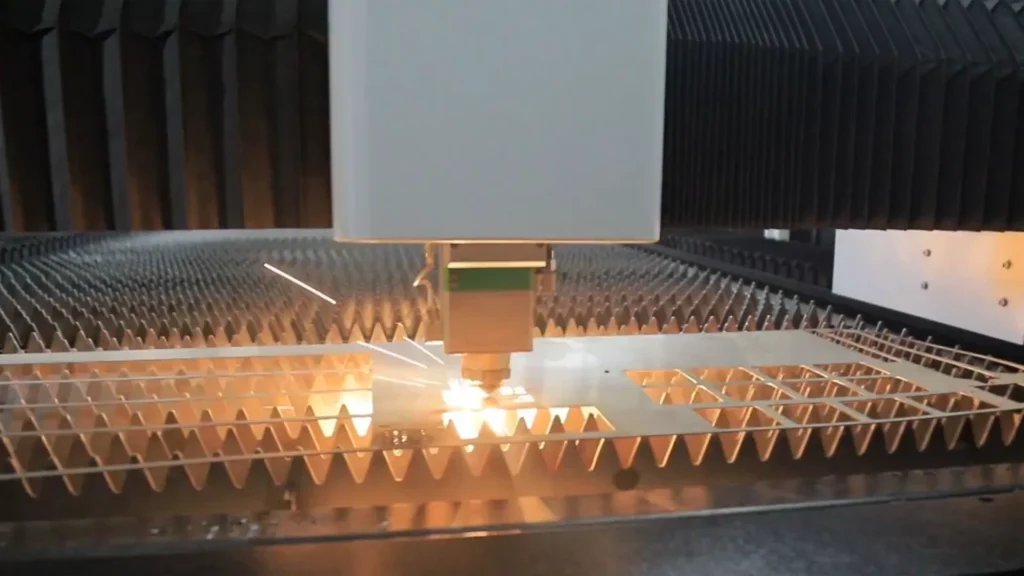
The aerospace sector demands components that withstand extreme operational stresses while maintaining strict weight and dimensional specifications. Aerospace laser cutting services enable manufacturers to achieve intricate designs and tight tolerances critical for turbine blades, fuel nozzles, and structural brackets. A turbine blade manufacturer reduced dimensional rejection rates from 8.2% to 0.7% after adopting 3D laser cutting, achieving 25 µm profile accuracy across nickel alloy components. The global laser processing market is forecast to expand at a CAGR of 10%, reaching USD 62.08 billion by 2033, with aerospace applications driving significant demand.
2. Medical Device Laser Cutting
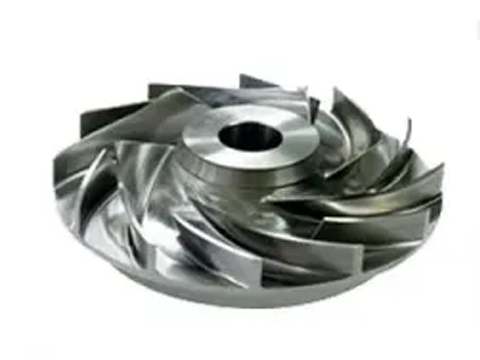
Medical device laser cutting delivers micron-level precision essential for miniaturization across metals, polymers, and alloys. Applications range from cardiovascular stents and surgical catheters to orthopedic implants and microfluidic devices. The medical device contract manufacturing market is projected to grow from USD 84.6 billion in 2024 to USD 158.7 billion by 2030, as documented in comprehensive medical device laser cutting studies. When comparing manufacturing processes, precision laser cutting produces tolerances up to ±0.1 mm with minimal heat-affected zones, preserving material biocompatibility.
| Manufacturing Process | Tolerance | Speed | Cost Efficiency | Material Versatility |
|---|---|---|---|---|
| Laser Cutting | Up to ±0.1 mm | 5–50 m/min | 中程度 | High (metals, plastics, composites) |
| Plasma Cutting | Up to ±1.5 mm | 10–100 m/min | Low | Moderate (thick metals only) |
| Metal Stamping | Up to ±0.5 mm | 50–200 strokes/min | High | Moderate (metal sheets only) |
3. Electronics and Microfabrication
In electronics manufacturing, precision laser cutting processes substrates, flexible circuits, and shielding components with feature sizes as small as 0.05 mm. The non-contact nature eliminates mechanical stress on delicate components, while narrow kerf widths under 0.15 mm maximize material yield. As consumer electronics continue shrinking, this precision cut tool has become indispensable for producing connectors, sensors, and battery enclosures.
Ⅲ. The Business Case: Cost Calculation & ROI in Precision Fabrication
1. In-House vs. Outsourcing: A Cost Breakdown
For manufacturers currently outsourcing precision components, bringing production in-house offers compelling financial advantages. Consider a shop producing 1,000 custom brackets monthly. Outsourcing at USD 5.00 per bracket costs USD 60,000 annually with 10-day lead times. In-house production using a 3 kW fiber laser reduces material cost to USD 1.50 per bracket, with machine operating costs of approximately USD 30.25 per hour. Total annual in-house cost drops to roughly USD 20,000, generating annual savings of USD 40,000 and achieving break-even within 13 months according to detailed ROI analysis.
2. Energy Efficiency and Operating Cost Comparison
Fiber laser systems demonstrate superior energy efficiency with 45–50% wall-plug efficiency compared to 5–10% for CO₂ lasers. A 6 kW fiber laser consumes approximately 51,480 kWh annually versus 152,100 kWh for an equivalent CO₂ system—saving 100,620 kWh per year. At USD 0.15 per kWh, this translates to USD 15,093 in annual energy savings. Furthermore, fiber laser operating costs average approximately USD 4 per hour on mild steel compared to USD 20 per hour for CO₂ systems.
| Cost Factor | Fiber Laser (6 kW) | CO₂ Laser (6 kW) | Annual Difference |
|---|---|---|---|
| Energy Consumption | 51,480 kWh | 152,100 kWh | 100,620 kWh saved |
| Energy Cost (@$0.15/kWh) | USD 7,722 | USD 22,815 | USD 15,093 saved |
| Operating Cost (mild steel) | ~USD 4/hr | ~USD 20/hr | 5× reduction |
| Weekly Maintenance | <30 min | 4–5 hrs | ~USD 9,100 labor saved |
3. Maintenance Downtime and Total Cost of Ownership
Total cost of ownership extends beyond acquisition price to encompass maintenance, consumables, and downtime. Fiber laser systems require fewer than 30 minutes of maintenance weekly, while CO₂ systems demand 4–5 hours weekly for mirror cleaning and beam realignment. Fiber laser sources also offer operational lifespans exceeding 100,000 hours—approximately ten times longer than CO₂ systems—making fiber the most cost-effective tool for precision cutting over a 10-year operational horizon.
Ⅳ. Selecting the Right Precision Laser Cutter
1. Power, Bed Size, and Material Compatibility
Selecting the appropriate precision laser cutter begins with defining your material portfolio. For comprehensive metal fabrication, 3 kW fiber laser systems provide optimal balance, handling materials up to 20 mm carbon steel and 12 mm stainless steel efficiently. This power level covers approximately 80% of typical fabrication requirements. Bed size should accommodate your largest raw sheets—standard 4×8 ft sheets require a 4×2 m bed, while larger 6×2 m beds improve nesting efficiency.
| 素材 | Thickness Capacity (3 kW) | Thickness Capacity (6 kW) | Recommended Gas |
|---|---|---|---|
| Carbon Steel | Up to 20 mm | Up to 30 mm | Oxygen (O₂) |
| Stainless Steel | Up to 12 mm | Up to 25 mm | Nitrogen (N₂) |
| Aluminum Alloy | Up to 10 mm | Up to 20 mm | Nitrogen (N₂) |
| Copper/Brass | Up to 6 mm | Up to 12 mm | Nitrogen (N₂) |
2. Software, Automation, and After-Sales Support
A powerful machine requires equally capable control software. Look for intuitive interfaces compatible with standard design files (DXF, DWG), advanced nesting capabilities to maximize material utilization, and real-time monitoring systems. Industry 4.0 connectivity enables predictive maintenance and automated quality control, typically paying back within 12–18 months. For additional insights on optimizing your production workflow, explore our previous technical discussions on the WSLLASER blog.
3. Vendor Evaluation Criteria
Vendor partnership quality directly impacts equipment uptime and long-term operational success. Evaluate engineering expertise, ISO certification standards, and customization options. Essential service capabilities include 24/7 technical support with response times under 4 hours, local spare parts inventory, comprehensive operator training programs, and remote diagnostics capabilities. A vendor’s technology roadmap ensures your investment remains supported throughout the machine’s operational lifespan.
FAQ
Q1: What tolerance can a precision laser cutting machine actually achieve? A: Standard precision laser cutting achieves ±0.127 mm, with advanced fiber systems reaching ±0.050 mm for critical features. Ultra-precision configurations under optimal conditions can attain ±0.0127 mm.
Q2: Is fiber laser better than CO₂ for all precision metal cutting applications? A: Fiber lasers dominate metal cutting due to higher speed, lower operating costs, and minimal maintenance. However, CO₂ lasers remain superior for non-metallic materials such as wood, acrylic, and textiles.
Q3: How quickly can a precision laser cutting machine generate ROI? A: Typical break-even occurs within 12–24 months for shops transitioning from outsourcing. A 3 kW fiber laser producing 1,000 parts monthly can achieve payback in approximately 13 months based on direct cost savings alone.
Q4: What industries benefit most from precision laser cutting technology? A: Aerospace, medical device manufacturing, electronics, automotive, and precision engineering sectors benefit most, particularly where tight tolerance machining and complex geometries are required.
Q5: What factors should I prioritize when selecting a precision cut tool for my workshop? A: Prioritize material compatibility, required power capacity, bed size for your largest sheets, software capabilities, automation features, and—critically—the vendor’s after-sales support infrastructure.
Conclusion
Sheet metal laser technology has fundamentally transformed precision manufacturing by delivering the accuracy, speed, and cost efficiency that modern industries demand. As the definitive tool for precision cutting, fiber laser systems offer micron-level tolerances, reduced post-processing requirements, and compelling ROI timelines. At WSLLASER, we remain committed to advancing laser cutting and welding solutions that meet the evolving demands of precision engineering worldwide.