

Most fabricators buy a 12kW fiber laser and then watch it sit idle. The cut itself takes 40 seconds. The crane operator takes 15 minutes to swap the next sheet. That gap is where your return on capital disappears, and it is the exact problem laser automation is priced to solve.
This guide is written for shop owners evaluating pallet changers, automatic load and unload systems, and tower stockyards. It does not sell hardware. It calculates payback.
Ⅰ. The Beam-On Paradox: Why a Faster Laser Does Not Mean More Output
1. The cutting speed trap
A 12kW source cutting 3mm carbon steel at 28–35 m/min finishes a 3,000 × 1,500mm nest in under 90 seconds. The operator then needs 12–20 minutes to unload the skeleton, fetch a new sheet with a forklift, and re-zero the head.
Your $180,000 laser is beam-on for roughly 35% of a paid shift.
2. Beam-on time benchmark by automation level
Manual crane loading caps beam-on time at 35%. A dual shuttle pallet changer raises it to 60%. Standalone load and unload automation reaches 75%. A tower stockyard pushes it to 85%.
Industry data shows that machines equipped with a flexible manufacturing system (FMS) can achieve 92% beam-on time when running one manned and one unmanned shift-11. Every tier costs money. Only one tier pays back inside 18 months for a two-shift shop.
3. What laser automation actually targets
Laser automation does not target cutting speed. It targets the 65% of the shift where the machine is not cutting. That is the only number that changes your cost per part.
Ⅱ. Three Tiers of Fiber Laser Automation Hardware
1. Tier 1: Dual shuttle pallet changers
Two pallets alternate on a shuttle. While the head cuts pallet A, the operator loads pallet B. This is the baseline standard and the cheapest entry point into laser automation.
Pallet changer laser systems are available from multiple global suppliers, with pricing typically ranging from $35,000 to $55,000 for the incremental hardware cost-15.
2. Tier 2: Standalone sheet load and unload automation
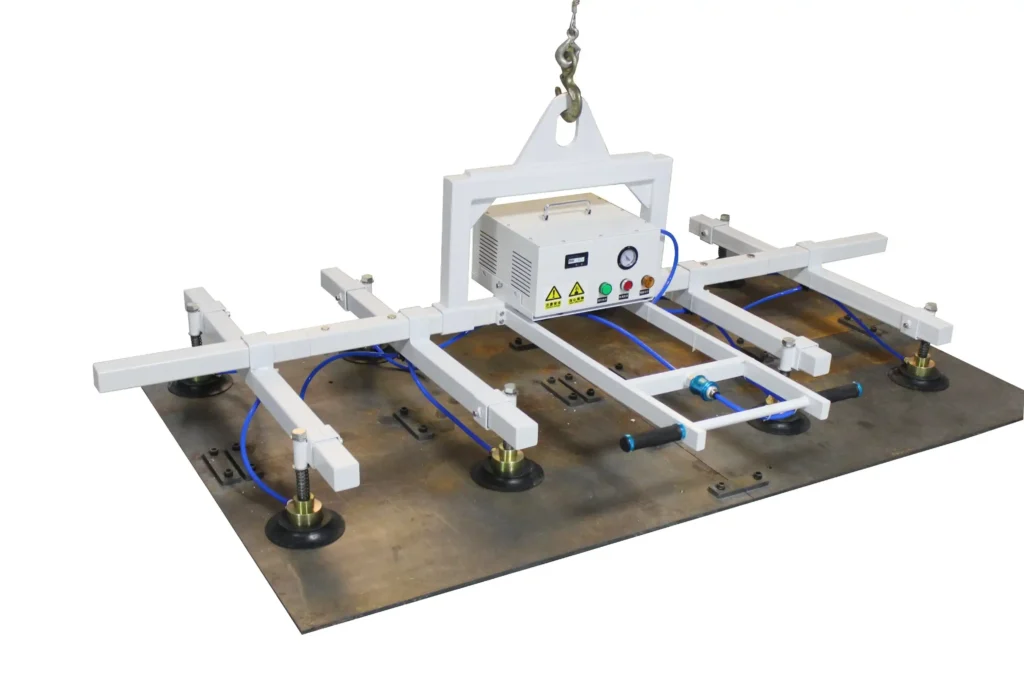
A vacuum lift places sheets onto the bed. A fork unloader removes the skeleton and finished parts. This tier removes the crane operator from the cell entirely.
A real-world case: an automated loading and unloading system for a laser machine was implemented at a hardware cost under $12,000 with a reported ROI of less than 12 months-5. That was a smaller-scale cobot application, but it demonstrates the principle that automation payback is a function of labor displacement, not absolute hardware cost.
3. Tier 3: Automated storage and retrieval systems
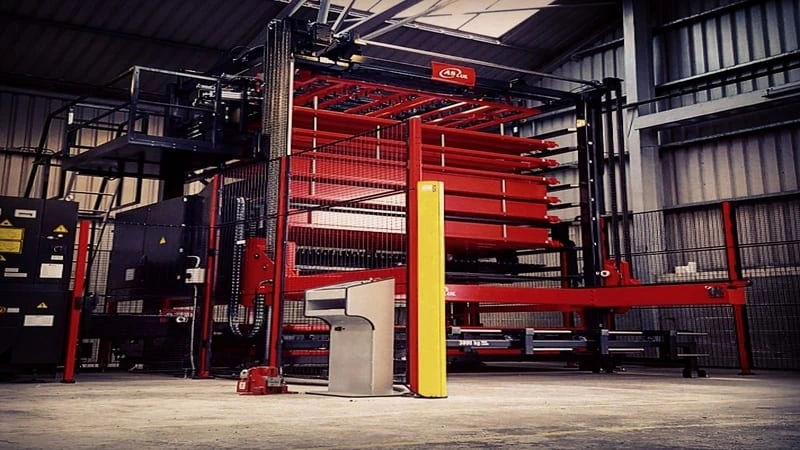
Tower stockyards and ASRS feed raw sheets and retrieve finished nests without human touch. This is true lights out manufacturing laser cutting, and it only makes sense above 400 cutting hours per month.
Ⅲ. The Hard Math: Labor Savings and Operator Manning Ratios
1. Eliminating the dedicated crane operator
A dedicated crane or forklift operator costs $28/hr fully loaded. At 320 cutting hours per month, that is $8,960 in direct labor tied to material handling alone.
This labor figure is not hypothetical. SME Snapshot data from 2025 shows that 89% of manufacturing SMEs cite labor costs as pressure to raise prices, and 41% report being unable to grow despite demand due to skills shortages-1.
2. From one operator per machine to one per three
Manual loading binds one operator to one machine. A pallet changer lets one operator tend two machines. A tower stockyard lets one operator tend three or more.
At $28/hr, moving from 1:1 to 1:3 manning releases $5,973 per month in labor capacity without a single layoff.
3. Monetizing unattended evening shifts
If your loading system runs unattended from 10pm to 6am, you add 160 cutting hours per month at near-zero marginal labor. That is the entire economic case for lights out fabrication.
Ⅳ. Table 1: Capital Outlay vs. Throughput Lift by Automation Level
| Automation Tier | Incremental Hardware Cost | Footprint Added | Sheet Swap Cycle Time | Typical Beam-On Rate | Crane Operator Required |
|---|---|---|---|---|---|
| Manual crane + forklift | $0 | 0 m² | 12–20 min | 35% | Yes, dedicated |
| Dual shuttle pallet changer | $35,000–$55,000 | 8–12 m² | 45–90 sec | 60% | No |
| Standalone load/unload | $90,000–$140,000 | 20–30 m² | 30–60 sec | 75% | No |
| Tower stockyard / ASRS | $180,000–$320,000 | 45–70 m² | 20–40 sec | 85% | No |
Ⅴ. Payback Modeling: Single-Shift vs. Double-Shift Fabrication Shops
1. Why automation is an expensive toy on 80 cutting hours per month
A single-shift shop running 160 hours per month saves $4,480 in labor by eliminating a crane operator. A $120,000 automated cell financed at 8.5% over 60 months costs $2,462 per month.
The math works, but the margin is thin. Add maintenance and the payback stretches past 40 months.
2. The 2-shift tipping point
At 320 cutting hours per month, labor savings reach $8,960. The same $2,462 monthly payment now produces a net cash surplus of $6,498 per month. Payback lands inside 20 months.
This is the tipping point. Below 250 cutting hours per month, buy a pallet changer. Above 250, buy full load and unload automation.
3. Table 2: 3-Year Cash Flow & Payback Schedule
| Month | Cumulative Labor Saved | Cumulative Financing Cost | Net Cash Position | Payback Status |
|---|---|---|---|---|
| 6 | $53,760 | $14,772 | +$38,988 | On track |
| 12 | $107,520 | $29,544 | +$77,976 | On track |
| 18 | $161,280 | $44,316 | +$116,964 | Payback reached |
| 24 | $215,040 | $59,088 | +$155,952 | Net positive |
| 36 | $322,560 | $88,632 | +$233,928 | Fully amortized |
Assumes $120,000 cell, 8.5% APR, 60-month term, two-shift operation at 320 cutting hours/month. Financing benchmark context: ELFA reported $119.8 billion in total new business volume for 2025, with credit approval rates at 78.1%-3.
Ⅵ. Table 3: Sheet Cycle Times & Hidden Scrap Risks
1. Thin sheet vs. thick plate handling
Thin sheet below 2mm is the hardest material to automate. Vacuum cups pull double sheets. Air knives and sheet separators are mandatory, not optional.
2. The cost of a double-sheet misfeed
A double-sheet misfeed on 1mm stainless destroys the nozzle, the ceramic ring, and sometimes the protective lens. That is $180–$420 in parts plus 2–4 hours of downtime.
3. Micro-joint and nesting requirements
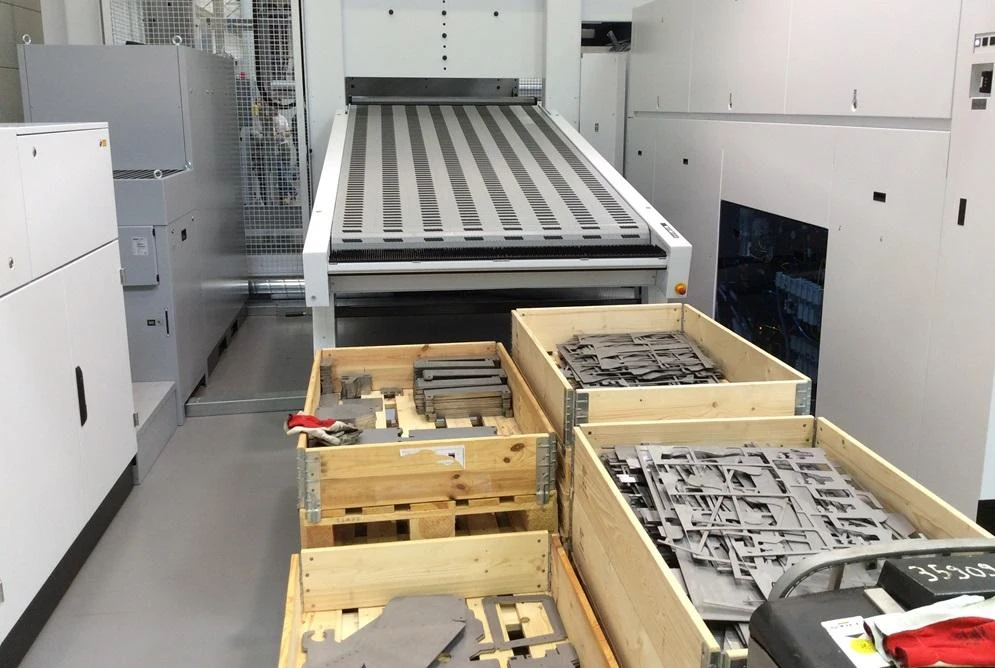
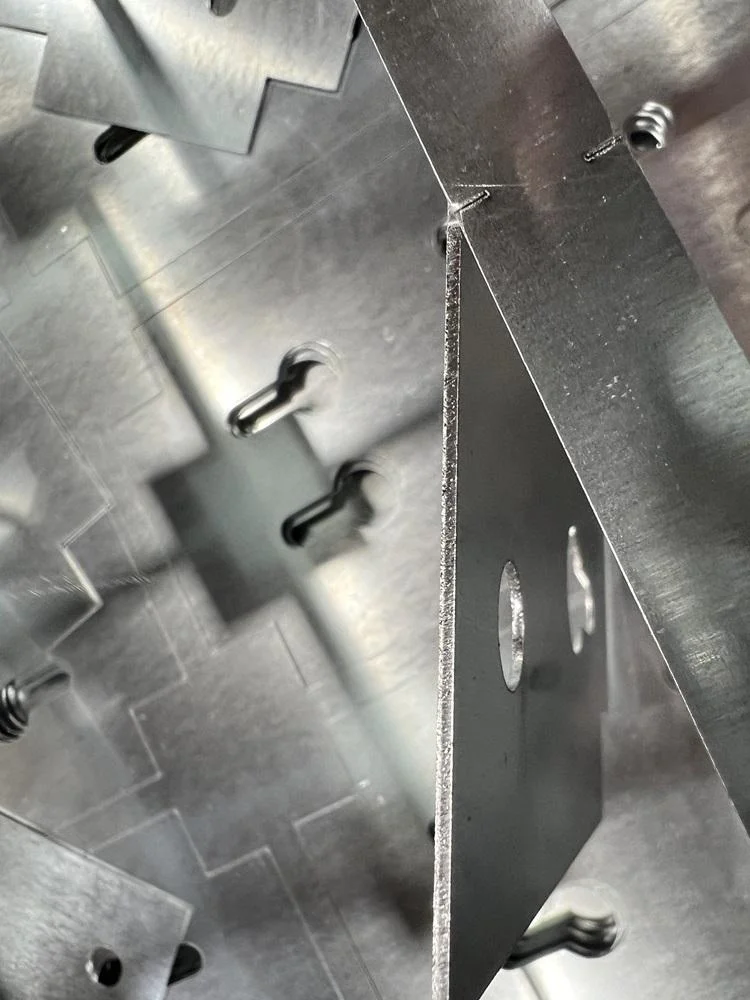
Automated unloading requires micro-joints to hold parts in the nest. Without them, parts fall through the bed and jam the unloader. Your nesting software must be reconfigured before the hardware arrives.
| Material & Thickness | Manual Cycle Time | Automated Cycle Time | Double-Sheet Risk | Scrap Cost per Event |
|---|---|---|---|---|
| 1mm stainless | 12–15 min | 30–45 sec | High | $180–$420 |
| 3mm carbon steel | 10–14 min | 30–45 sec | Medium | $90–$220 |
| 6mm carbon steel | 14–18 min | 45–60 sec | Low | $60–$150 |
| 10mm+ plate | 18–25 min | 60–90 sec | Very low | $40–$100 |
Ⅶ. Table 4: How Automation Dilutes Your Cost Per Hour
1. Connecting back to your hourly cost ledger
Your manual cell runs at $38–$45 per cutting hour once labor, gas, power, and consumables are loaded. Automation does not reduce gas or power. It reduces the labor component per hour.
2. The dilution effect
At 35% beam-on, you pay for 100 hours of labor to get 35 hours of cutting. At 85% beam-on, you pay for 100 hours of labor to get 85 hours of cutting. The hourly rate collapses.
3. Table 4: Cost Per Cutting Hour by Automation Level
| Cost Component | Manual | Pallet Changer | Load/Unload | Tower Stockyard |
|---|---|---|---|---|
| Labor per cutting hour | $22.40 | $13.07 | $10.45 | $9.22 |
| Gas & power per hour | $8.50 | $8.50 | $8.50 | $8.50 |
| Consumables per hour | $4.20 | $4.20 | $4.20 | $4.20 |
| Financing per hour | $0 | $3.13 | $7.69 | $12.50 |
| Total per cutting hour | $35.10 | $28.90 | $30.84 | $34.42 |
The pallet changer wins on pure hourly cost. The tower stockyard wins only when you count the unattended night shift as free capacity.
Ⅷ. Integration Traps: When Loading Systems Fail to Deliver
1. Floor slab and ceiling height limits
A tower stockyard needs 4.5–6m of clear height and a reinforced slab rated for 1,500kg/m². Retrofitting an existing bay often costs more than the tower itself.
2. Material flatness and surface contamination
Vacuum cups fail on rusty, oily, or warped sheets. If your incoming material is not flat and dry, automation will misfeed daily.
3. Part skeleton sorting bottlenecks
Automated unloading without part sorting just moves the bottleneck downstream. You still need a human to separate parts from the skeleton unless you invest in a sorting cell.
Ⅸ. Frequently Asked Questions
How much does a laser load and unload automation system cost?
A standalone load and unload system runs $90,000–$140,000 installed. A tower stockyard runs $180,000–$320,000. Pallet changers are the cheapest entry at $35,000–$55,000.
What is the typical payback period for fiber laser automation?
For a two-shift shop at 320 cutting hours per month, payback lands between 18 and 24 months. Single-shift shops below 250 hours per month rarely break even inside three years.
Can an automated loading system be retrofitted to an existing laser cutter?
Yes, if the machine has an open bed and compatible interface. Fully enclosed machines often require factory-level modifications that void the warranty.
What is the minimum production volume required to justify laser automation?
The floor is roughly 250 cutting hours per month. Below that, a pallet changer is the only tier that pays back. Above 400 hours, a tower stockyard becomes viable.
Ⅹ. Commercial Conclusion & Investment Verdict
Laser automation is not a hardware purchase. It is a labor arbitrage decision. If your shop runs two shifts and your beam-on rate is stuck at 35%, every month you wait costs you $8,960 in recoverable labor.
Buy the pallet changer first. Prove the manning ratio. Then finance the full load and unload cell. The math only works when the machine cuts while you sleep.
References
- FMA Benchmarking Surveys and Reports — Salary/Wage and Benefit Survey, 2024 Edition, Fabricators & Manufacturers Association
- Equipment Demand in 2025 Reached All-Time Second Highest Level — CapEx Finance Index, December 2025, Equipment Leasing & Finance Association, January 2026
- 29 CFR 1910.176 — Handling materials – general, Electronic Code of Federal Regulations (eCFR), U.S. National Archives and Records Administration
- SME — Society of Manufacturing Engineers Official Resources, Society of Manufacturing Engineers
Further Reading
- Laser Cutter Cost Per Hour: The Full Operating Ledger — Your baseline hourly cost before automation.
- Fiber Laser Financing: 2026 Equipment Lease vs Buy — Monthly payment structures and Section 179 treatment.
- In-House vs Outsourcing Laser Cutting: Cost & ROI — The break-even point between self-cutting and subcontracting.
- Laser Cutting Business: Profit, Payback & Job Shop — Job shop margins and payback benchmarks.





