

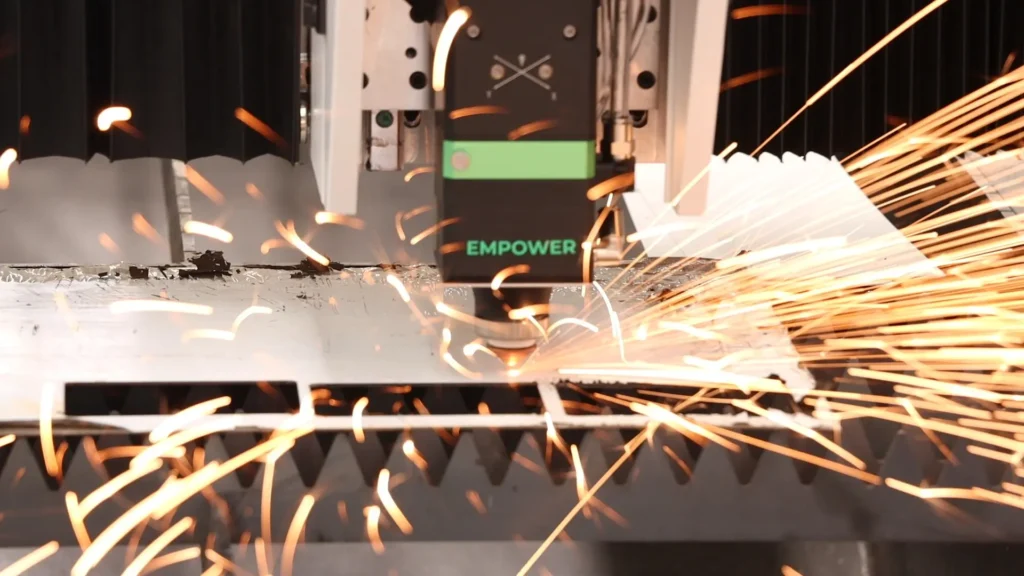
Laser cutting gas cost is the single largest variable expense on a fiber laser after electricity. A 6kW machine cutting 3mm stainless on bulk liquid nitrogen burns $28.50 per cutting hour in gas alone. Switch to air assist laser cutting with a dedicated high-pressure compressor, and that same hour costs $3.00.
This guide calculates the hourly Opex difference, the auxiliary gas system Capex, and the payback horizon across single-shift, double-shift, and high-production schedules. Every number is built from published industry benchmarks and mid-range equipment quotes.
Ⅰ. The Assist Gas Opex Bleed: Why Bulk Nitrogen Destroys Operating Margins
1. The monthly invoice shock
A shop running 2,000 cutting hours per year on bulk liquid nitrogen spends $57,000 annually on gas. That figure includes the nitrogen itself, tank lease, vaporizer rental, delivery surcharges, and boil-off losses that occur whether the machine runs or not.
2. Industry benchmark verification
TRUMPF reported at its 2026 Intech exhibition that switching from nitrogen to compressed air reduces laser cutting gas cost by 75%. AMADA’s published data shows compressed air cutting recovers its hardware investment within five years even on single-shift operation. These figures are consistent with the $28.50 vs $3.00 per hour gap modeled in this guide.
3. The metallurgical boundary
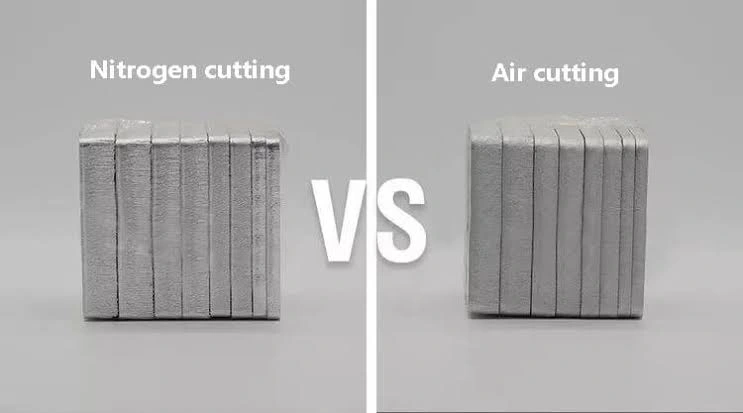
Compressed air is not a universal substitute. Nitrogen remains mandatory where an oxide-free edge is required for cosmetic stainless, medical parts, or aluminum exposed to moisture. For 1mm–6mm carbon steel and most non-cosmetic stainless, dry filtered air matches nitrogen edge quality at 10% of the cost.
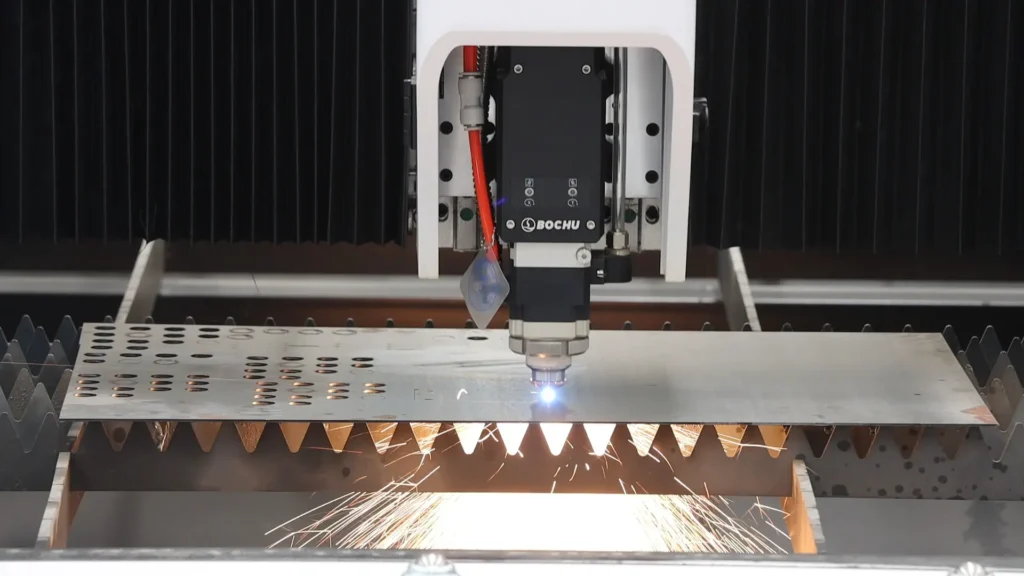
Ⅱ. Table 1: Hourly Operating Ledger: High-Pressure N₂ vs. Dedicated Shop Air
| Cost Component | Bulk Liquid N₂ | Dedicated Shop Air | Notes |
|---|---|---|---|
| Gas consumption rate | 40 m³/hr at 18–22 bar | 40 m³/hr at 20–25 bar | Same nozzle, same pressure |
| Gas media cost | $0.60–$0.70 per m³ | $0 (ambient air) | Nitrogen purchased, air is free |
| Electricity (compressor) | $0 | $2.15/hr (18 kWh @ $0.12/kWh) | VFD screw compressor load |
| 4-stage filter & oil maintenance | $0 | $0.50/hr | ISO 8573-1 Class 1 consumables |
| Air-end overhaul reserve | $0 | $0.35/hr | Accrual for 8,000-hr service |
| Tank lease / vaporizer / delivery | $0.80–$1.20/hr amortized | $0 | Cryogenic supply chain cost |
| Total per cutting hour | $28.50 | $3.00 | 89.5% reduction |
The $3.00/hr air figure is the full variable cost: electricity, filtration, and overhaul reserve. It excludes the compressor’s capital cost, which is handled in Table 2 and Table 4.
Ⅲ. Auxiliary Gas Architecture: Three Ways to Feed a Fiber Laser
1. Bulk liquid nitrogen
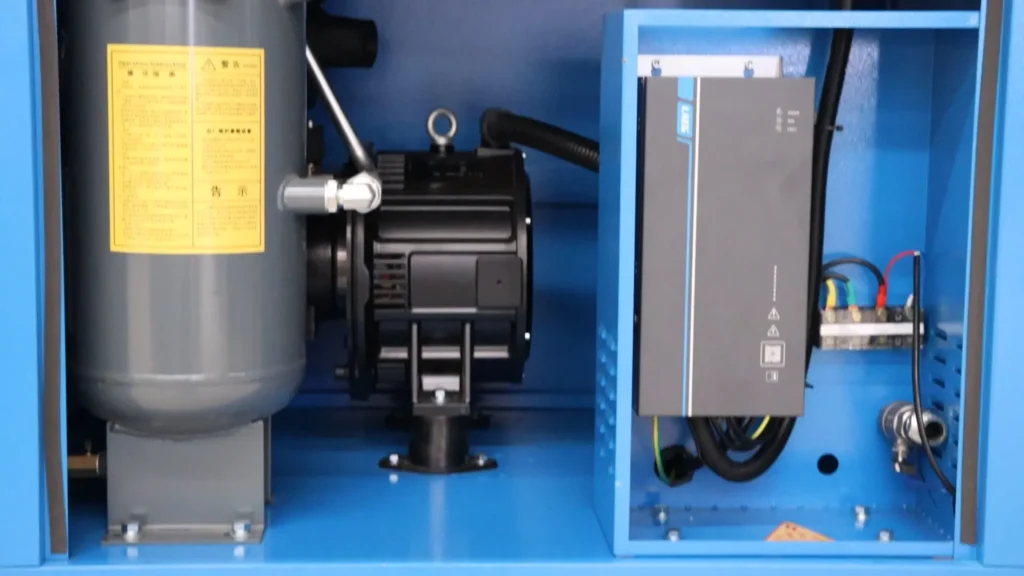
Sourcing bulk nitrogen gas for laser cutting requires a tank pad, a vaporizer, and an ongoing supply contract. It is the highest-Opex, lowest-Capex option, and it locks the shop into a cryogenic supplier whose price is not under the shop’s control.
2. Turnkey high-pressure air package
A dedicated high-pressure air package (compressor, dryer, filtration, receiver) integrates with the laser cell at the nozzle. It is the lowest-Opex option for 1mm–6mm carbon steel and non-cosmetic stainless, with a turnkey Capex benchmark of $26,000.
3. On-site PSA nitrogen generator
A pressure swing adsorption generator produces 99.999% nitrogen on demand at $0.15–$0.25 per m³. It sits between the two other options: higher Capex than air, lower Opex than bulk nitrogen, and it preserves the oxide-free edge required for cosmetic work.
Ⅳ. Table 2: Auxiliary Gas Architecture Selection Matrix
| Parameter | Bulk Liquid N₂ | Turnkey Air Assist Package | On-Site PSA N₂ Generator |
|---|---|---|---|
| Integration with laser cell | Tank pad + vaporizer + hose | Compact skid at machine side | Generator + buffer tank nearby |
| Footprint required | 15–25 m² outdoor pad | 3–6 m² at machine side | 8–12 m² indoor |
| Capex range | $0 (supply contract) | $22,300–$30,500 | $35,000–$55,000 |
| Hourly Opex | $28.50 | $3.00 | $6.00–$10.00 |
| Edge quality | Oxide-free | Oxide-free on carbon steel | Oxide-free on all materials |
| Best material fit | Cosmetic stainless, aluminum | 1–6mm carbon steel, non-cosmetic stainless | Heavy plate, cosmetic stainless |
| Payback vs bulk N₂ | — | 3.5–12.2 months | 8–18 months |
Ⅴ. Payback Modeling: Shift Schedules, Duty Cycles & Breakeven Horizons
1. Single shift (1,000 cutting hours per year)
Annual nitrogen spend: $28,500. Annual air cost: $3,000. Annual savings: $25,500. Payback on $26,000 package: 12.2 months.
2. Double shift (2,000 cutting hours per year)
Annual nitrogen spend: $57,000. Annual air cost: $6,000. Annual savings: $51,000. Payback on $26,000 package: 6.1 months.
3. High production (3,500 cutting hours per year)
Annual nitrogen spend: $99,750. Annual air cost: $10,500. Annual savings: $89,250. Payback on $26,000 package: 3.5 months.
Ⅵ. Table 3: Cutting Hours vs. Compressor Payback & Machine ROI Acceleration
| Operating Schedule | Annual Cutting Hours | Annual N₂ Cost | Annual Air Cost | Annual Net Savings | Static Payback (Months) | Machine ROI Shortened By |
|---|---|---|---|---|---|---|
| Single shift | 1,000 | $28,500 | $3,000 | $25,500 | 12.2 | ~2 months |
| Double shift | 2,000 | $57,000 | $6,000 | $51,000 | 6.1 | ~4 months |
| High production | 3,500 | $99,750 | $10,500 | $89,250 | 3.5 | ~6 months |
The final column matters more than the payback column. On 1mm–6mm sheet, air assist cuts the per-meter processing cost of a 6kW or 12kW fiber laser by 70%–85%. That reduction flows directly into the machine’s own payback calculation, shortening the laser’s overall ROI by 2–6 months depending on utilization.
Ⅶ. Balance Sheet Integration: Section 179, Tax Shield & Residual Equity
1. Section 179 immediate expensing
Under IRS Section 179, the full $26,000 auxiliary air package can be expensed in Year 1 rather than depreciated over its useful life. At a 25% marginal tax rate, that produces a $6,500 tax reduction in the first year.
2. Cash flow preservation vs. nitrogen bleed
A nitrogen generator for laser cutting financed at $500/month replaces a $4,750/month gas invoice in the double-shift scenario. The monthly cash swing is $4,250 in favor of the auxiliary air package, before any tax benefit.
3. Residual equity and supplier independence
At Year 5, the auxiliary air package retains roughly $7,800 in residual value. More importantly, it eliminates the cryogenic supplier contract, tank lease, and delivery dependency that lock a shop into a fixed gas price.
Ⅷ. Table 4: 5-Year Cumulative TCO & Cash Flow Comparison (2,000 hr/yr Baseline)
| Cost Category | Bulk Liquid N₂ (5-Year) | Turnkey Air Package (5-Year) | Difference |
|---|---|---|---|
| Gas media cost | $285,000 | $0 | −$285,000 |
| Auxiliary air package Capex | $0 | $26,000 | +$26,000 |
| Electricity (10,000 hrs @ $2.15) | $0 | $21,500 | +$21,500 |
| 4-stage filter & oil (10,000 hrs @ $0.50) | $0 | $5,000 | +$5,000 |
| Air-end overhaul reserve (10,000 hrs @ $0.35) | $0 | $3,500 | +$3,500 |
| Section 179 tax reduction | $0 | −$6,500 | −$6,500 |
| Residual value (Year 5) | $0 | −$7,800 | −$7,800 |
| Net 5-Year Cost | $285,000 | $41,700 | −$243,300 |
The 5-year net cash advantage of air assist laser cutting is **$243,300** in the double-shift scenario. Single-shift shops still save $127,500 over five years; high-production shops save more than $400,000.
Ⅸ. Equipment Selection Matrix: Matching Auxiliary Gas to the Material Mix
1. Thin-to-medium sheet (1mm–6mm)
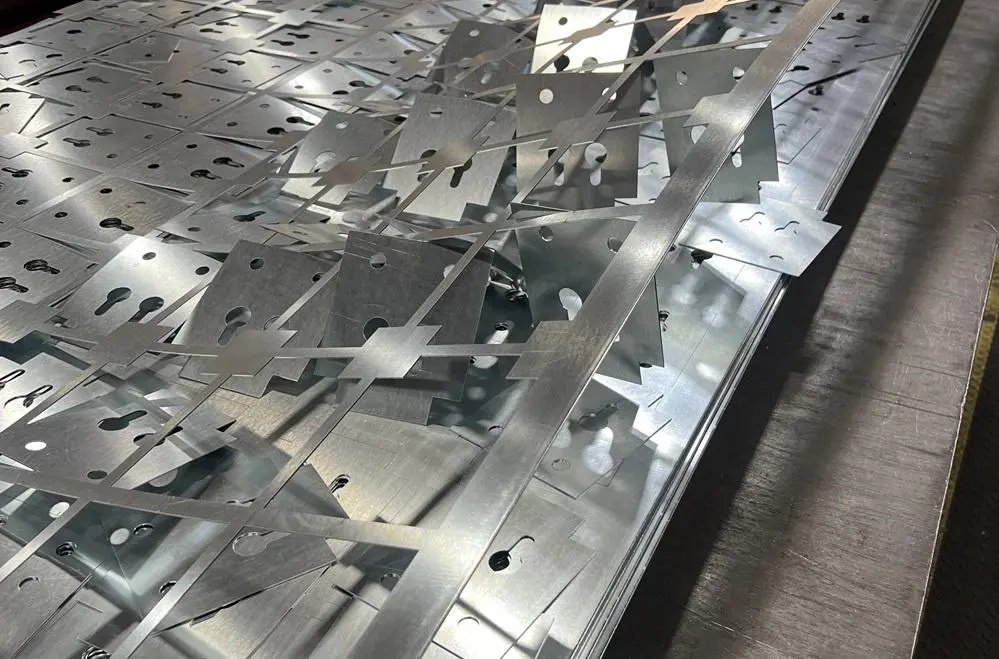
Compressed air wins on velocity and margin. The 89.5% hourly Opex reduction applies directly to production cost per part, and the 6-month payback is faster than most equipment financing terms.
2. Heavy plate and cosmetic stainless
An on-site PSA nitrogen generator produces 99.999% purity nitrogen at $0.15–$0.25 per m³, still 60%–75% below bulk liquid pricing. For shops cutting above 6mm stainless where oxide-free edges are mandatory, the PSA generator is the correct investment.
3. Hybrid approach
Many shops run compressed air on carbon steel and non-cosmetic work while keeping a small liquid nitrogen backup for cosmetic stainless. The auxiliary air package still pays back in under 12 months, and the nitrogen invoice drops by 70%–80%.
Ⅹ. Frequently Asked Questions
Does compressed air cutting affect paint and powder coat adhesion?
Dry filtered air at ISO 8573-1 Class 1 produces a cut edge comparable to nitrogen on carbon steel and non-cosmetic stainless. Paint and powder coat adhesion is not affected when the air purity chain is properly maintained. Moisture or oil carryover is the actual risk, not the air itself.
What air pressure and air purity are required for fiber laser air assist?
Pressure: 18–25 bar at the nozzle. Purity: ISO 8573-1 Class 1 for oil and moisture, with particulate filtration down to 0.01 micron. Standard 8-bar shop air cannot meet either requirement without a dedicated high-pressure package and 4-stage filtration.
How quickly does a dedicated high-pressure air package pay for itself?
Double-shift operation at 2,000 cutting hours per year pays back the $26,000 turnkey package in 6.1 months. Single-shift at 1,000 hours pays back in 12.2 months. High-production at 3,500 hours pays back in 3.5 months.
Can existing factory shop air be boosted for fiber laser cutting?
Technically yes, but a piston booster on 8-bar shop air introduces oil carryover that contaminates the protective lens within days. The repair cost over one year typically exceeds the price difference between a booster and a dedicated high-pressure air package.
Ⅺ. Commercial Verdict & Executive Recommendation
Laser cutting gas cost is not a fixed operating expense. It is a capital decision disguised as an invoice. A shop paying $57,000 per year for nitrogen is financing a cryogenic supply chain instead of owning an auxiliary air package.
The payback math is not close. Double-shift shops recover the package in 6.1 months. Single-shift shops recover it in 12.2 months. Over five years, the net cash advantage ranges from $127,500 to more than $400,000 depending on utilization.
Run the numbers on your own gas invoices. If your monthly nitrogen bill exceeds $2,500, the auxiliary air decision is already overdue.
References
- U.S. Department of Energy — Industrial Compressed Air Systems & Best Practices, Office of Manufacturing and Energy Supply Chains
- ISO 8573-1:2010 — Compressed air — Part 1: Contaminants and purity classes, International Organization for Standardization (ISO OBP)
- IRS Section 179 — Election to Expense Certain Depreciable Business Assets, Internal Revenue Service
- 29 CFR 1910.176 — Handling materials — general, Electronic Code of Federal Regulations (eCFR)
Further Reading
- Laser Cutter Cost Per Hour: The Full Operating Ledger — Your baseline hourly cost before the gas decision.
- In-House vs Outsourcing Laser Cutting: Cost & ROI — The break-even point between self-cutting and subcontracting.
- Laser Automation ROI: Payback, Pallet Changers & Loading Systems — How automation compresses the hourly cost further.
- Fiber Laser Financing: 2026 Equipment Lease vs Buy — Monthly payment structures and Section 179 treatment.





