
Every laser cutting machine needs assist gas. And for most metal fabricators, assist gas is the single largest operating cost after labor. A shop cutting carbon steel with nitrogen can easily spend $3,000 to $5,000 per month on gas alone. That is $36,000 to $60,000 a year, every year, for as long as the machine runs.
Now consider this: a dedicated air compressor for laser cutting costs between $8,000 and $15,000. It is a one-time purchase. Once installed, it produces compressed air for a few dollars per hour in electricity. For carbon steel under 6mm, that compressed air can replace nitrogen entirely. The math is not complicated. The air compressor pays for itself in months, and then it keeps saving you money for years.
At WSL Laser, we position the air compressor as the highest-return optional accessory you can add to a fiber laser cutting machine. This article explains the investment logic, the numbers, and what to look for in a system that protects your machine.
Ⅰ. The Gas Cost Problem
1. Nitrogen Is a Quiet Profit Killer
Nitrogen is the default assist gas for many fabricators because it produces a clean, bright cut edge. But nitrogen is expensive. The gas itself costs money. The bulk tank costs rent. The liquid boils off even when the machine is idle. Delivery fees add up. In a high-volume shop, nitrogen can consume 15 to 25 percent of the machine’s total operating budget.
This is not a problem for every application. Stainless steel and aluminum require nitrogen to prevent oxidation. But carbon steel is a different story. Under 6mm, carbon steel cuts perfectly well with compressed air. The edge is slightly darker, but for parts that will be painted, coated, or welded, that difference rarely matters.
2. The Compressed Air Alternative
Compressed air for laser cutting is essentially free at the point of use. The air itself costs nothing. The only cost is the electricity to run the compressor. A 15kW compressor running at full load consumes about 15 kilowatt-hours per hour. At $0.12 per kWh, that is $1.80 per hour. The same cutting job on nitrogen might cost $18 to $25 per hour in gas.
Beyond direct gas savings, air assist delivers another massive operational advantage: cutting speed. On 1mm to 4mm carbon steel, compressed air cuts two to three times faster than oxygen assist, matching nearly 90% of nitrogen speed at a fraction of the cost. This turns the value proposition from simple cost saving into a genuine throughput upgrade.
The savings per hour are dramatic. The savings per year are transformative. A shop running 2,000 cutting hours per year can save $30,000 to $45,000 annually by switching carbon steel work from nitrogen to compressed air. The laser cutting gas cost drops from a recurring invoice to a predictable utility bill. The compressor system pays for itself in four to six months.
A note on edge quality: air cutting on carbon steel produces a light oxide layer on the cut face. This is acceptable for parts that will be painted, powder coated, or welded without demanding bright-metal aesthetics. For applications that require a completely oxide-free edge, the machine can still switch back to nitrogen at any time. The air system does not eliminate nitrogen; it eliminates the unnecessary use of nitrogen on work that does not need it.
Ⅱ. What a Laser-Grade Compressor System Actually Costs
1. The System, Not Just the Compressor
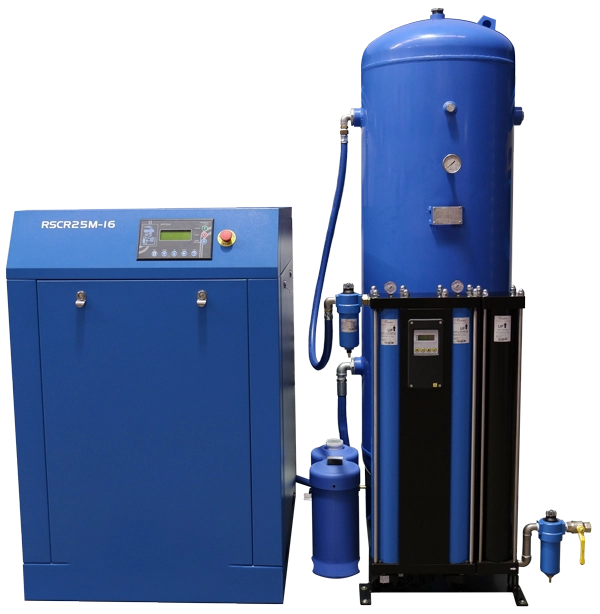
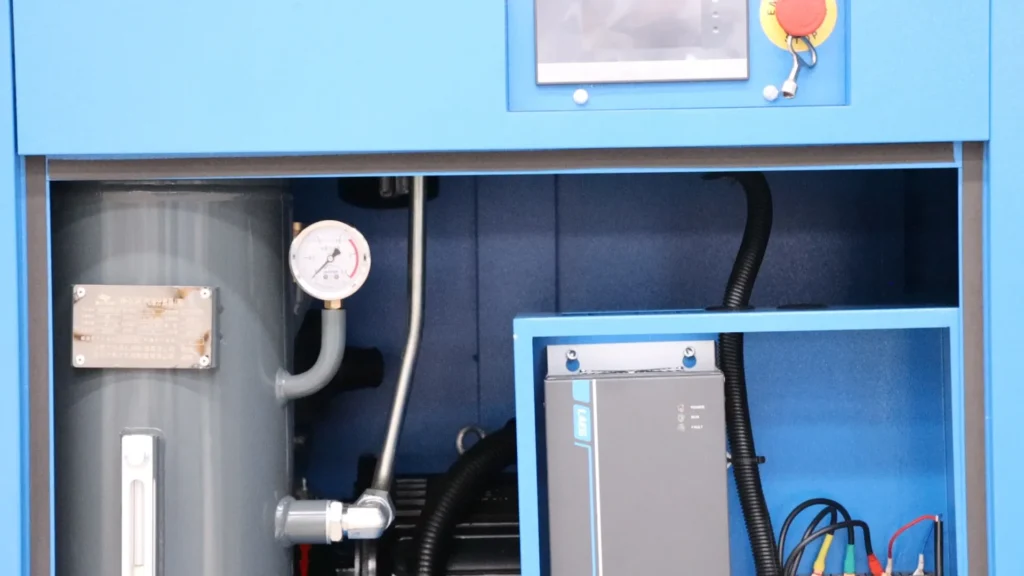
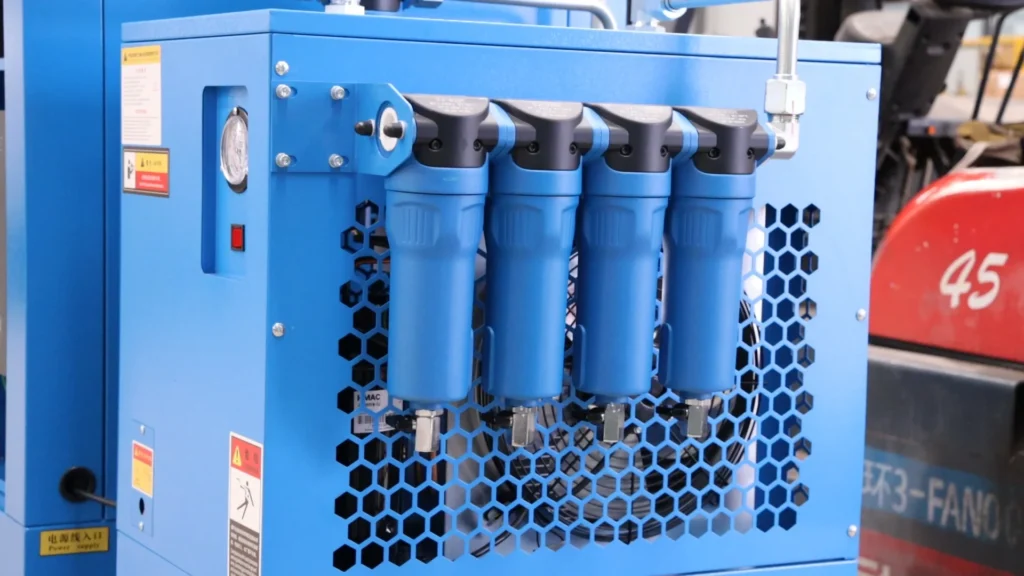
A laser-grade air system is more than a compressor. It includes a refrigerated dryer, a desiccant dryer, multi-stage filtration, and an air receiver tank. The compressor alone is not enough. Moisture and oil in the air will destroy protective lenses and degrade cut quality.
A complete system configured for a single laser cutting machine typically falls in this range:
| Component | Typical Cost | Function |
|---|---|---|
| 15kW Screw Compressor | $5,000–$8,000 | Produces 1.3 m³/min at 16 bar |
| Refrigerated Dryer + Desiccant Dryer | $1,500–$3,000 | Achieves -40°C dew point |
| Multi-Stage Filtration | $500–$1,000 | Removes oil and particulates to 0.01 µm |
| 350L Air Receiver Tank | $300–$600 | Buffers pressure during pierce cycles |
| Installation and Piping | $500–$1,500 | Connects to the machine |
| Total System | $8,000–$15,000 | One-time investment |
This is the total cost. There is no recurring rental, no delivery fee, no boil-off loss. Once the system is installed, the only ongoing cost is electricity and periodic filter replacement.
2. Two Configurations for Typical Shops
WSL Laser recommends two standard configurations depending on machine power and production volume.
The 15kW configuration is matched to 4kW to 6kW fiber laser cutting machines. It delivers 1.3 m³/min at 16 bar maximum pressure, with a 350-liter air receiver. This is the sweet spot for shops cutting thin to medium carbon steel sheet. The compressor and dryer package is compact, air-cooled, and sized for single-machine operation.
The 22kW configuration delivers 2.1 m³/min at 16 bar and is intended for higher-power machines or shops running multiple laser systems. The larger volume flow rate ensures stable pressure even during peak demand, such as rapid pierce cycles when cutting thick plates with high-power lasers.
Both configurations are built around the same quality standard: oil content at the system terminal below 0.003 ppm, dust content below 0.01 micron, and a pressure dew point of -40°C or lower. These are not optional requirements. They are the difference between air that protects your cutting head and air that destroys it.
Ⅲ. The Payback Calculation
1. A Realistic Example
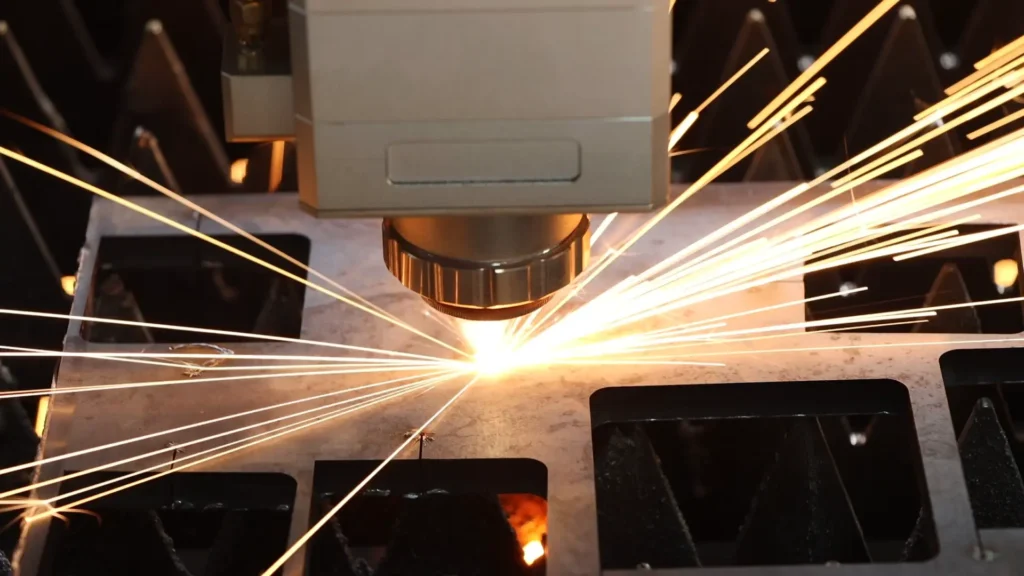
Take a mid-sized fabrication shop cutting 3mm carbon steel on a 6kW fiber laser. The shop runs 2,000 cutting hours per year. On nitrogen, the assist gas costs $18 per hour. On compressed air, the electricity cost is $1.80 per hour.
| Line Item | Nitrogen | Compressed Air |
|---|---|---|
| Hourly gas cost | $18.00 | $1.80 |
| Annual gas cost (2,000 hrs) | $36,000 | $3,600 |
| Annual savings | — | $32,400 |
| Compressor system cost | — | $12,000 |
| Payback period | — | 4.5 months |
After the payback period, the savings continue. Every year the shop keeps $30,000 or more that would have gone to the gas supplier. That money falls directly to the bottom line.
2. Even Faster Payback for Multi-Shift Shops
The payback accelerates for shops running two or three shifts. A two-shift operation doubles the cutting hours and doubles the savings. The same $12,000 compressor system pays for itself in just over two months. A three-shift operation pays for it even faster.
This is why the air compressor is the first accessory I recommend to any shop cutting carbon steel. For contract manufacturers looking to maintain a competitive edge in sheet metal cutting, it is not an optional extra—it is a direct margin builder.
Ⅳ. Air Quality and Machine Protection
1. Why Cheap Air Destroys Expensive Machines
The biggest mistake a buyer can make is connecting a laser cutting machine to a standard shop air line. Standard shop air contains water vapor, oil vapor, and solid particulates. Each one damages the machine in a specific way.
Water vapor condenses in the cutting head and causes thermal lensing, which shifts the focal point and ruins cut quality. Oil vapor coats the protective window, absorbs laser energy, and cracks the lens. Solid particles scratch optical surfaces and clog nozzles.
The repair bill from contaminated air can exceed the cost of a proper compressor system. A cracked protective window stops production. A contaminated optical path requires professional cleaning. In the worst case, the cutting head must be replaced. The “savings” from skipping the air system disappear with the first major repair.
2. The WSL Laser Specification
WSL Laser specifies air systems that meet the following requirements:
| Parameter | Requirement |
|---|---|
| Maximum pressure | 16 bar |
| Oil content at terminal | ≤ 0.003 ppm |
| Dust content at terminal | ≤ 0.01 µm |
| Pressure dew point | -40°C or lower |
| Air receiver capacity | 350 liters |
These specifications protect the machine, extend the life of protective lenses, and keep cut quality consistent. The compressor is a one-time purchase. The protection it provides lasts for the life of the machine.
Ⅴ. FAQ: Air Compressor for Laser Cutting
1. Is the air compressor worth it if I only cut stainless steel?
No. Stainless steel requires nitrogen to prevent oxidation and preserve corrosion resistance. Compressed air on stainless steel produces a black, oxidized edge that is unacceptable for most applications. If your work is primarily stainless steel, the air compressor will not replace nitrogen, and the investment logic changes.
2. How long does the compressor system last?
A quality screw compressor with proper maintenance lasts 10 to 15 years in industrial service. The dryer and filters require periodic element replacement, but the core compressor unit is a mature, reliable technology. Spread the purchase cost over a decade, and the annual cost is trivial.
3. Can I use my existing shop compressor?
Probably not, unless it was sized and configured for laser-grade air. Standard shop compressors produce air that is too wet and too oily for a laser cutting head. You can use the existing compressor as a pre-stage, but you will still need to add a desiccant dryer and multi-stage filtration. In most cases, a dedicated system is the better investment.
4. What happens if I skip the air dryer?
Moisture condenses in the cutting head and causes thermal lensing. The focal point shifts, cut quality drops, and the protective window fogs. Over time, the moisture corrodes internal components. The cost of a dryer is a fraction of the cost of the damage it prevents.
5. How do I know what size compressor I need?
For a single 4kW to 6kW laser cutting machine, a 15kW compressor delivering 1.3 m³/min at 16 bar is sufficient. For higher-power machines or multiple machines, a 22kW unit delivering 2.1 m³/min provides additional capacity. WSL Laser specifies the correct system for each machine configuration before delivery.
Ⅵ. Conclusion: The Best Optional Extra You Will Ever Buy
An air compressor is not the most exciting purchase in a laser cutting investment. The laser source gets the attention. The cutting head gets the technical admiration. The software gets the demo. But the air compressor is the accessory that quietly pays for itself in months and then keeps saving money for a decade.
At WSL Laser, we offer the air compressor as a factory-configured option because we know what it does for our customers’ profitability. It turns a recurring gas expense into a one-time capital purchase. It protects the machine from the most common cause of cutting head failure. And it keeps paying back long after the initial investment is forgotten.
If you are buying a fiber laser for carbon steel work, configure the air system from day one. The math is already done. The only question is how soon you want to start saving.
References
- ISO 8573-1: Compressed air — Part 1: Contaminants and purity classes, International Organization for Standardization, 2010.
- Industrial air compressor system design for laser cutting applications, Atlas Copco, 2022.
- Compressed air system economics and energy efficiency, U.S. Department of Energy, 2021.