
Table of Contents
Ⅰ. Introduction
The heavy construction and infrastructure sectors demand manufacturing technologies capable of processing thick-section structural steels with precision, efficiency, and verified structural integrity. Structural steel laser processing has emerged as the definitive solution for fabricating components ranging from bridge girders and wind turbine towers to high-rise building frames and offshore platforms. The global laser processing market is estimated at USD 21.00 billion in 2025 and is forecast to expand at a CAGR of 5.1%, reaching USD 36.30 billion by 2036. Within this expansion, laser cutting systems for structural fabrication and laser welding systems for heavy-duty joining represent the fastest-growing segments.
Ⅱ. Laser Physics and Equipment Architecture for Heavy Industry
Understanding the photonic interaction mechanisms behind structural steel laser processing is essential for selecting optimal system configurations in heavy fabrication environments.
- High-Power Fiber Laser Architecture
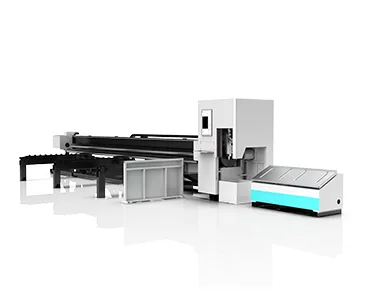
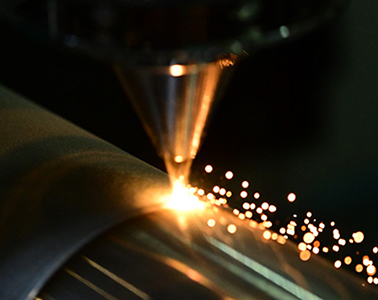
Fiber lasers operate at a 1.07 µm wavelength with electrical-to-optical efficiency of 20–30%—four to six times higher than traditional CO₂ systems. For structural steel applications, high-power fiber lasers from 6 kW to 30 kW enable cutting of carbon steel plate up to 60 mm thick and stainless steel up to 40 mm. The shorter wavelength is more easily absorbed by metals, delivering higher cutting acceleration and maximum cutting speed on thick plates.
- Multi-Axis Motion Systems for Complex Geometries
Modern structural steel laser processing platforms incorporate 5-axis and 6-axis motion systems with bevel heads capable of ±45° rotation and tilt. These systems execute V, Y, X, and K groove configurations directly on thick plate, eliminating secondary grinding operations.
Ⅲ. Laser Cutting Processes for Construction Thick Plates and Heavy Profiles
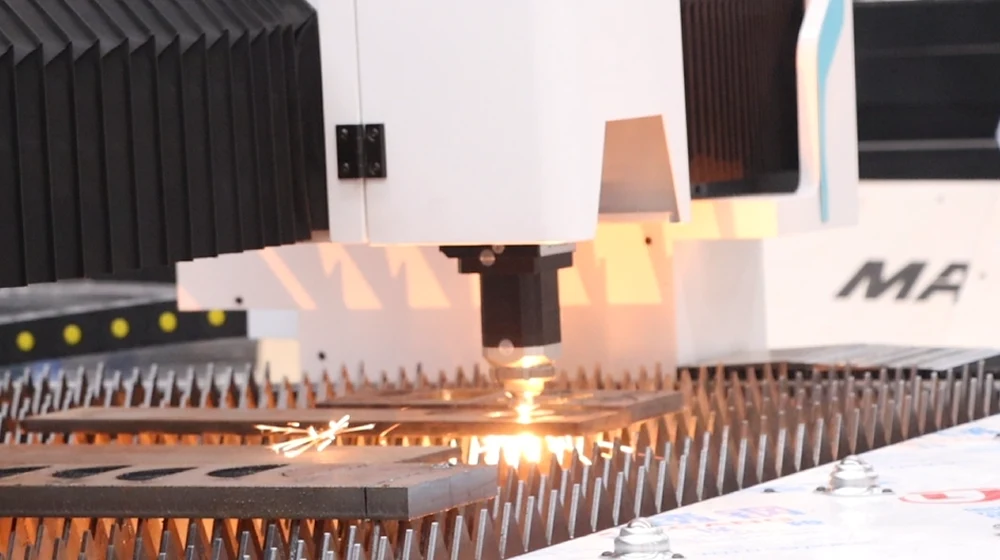
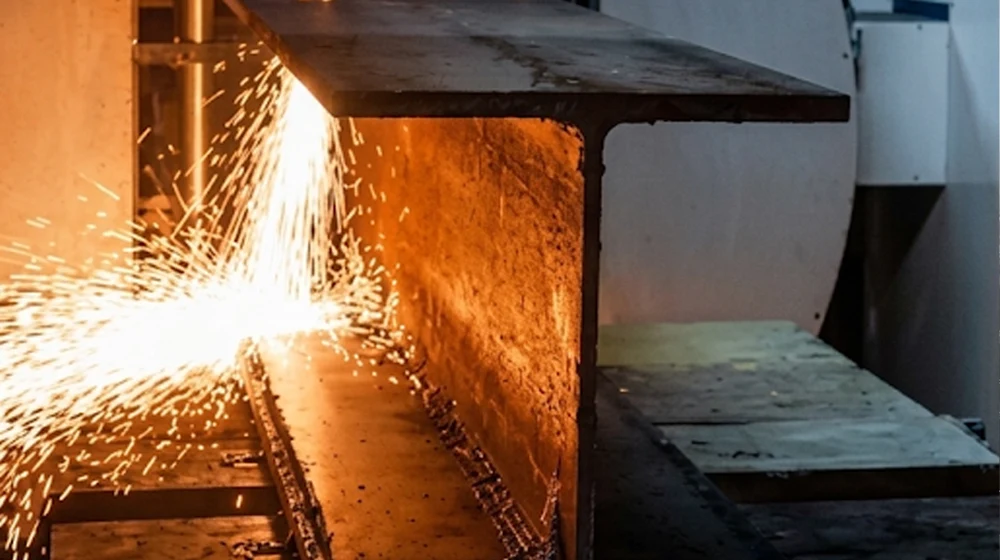
Structural steel laser processing delivers transformative advantages over plasma and oxy-fuel cutting in heavy fabrication workflows.
- Precision Cutting of S355 and High-Strength Steels
Research on fiber laser cutting of S355JR structural steel confirms that optimized parameters achieve dimensional deviations as low as 0.096 mm on 6 mm thick plate. The study further demonstrates that increasing laser power and cutting speed reduces surface roughness, while excessive auxiliary gas pressure degrades edge quality. Optimal parameters for 4 mm S355JR are 3 kW power, 2900 mm/min speed, and 0.4 bar oxygen pressure; for 6 mm, 3.9 kW, 3240 mm/min, and 0.55 bar.
- 3D Bevel Cutting for Weld Preparation
3D bevel cutting technology enables direct preparation of weld grooves on thick plate in a single pass. For structural steel applications, bevel angles of ±45° on mild steel up to 40 mm thick eliminate post-process grinding and reduce fit-up time by 55%. The X bevel—essential in shipbuilding and railway component manufacturing—allows single-side welding of plates up to 37 mm thick with superior root quality.
Table 1: Fiber Laser Cutting Parameters for Structural Steel Grades
| Grade | Thickness (mm) | Laser Power (kW) | Cutting Speed (mm/min) | Assist Gas | Kerf Taper (mm) | HAZ Depth (µm) |
|---|---|---|---|---|---|---|
| S355JR | 4 | 3.0 | 2900 | O₂ 0.4 bar | 0.148 | 33 |
| S355JR | 6 | 3.9 | 3240 | O₂ 0.55 bar | 0.103 | 206 |
| S275 | 12.7 (0.5″) | 6–12 | 1500–2500 | O₂ / N₂ | <0.3 | 300–500 |
| A36 | 25–40 | 12–20 | 800–1500 | O₂ | <0.5 | 500–800 |
Ⅳ. Laser Welding Processes for Long-Span/Heavy-Duty Joints in Steel Structures
Joining thick-section structural steel has historically relied on multi-pass submerged arc welding (SAW), a process requiring numerous weld passes with high heat input and significant distortion. Structural steel laser processing introduces laser-hybrid welding as a transformative alternative.
- Laser-Hybrid Welding for Thick-Section Joints
Laser-hybrid welding combines high-power laser beam energy with conventional arc processes in a common process zone. Research at RWTH Aachen University demonstrates that the laser beam submerged arc hybrid welding process (LUPuS Hybrid) can join structural steel up to 50 mm thick using the layer-counterlayer technique in just two weld passes—compared to five to six passes with conventional SAW. When comparing SAW welded 25 mm thick steels in five to six layers against single-pass laser hybrid welding, welding time can be reduced by more than 80% and filler material costs saved up to 90%.
- Electromagnetic Weld Pool Support for Single-Pass Thick Welds
A critical challenge in thick-section laser welding is molten pool sagging due to gravity. Researchers have developed contactless electromagnetic backing based on externally applied AC magnetic fields, where eddy currents generate an upward-oriented Lorentz force to counteract droplet sagging. This innovation enables single-pass welding of structural steels up to 30 mm thick with a 20 kW fiber laser system, while increasing gap bridgeability to 2 mm.
- Metallurgical Integrity and Mechanical Performance
The microstructure of laser-hybrid welded joints plays a critical role in determining mechanical performance. Research demonstrates that acicular ferrite predominates as the primary component of the weld metal in hybrid laser-arc welding of HSLA-65 steel, contributing to enhanced strength and toughness. Fine equiaxial dendrites exhibit smaller grain sizes than columnar dendrites, further enhancing joint strength by obstructing dislocation movement.
Table 2: Welding Process Comparison for Thick Structural Steel
| Process | Passes for 25 mm | Heat Input | Distortion | Filler Consumption | Welding Time | Gap Tolerance |
|---|---|---|---|---|---|---|
| SAW (Conventional) | 5–6 | Very high | High | 100% (baseline) | 100% (baseline) | ±1 mm |
| Laser-Hybrid | 1–2 | Low | Minimal | 10–20% | <20% | ±2 mm |
| LUPuS Hybrid (50 mm) | 2 | Moderate | Low | 15–25% | <25% | ±1.5 mm |
Ⅴ. Digital Workshop and BIM Workflow Integration
Modern structural steel laser processing extends beyond the machine tool to encompass full digital workflow integration.
- From Digital Model to CNC Fabrication
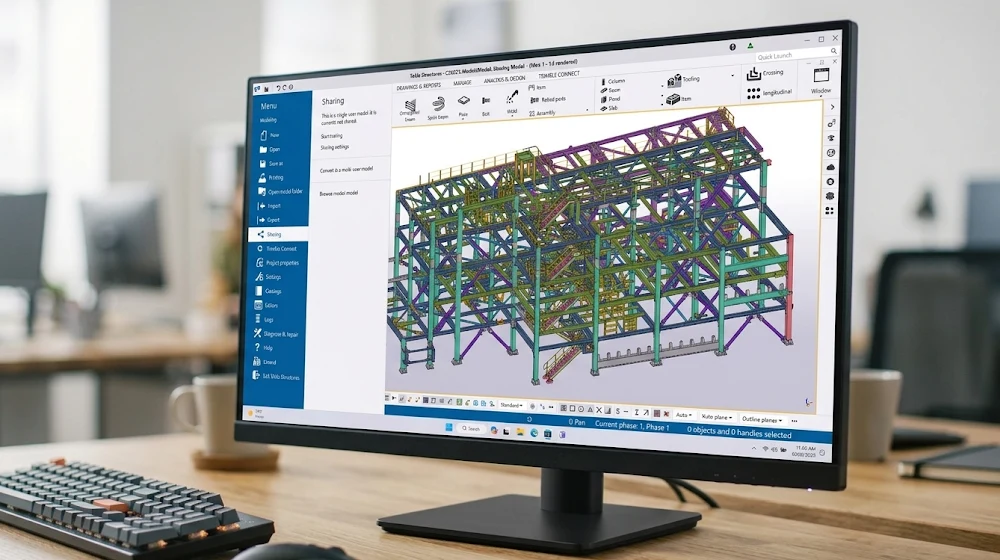
Building Information Modeling (BIM) software such as Tekla Structures and Autodesk Inventor exports fabrication data directly to CNC laser cutting machines. This eliminates transcription errors and ensures that structural components—from IPE 300 beams with precisely located bolt holes to complex gusset plates—are fabricated with tolerances of ±2 mm without manual interpretation. The BIM-to-CNC pipeline compresses project timelines from months to weeks while maintaining full traceability from design intent to finished component.
- Automated Nesting and Material Optimization
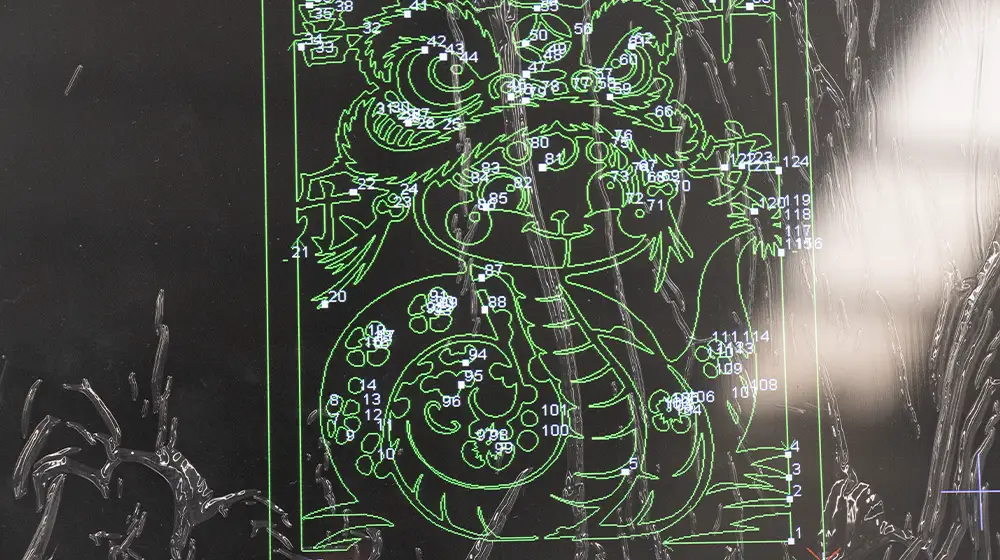
Advanced CAM software integrated with structural steel laser processing platforms optimizes plate nesting, reducing material waste by up to 30% compared to manual layout methods. Real-time production monitoring through Manufacturing Execution Systems (MES) enables dynamic scheduling and predictive maintenance, maximizing equipment utilization in heavy fabrication environments.
Ⅵ. Quality Inspection, Standards, and Safety Regulations
Structural components must meet stringent international standards to ensure lifetime performance and safety.
- Edge Quality Classification per ISO 9013
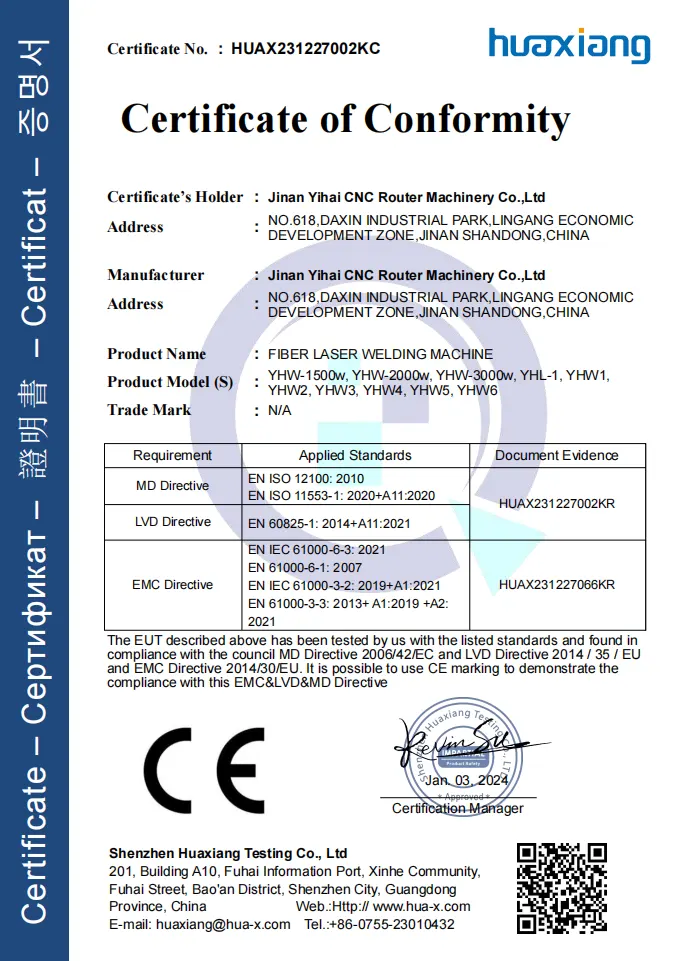
Laser-cut edges for structural applications are classified under ISO 9013:2017, with Grade 3 typically acceptable for construction and HVAC applications where weldability and structural integrity are primary concerns. For critical load-bearing connections, Grade 2 or higher is specified to ensure minimal post-cut preparation. AWS D1.1 (North America) and EN 1090 (Europe) provide complementary requirements for structural welding and fabrication execution classes. Click here to learn more about WSL’s quality control processes.
- Non-Destructive Testing and Weld Quality Verification
Laser-hybrid welded joints in structural steel undergo ultrasonic testing (UT), radiographic inspection (RT), and magnetic particle examination (MT) per ISO 17640 and EN 12062. The narrow, consistent weld profiles produced by laser-hybrid processes simplify inspection protocols while delivering defect rates significantly lower than conventional multi-pass SAW.
Table 3: International Standards for Structural Steel Laser Processing
| Standard | Region | Scope | Execution Class | Applicable Process |
|---|---|---|---|---|
| ISO 9013:2017 | International | Thermal cutting quality | Grade 1–4 | Laser cutting, plasma, oxy-fuel |
| AWS D1.1 | North America | Structural welding code | N/A | Laser-hybrid welding |
| EN 1090-1 | Europe | Steel structure execution | EXC 1–4 | Full fabrication chain |
| EN 1090-2 | Europe | Technical requirements | EXC 1–4 | Cutting, welding, drilling |
| DIN EN ISO 3690 | International | Hydrogen content in welds | N/A | Laser-hybrid, SAW |
| ISO 17640 | International | Ultrasonic testing of welds | N/A | All fusion welding |
Ⅶ. FAQ
Q1: What thickness range can fiber lasers cut in structural steel applications?
A: Modern high-power fiber lasers cut carbon steel up to 60 mm and stainless steel up to 40 mm. For heavy structural fabrication, 12–20 kW systems typically handle 25–40 mm plate at production speeds, while 30 kW systems extend capability to 60 mm and beyond.
Q2: How does laser-hybrid welding compare to conventional SAW for thick structural joints?
A: Laser-hybrid welding reduces welding time by over 80% and filler material costs by up to 90% compared to multi-pass SAW. The process achieves comparable or superior mechanical properties with significantly lower heat input and distortion.
Q3: Is 3D bevel cutting accurate enough for structural weld preparation without grinding?
A: Yes. Modern 3D bevel laser cutting achieves angle consistency within ±1° and reduces post-process grinding time by 62%. The narrow heat-affected zone improves subsequent welding results compared to plasma or oxy-fuel beveling.
Q4: What BIM software integrates with structural steel laser processing equipment?
A: Tekla Structures, Autodesk Inventor, and Advance Steel export CNC files directly to laser cutting and drilling machines. This BIM-to-CNC integration eliminates manual data entry, reduces errors, and maintains full component traceability.
Q5: Does laser cutting compromise the metallurgical properties of structural steel?
A: When parameters are optimized, the heat-affected zone remains minimal—typically 26–230 µm depending on thickness and speed. Research on S355JR confirms that properly optimized fiber laser cutting preserves base material tensile strength and weldability.
Ⅷ. Conclusion
Structural steel laser processing has fundamentally redefined the economics and capabilities of heavy fabrication. By replacing multi-pass arc welding with single-pass laser-hybrid technology, eliminating secondary grinding through integrated 3D bevel cutting, and connecting design intent directly to CNC fabrication via BIM workflows, these photonic technologies address the construction industry’s most demanding challenges. As the global laser processing market accelerates toward USD 36.30 billion by 2036, manufacturers who integrate high-power cutting, hybrid welding, and digital workflow platforms will secure decisive competitive advantages in infrastructure, energy, and heavy machinery sectors. At WSLLASER, our CE/ISO-certified fiber laser systems deliver exactly this transformative capability—engineered for structural precision, built for heavy-duty reliability, and backed by 17 years of industrial expertise.