
There is a problem that shows up in laser cutting shops about three months after the machine is installed. The machine is fast. The parts are accurate. The customers are happy. But the gas bill has become a line item that the owner cannot stop thinking about.
Liquid nitrogen is not cheap. It arrives by truck, sits in a rented tank outside the building, and boils away whether the machine is cutting or not. Every month, the invoice comes in, and every month it is bigger than expected. This is the laser cutting gas cost problem, and it is one of the most controllable expenses in the entire operation.
This article is not about gas physics. It is about money. It compares liquid nitrogen and compressed air as assist gases for laser cutting, and shows you exactly where the savings come from, how fast they add up, and what you need to do to capture them without destroying your cutting head.
At WSL Laser, we work with fabricators who have cut their gas bills by 60 to 75 percent. The change does not require a new machine. It requires a new way of thinking about gas.
Ⅰ. Breaking Down the Real Laser Cutting Gas Cost
1. What Nitrogen Actually Costs per Hour
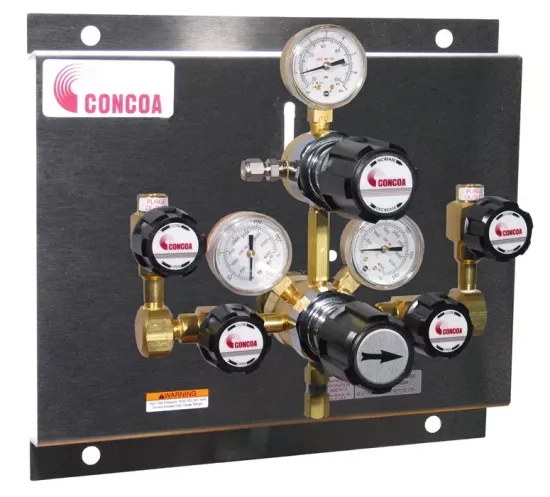
Liquid nitrogen is the default assist gas for many laser cutting shops because it produces a clean, bright edge. But the cost per cutting hour is rarely calculated honestly. The invoice shows the price per liter or per kilogram. It does not show the tank rental, the delivery fee, the boil-off loss, or the time the machine spends idle while still consuming gas during pierce cycles.
A 6kW fiber laser cutting stainless steel with nitrogen typically consumes 35 to 50 cubic meters of nitrogen per hour. Depending on regional pricing and delivery infrastructure, the true cost per cutting hour lands between $15 and $30. A shop running 2,000 cutting hours per year is spending $30,000 to $60,000 annually on nitrogen alone.
This is the number that matters. Not the price per liter. The price per hour.
2. What Compressed Air Costs per Hour
Compressed air is generated on-site. The air itself is free. The cost is the electricity to run the compressor, plus the amortized cost of the compressor system. A 15kW screw compressor running at full load consumes about 15 kilowatt-hours per hour. At $0.12 per kWh, that is $1.80 per hour.
Even with dryer and filtration electricity included, the hourly cost of compressed air rarely exceeds $3 to $5. Compare that with $15 to $30 for nitrogen, and the gap is immediate.
| Gas Type | Cost per Cutting Hour | Annual Cost (2,000 hrs) |
|---|---|---|
| Liquid Nitrogen | $15–$30 | $30,000–$60,000 |
| Compressed Air | $2–$5 | $4,000–$10,000 |
| Annual Difference | — | $20,000–$50,000 |
This is not a small optimization. This is the difference between a profitable machine and a machine that barely covers its costs.
Ⅱ. Where Air Cutting Works, and Where It Does Not
1. Carbon Steel: The Air Cutting Sweet Spot
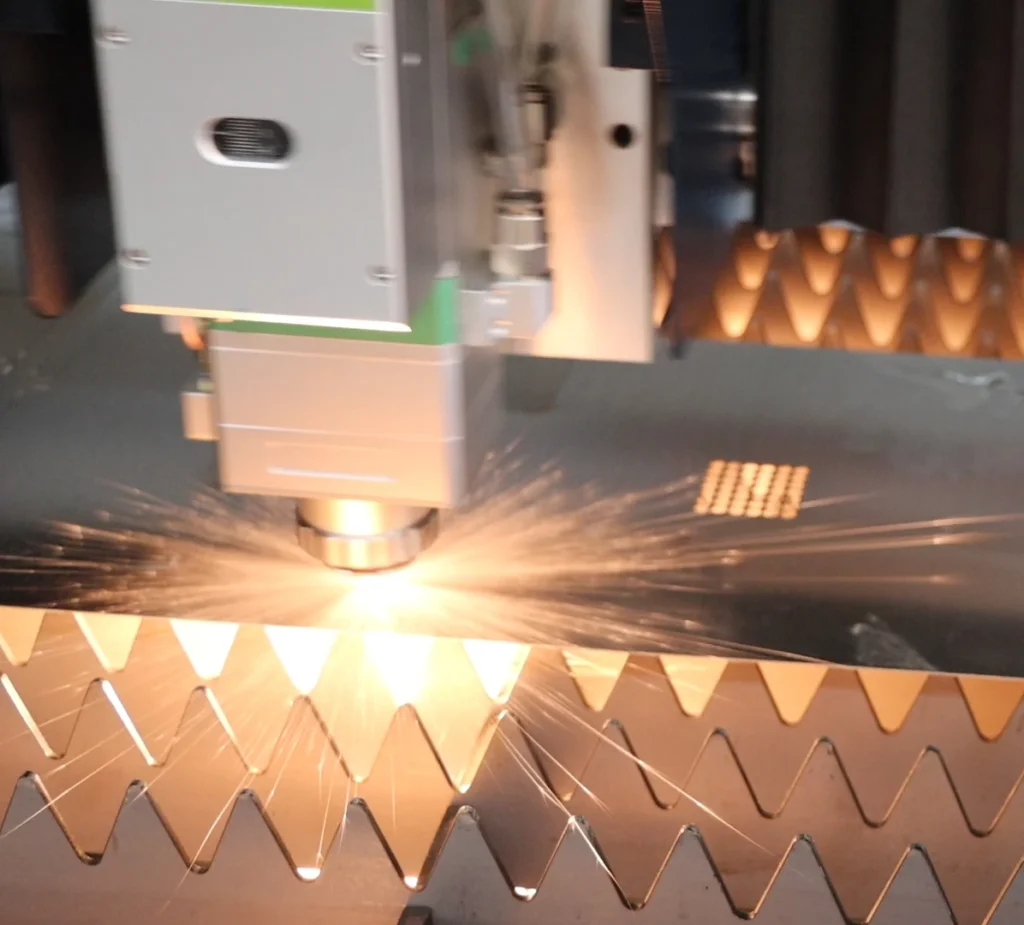
For carbon steel under 6mm, compressed air is a direct replacement for nitrogen. The cut speed is comparable, often within 90 percent of nitrogen speed, and far faster than oxygen cutting on thin sheet. The edge has a light oxide layer, but this is irrelevant for parts that will be painted, powder coated, or welded.
The savings apply immediately. A shop cutting 3mm carbon steel for brackets, enclosures, and structural components can move that work from nitrogen to air and cut its gas bill dramatically. The machine does not change. The part does not change. Only the gas bill changes.
2. Stainless Steel and Aluminum: Nitrogen Remains Necessary
Stainless steel and aluminum are different. These materials require nitrogen to prevent oxidation and preserve corrosion resistance. Compressed air on stainless steel produces a black, burned edge that is unacceptable for most applications. On aluminum, the results are similarly problematic.
The smart strategy is not to eliminate nitrogen. It is to stop wasting nitrogen on materials that do not need it. A mixed-production shop can use compressed air for carbon steel work and reserve nitrogen for stainless and aluminum. This hybrid approach captures most of the savings without compromising quality on the jobs that demand it.
Ⅲ. The Air Compressor Investment
1. What a Laser-Grade Air System Costs
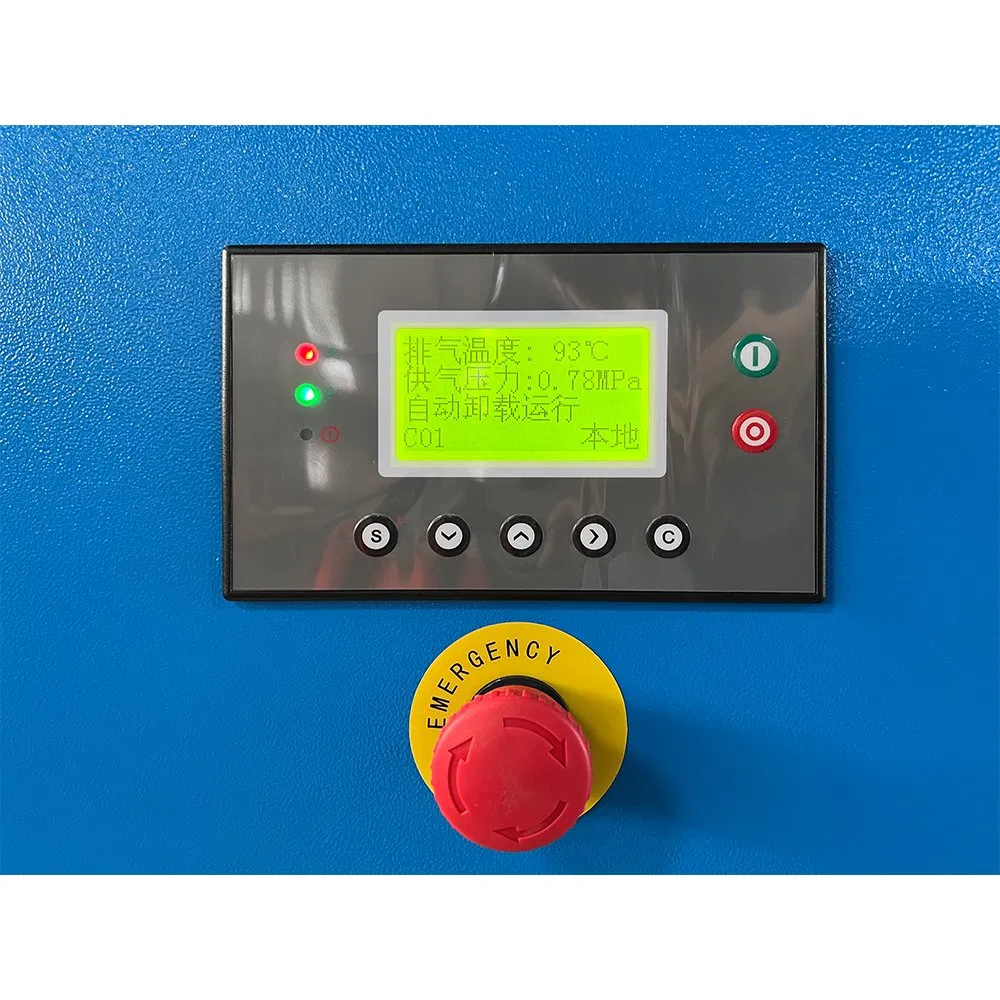
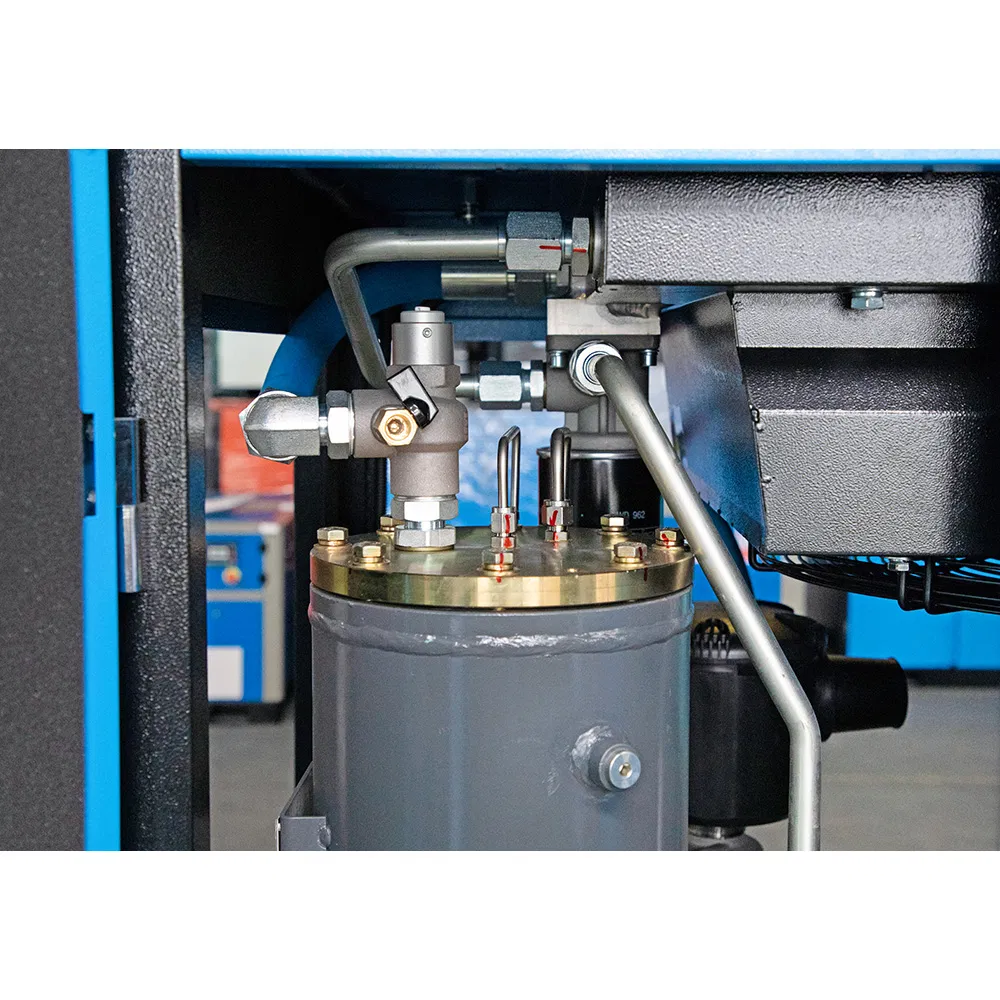
A laser-grade compressed air system includes more than a compressor. It includes a refrigerated dryer, a desiccant dryer, multi-stage filtration, and an air receiver tank. The complete system for a single laser cutting machine typically costs between $8,000 and $15,000.
The table below breaks down the components:
| Component | Typical Cost | Function |
|---|---|---|
| 15kW Screw Compressor | $5,000–$8,000 | Produces 1.3 m³/min at 16 bar |
| Dryer System | $1,500–$3,000 | Achieves -40°C dew point |
| Multi-Stage Filtration | $500–$1,000 | Removes oil and particulates |
| Air Receiver Tank | $300–$600 | Buffers pressure during pierce cycles |
| Installation and Piping | $500–$1,500 | Connects to the machine |
| Total | $8,000–$15,000 | One-time purchase |
A detailed breakdown of the air compressor for laser cutting investment logic is covered in our equipment guide.
2. The Payback Period
The payback calculation is straightforward. If a shop saves $25,000 per year by moving carbon steel work from nitrogen to compressed air, and the air system costs $12,000, the payback period is less than six months.
After that, the savings continue every year for the life of the compressor, which is typically 10 to 15 years in industrial service. The total savings over a decade can exceed $200,000. This is why the air compressor is not an expense. It is one of the highest-return investments a fabricator can make.
Ⅳ. Protecting Your Machine from Bad Air
1. Why Air Quality Matters
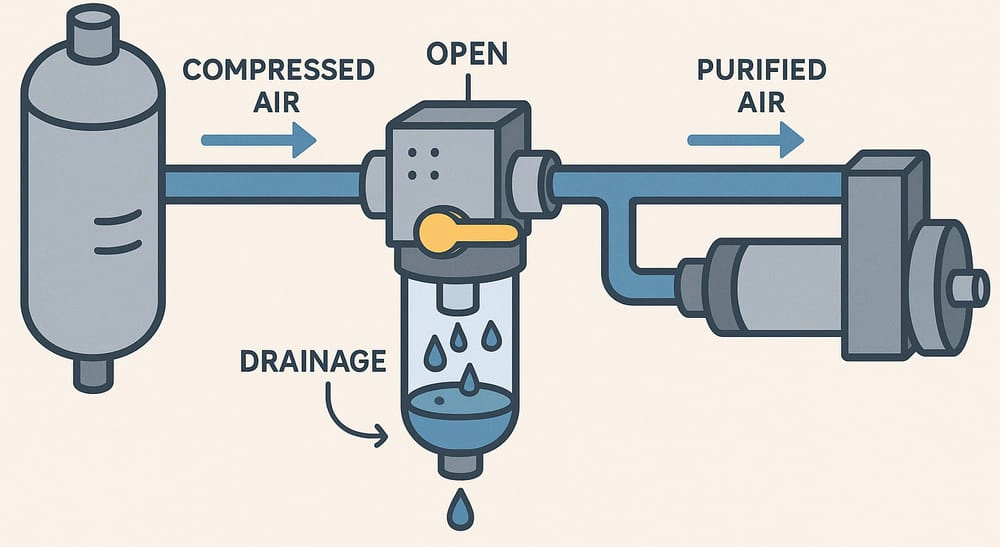
The biggest risk in switching to compressed air is contamination. Standard shop air contains water vapor, oil vapor, and solid particulates. Each one damages the cutting head in a specific way.
Water vapor condenses in the cutting head and causes thermal lensing. Oil vapor coats the protective window and cracks the lens under the laser beam. Solid particles scratch optical surfaces and clog nozzles. A shop that connects a laser cutting machine to a standard shop air line is trading gas savings for repair bills.
2. The Minimum Standards for Laser-Grade Air
WSL Laser specifies compressed air systems that meet these requirements:
| Parameter | Requirement |
|---|---|
| Maximum pressure | 16 bar |
| Oil content at terminal | ≤ 0.003 ppm |
| Dust content at terminal | ≤ 0.01 µm |
| Pressure dew point | -40°C or lower |
| Air receiver capacity | 350 liters |
These standards protect the cutting head, extend the life of protective lenses, and keep cut quality consistent. The air system pays for itself through gas savings. The filtration protects the machine from the air system.
Ⅴ. FAQ: Gas Cost Questions from Business Owners
1. How much can I really save by switching to compressed air?
For a shop cutting primarily carbon steel under 6mm, switching from nitrogen to compressed air typically cuts the assist gas bill by 60 to 75 percent. In dollar terms, a shop running 2,000 cutting hours per year can save $20,000 to $50,000 annually. The exact number depends on your material mix and your local nitrogen pricing.
2. Will compressed air slow down my cutting speed?
No. On thin carbon steel, compressed air cuts nearly as fast as nitrogen, and far faster than oxygen. The speed difference between air and nitrogen on 1–4mm carbon steel is typically less than 10 percent. The edge quality is slightly lower, but for parts that will be painted or welded, the difference rarely matters.
3. What about the edge quality on air-cut parts?
Air cutting produces a light oxide layer on the cut edge. This is acceptable for parts that will be painted, powder coated, galvanized, or welded. For applications that require a bright, oxide-free edge—such as food-grade stainless steel or high-end architectural panels—nitrogen remains the correct choice.
4. How long before the air compressor pays for itself?
For most shops, the payback period is four to eight months. A shop saving $25,000 per year on gas and spending $12,000 on a complete air system recovers its investment in roughly six months. After that, the savings continue for the life of the compressor.
5. Can I use my existing shop compressor?
Probably not. Standard shop compressors produce air that is too wet and too oily for a laser cutting head. You can use the existing compressor as a pre-stage, but you will still need to add a desiccant dryer and multi-stage filtration. In most cases, a dedicated laser-grade system is the better investment.
Ⅵ. Conclusion: Gas Is a Financial Decision
Laser cutting gas cost is not a technical issue for engineers to debate. It is a financial decision that shows up on the income statement every month. The choice between nitrogen and compressed air determines whether the machine is a profit center or a cost burden.
At WSL Laser, we help our customers build a gas strategy that matches their material mix and their margin targets. The shops that get this right stop worrying about the gas bill and start reinvesting the savings into growth. That is the whole point.
References
- ISO 8573-1: Compressed air — Part 1: Contaminants and purity classes, ANSI Webstore.
- Compressed Air Systems, U.S. Department of Energy.
- ISO 8573-1:2010 Standard, ANSI Webstore.