
Purchasing a 12kW or 20kW fiber laser is only half of the capital investment. The true bottleneck for most fabrication shops occurs during the installation phase, when the reality of the facility’s electrical grid, floor load capacity, and thermal management becomes clear. If the power transformer cannot handle the peak kVA draw, or the concrete slab fails under the machine’s static weight, the equipment sits idle while the factory undergoes expensive retrofits.
This facility planning guide breaks down the exact engineering requirements for laser cutter power requirements, transformer sizing, civil foundation prep, and chiller ventilation. It is designed for plant managers and facility engineers who need to prepare the workshop before the rigging truck arrives.
For a broader overview of machine cell integration, including floor clearances and material flow, review our complete CNC laser cutting machine guide.
Ⅰ. Electrical Infrastructure: Laser Cutter Power Requirements & Transformer Sizing
1. Full-system power draw
A common mistake when calculating laser cutter power requirements is sizing the factory transformer based solely on the laser source’s rated cutting power. The true electrical load includes the laser resonator, the dual-circuit water chiller, the high-pressure air compressor (or nitrogen generator), and the fume extraction system.
For a 12kW laser, the resonator and chiller draw roughly 45 kVA. A 20kW source pushes this to 75 kVA. Adding the air compressor (typically 15–25 kW) and extraction (5–7 kW) brings the total connected load to 65 kVA and 105 kVA respectively.
2. The 1.3× safety margin
Utility transformers should never be operated at 100% continuous load, as this causes overheating and premature failure. The industry standard is to apply a 1.3× safety margin. Therefore, a 12kW system requires a 100 kVA dedicated transformer, while a 20kW system requires a 150 kVA transformer. If the factory’s existing service is smaller than this, a step-down transformer or a local utility upgrade is mandatory.Meeting these continuous load thresholds is the first milestone in satisfying overall laser cutter power requirements.
Table 1: Electrical Load Ledger & Transformer Sizing
The ledger below outlines baseline laser cutter power requirements across three common industrial wattages.
| System Power | Resonator & Chiller (kVA) | Compressor & Aux (kVA) | Total Connected Load (kVA) | Recommended Transformer (1.3× Margin) |
|---|---|---|---|---|
| 6 kW | 25 kVA | 15 kVA | 40 kVA | 50 kVA |
| 12 kW | 45 kVA | 20 kVA | 65 kVA | 100 kVA |
| 20 kW | 75 kVA | 30 kVA | 105 kVA | 150 kVA |

Ⅱ. Civil Engineering: Floor Load Capacity & Anti-Vibration Control
1. Dynamic load and concrete specifications
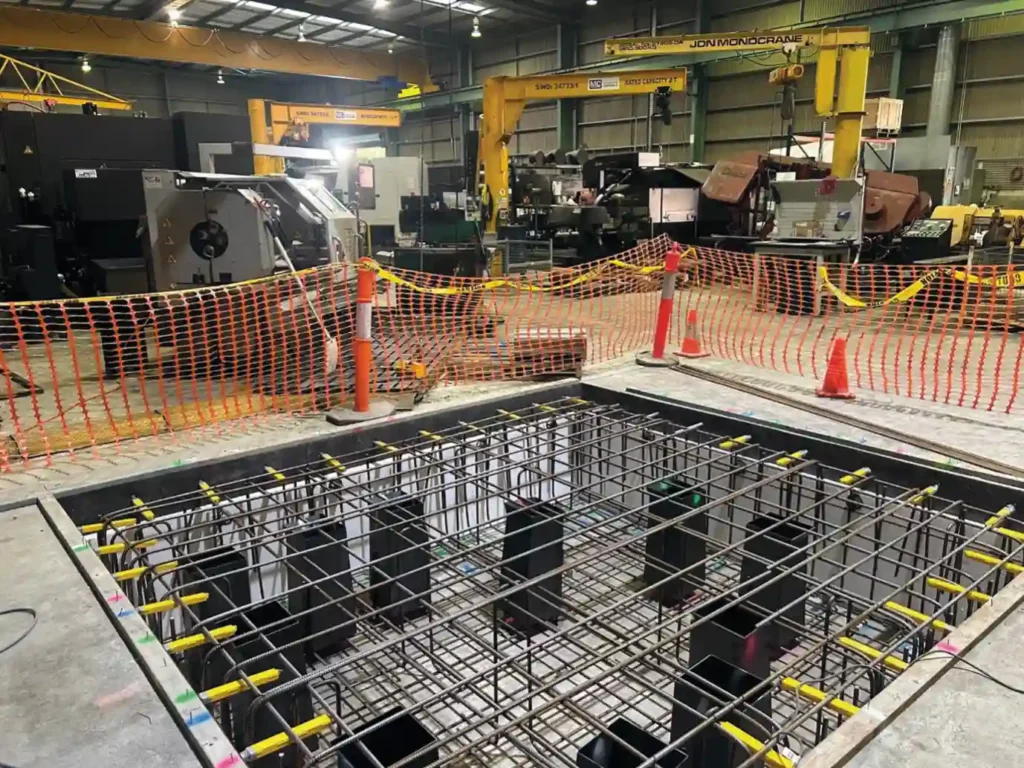
A standard 3015 format laser (like the YH3015BD) weighs roughly 4,400 kg. This weight is concentrated on the machine’s leveling feet. A standard 150mm concrete slab is often insufficient for high-acceleration cutting. The recommended foundation is a 200mm to 250mm thick C30 reinforced concrete slab, with a double-layer bidirectional rebar mesh (typically Φ12 at 200mm spacing). This distributes the static load and absorbs the dynamic shock of the moving gantry.
2. Vibration isolation joints
If the laser is installed near a heavy stamping press or a vehicle lift, external floor vibrations will degrade the cut quality. Instead of digging an expensive, deep anti-vibration trench, the standard practice is to cut a 10mm–15mm isolation joint around the machine’s foundation pad. This physically decouples the laser bed from the surrounding factory floor.
Table 2: Civil Engineering Standards for Laser Foundations
| Modèle de machine | Static Weight | Foundation Thickness | Concrete Grade | Rebar Mesh | Isolation Method |
|---|---|---|---|---|---|
| 3015 Single Bed | 1,300 – 1,800 kg | 150 mm | C25 | Single layer | Floor anchors |
| 3015 Exchange Table | 3,500 – 4,400 kg | 200 – 250 mm | C30 | Double Φ12@200 | 10mm isolation joint |
| 6025 Heavy Format | 5,500 kg | 250 – 300 mm | C35 | Double Φ14@200 | 15mm isolation joint |
Ⅲ. Thermal Management & Chiller Ventilation: Negative Pressure Ducting
1. Rejecting waste heat
A 12kW fiber laser system rejects approximately 45 kW of waste heat; a 20kW system rejects over 75 kW. If the chiller is placed in a small, enclosed room without proper ventilation, the ambient temperature will rapidly rise, causing the chiller to trigger a high-temperature alarm and shut down the laser.
2. Negative pressure exhaust ducts
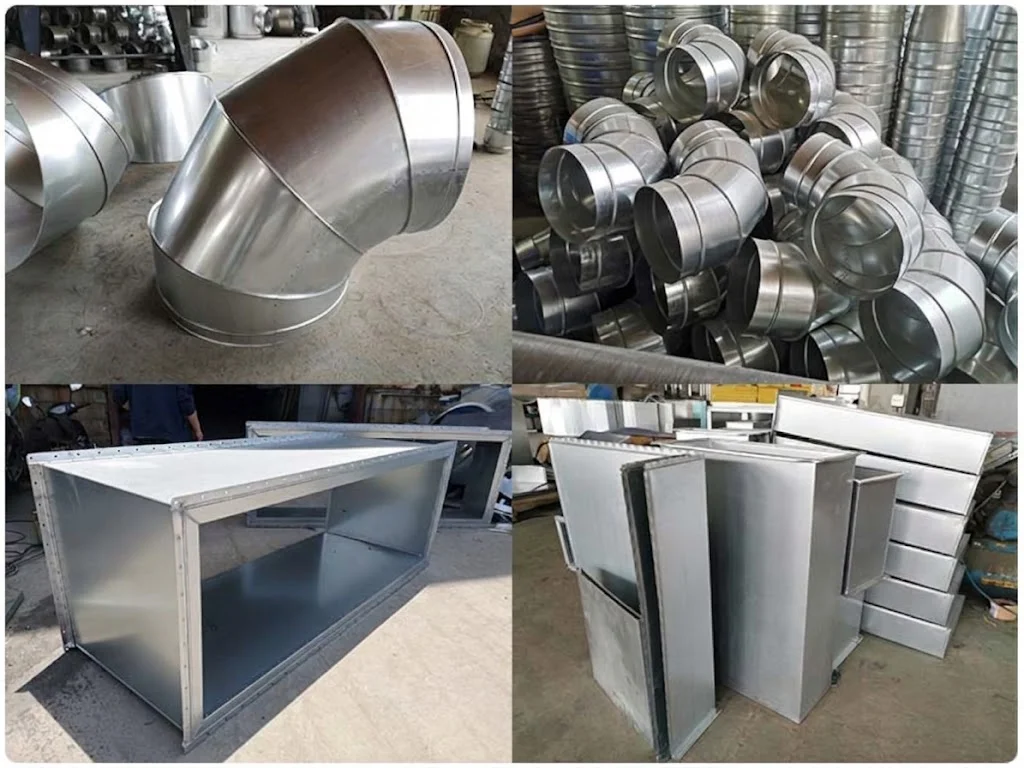
The most effective solution is a negative pressure exhaust duct connected directly to the chiller’s hot air outlet. The duct must be sized to handle 3,000 to 5,000 CFM (depending on the chiller capacity) and vented to the outdoors. If the chiller is placed in the open workshop, ensure there is at least 1.5 meters of clearance around the unit for air intake.
Table 3: Workshop HVAC & Chiller Ventilation Specifications
| Machine Power | Waste Heat (kW) | Chiller Airflow (CFM) | Duct Diameter (mm) | Max Ambient Temp |
|---|---|---|---|---|
| 6 kW | 25 kW | 1,500 CFM | 300 mm | 40°C |
| 12 kW | 45 kW | 2,800 CFM | 400 mm | 40°C |
| 20 kW | 75 kW | 4,500 CFM | 500 mm | 40°C |
Ⅳ. Rigging, Material Flow & Overhead Crane Clearances
1. Heavy plate infeed geometry
Even a standard 3015 machine requires a smooth material flow. Standard steel sheets are delivered in 1.5m × 3m or 2m × 6m pallets. The overhead crane hook must maintain a clearance of at least 4.5 meters to the floor to safely use vacuum lifters. If the ceiling height is lower, the machine bed must be recessed or the crane capacity must be downgraded to a forklift-based loading system.
2. Staging logistics
The machine footprint (e.g., 30.45 m² for the YH3015BD) is only the beginning. Planners must allocate a raw material staging area on the infeed side and a finished part pallet zone on the outfeed side. Forklift turning radius (typically 3.5 meters) must be maintained to avoid blocking the laser’s protective enclosure doors.
Table 4: Facility Spatial Staging Matrix
| Facility Zone | Min Clearance Width | Height Requirement | Purpose |
|---|---|---|---|
| Raw Sheet Infeed | 3.5 meters | 4.5m hook clearance | Forklift/crane staging |
| Machine Operating Envelope | 1.5 meters around perimeter | N/A | Maintenance access |
| Slag Bin Removal | 1.2 meters | N/A | Scrap extraction |
| Finished Part Outfeed | 2.5 meters | N/A | Pallet staging & inspection |
Ⅴ. Frequently Asked Questions
How do 12kW fiber laser cutter power requirements determine transformer sizing?
A 12kW fiber laser system, including the chiller, air compressor, and extraction, draws a total connected load of approximately 65 kVA. Applying a 1.3× safety margin, the dedicated transformer should be rated for at least 100 kVA to prevent continuous overload.
How thick should the concrete floor be for a 4.4-ton laser?
A 4,400 kg exchange-table laser (like the YH3015BD) requires a 200mm to 250mm thick reinforced concrete slab. The concrete should be C30 grade with a double-layer bidirectional rebar mesh to distribute the machine’s static weight and absorb the dynamic shock of the moving gantry.
How much chiller ventilation is needed for a 20kW laser?
A 20kW fiber laser chiller rejects approximately 75 kW of waste heat. It requires a negative pressure exhaust duct capable of moving 4,500 CFM of airflow, vented directly outdoors. Without this, the chiller will overheat and trip the machine’s thermal alarm.
Does the laser cutter need a dedicated air compressor?
Yes. While some shops try to use the factory’s general shop air, the laser’s high-pressure cutting (16–25 bar) requires a dedicated, clean, dry air system. It must be equipped with a refrigerated dryer and multi-stage filtration to meet ISO 8573-1 Class 1.2.2 standards.
Références
- ISO 9013:2017 — Thermal cutting — Classification of thermal cuts, International Organization for Standardization
- ISO 8573-1:2010 — Compressed air — Contaminants and purity classes, International Organization for Standardization
- Article 179 de l'IRS — Option permettant de passer en charges certains actifs d'exploitation amortissables, Administration fiscale américaine (Internal Revenue Service)
Pour en savoir plus
- Machine Bed Architecture: Dynamics & Vibration Damping — Engineering analysis of bed structures and vibration isolation.
- Fiber Laser Financing: Equipment Lease vs Buy — Capital planning and Section 179 tax treatment.
- Compresseur d'air pour la découpe laser : réduisez vos coûts de gaz de 75% — Compressor sizing and purity requirements.
- 12kW Fiber Laser Cutting Machine Price & Factory Upgrade — CapEx and power infrastructure analysis for 12kW systems.