Table of Contents
Ⅰ. Introduction
Sheet metal cutting has evolved from a basic fabrication step into a strategic differentiator for modern contract manufacturers. The global metal fabrication services sector is experiencing unprecedented expansion—the North America contract fabrication services market alone was valued at USD 65.95 billion in 2025 and is projected to reach USD 103.68 billion by 2033, growing at a CAGR of 5.9%.For any fabrication shop aiming to capture this growth, mastering advanced sheet metal cutting technology is no longer optional. This article examines three critical dimensions: conquering high-mix production challenges, maximizing profitability through smart equipment investment, and identifying the laser cutter features that deliver lasting competitive advantage.
Ⅱ. Conquering the “High-Mix, Low-Volume” Challenge
The modern manufacturing landscape demands agility. Contract manufacturers increasingly face orders for dozens—or hundreds—of different part numbers in quantities too small to justify dedicated tooling. This “high-mix, low-volume” (HMLV) environment is where sheet metal cutting with fiber laser technology shines.
1. Zero Tooling Changeover
Unlike stamping or punching, which require physical dies and extended setup periods, CNC laser cutting requires no hard tooling. A custom cut sheet metal order can move from CAD file to finished part in minutes. As documented in industry case studies, a fiber laser can reduce processing time dramatically—one prototype shop reported cutting an instrument panel in 3 minutes on a laser machine versus 18 minutes by conventional machining.This speed advantage compounds across every job changeover in a busy fabrication shop.
2. True-Shape Nesting for Complex Geometries
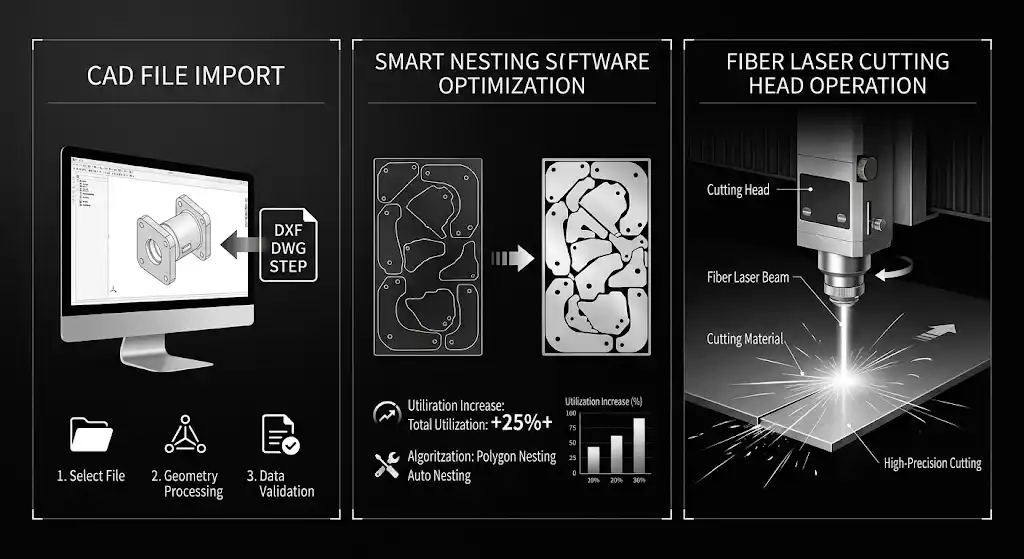
Advanced nesting software enables true-shape packing of irregular parts, rotating and fitting components into spaces that rectangular nesting would waste. Research indicates that true-shape nesting can improve material yield by 10 to 25 percent over basic rectangular layouts.For contract manufacturers handling diverse custom cut sheet metal orders, this directly translates to lower material costs and faster turnaround.
3. Programming Simplicity
Modern laser systems import common CAD formats (.dxf, .dwg) directly, with integrated CAM capabilities that automatically apply cutting parameters from material databases. Operators with minimal programming experience can be trained to run production in hours rather than weeks—critical for shops where workforce flexibility determines throughput.
Table 1: Production Method Comparison for HMLV Environments
| Method | Setup Time | Tooling Cost | Part Complexity | Best Use Case |
|---|---|---|---|---|
| Laser Cutting | 5–15 min | None | Unlimited | HMLV, prototypes, complex shapes |
| CNC Punching | 30–90 min | Die required | 中程度 | Medium-volume, standard shapes |
| Stamping | Hours–Days | High die cost | Low–Moderate | High-volume, simple geometries |
| Waterjet Cutting | 15–30 min | ミニマル | High | Thick materials, heat-sensitive alloys |
Ⅲ. Maximizing Profitability & ROI for Contract Manufacturers
Equipment investment in a competitive market must deliver measurable returns. Advanced sheet metal cutting systems generate ROI through three primary mechanisms: material efficiency, labor optimization, and expanded service capability.
1. Material Utilization Drives Margin
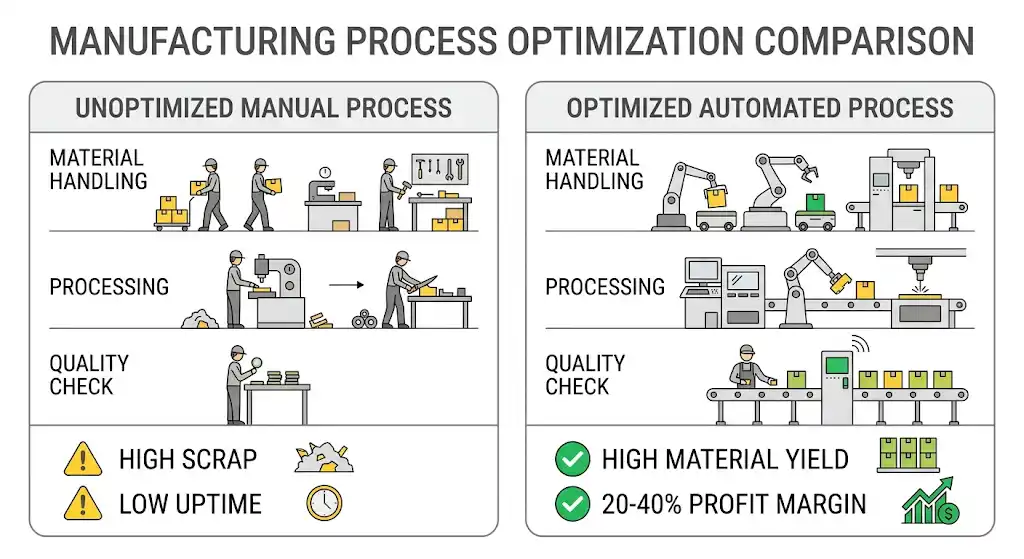
Raw material typically represents the largest variable cost in metal fabrication services. Automated nesting software optimizes part placement, minimizes kerf waste, and intelligently reuses sheet remnants. As noted in manufacturing analysis, even small improvements in material utilization compound into substantial savings when multiplied across hundreds or thousands of sheets processed annually.Some shops report material cost reductions of 15–30% after implementing advanced nesting platforms.
2. Profit Margins in Laser Operations
Well-managed laser cutting operations typically achieve profit margins between 20% and 40%.These margins depend on operational discipline: efficient nesting, reduced setup time, skilled operation, and strategic market positioning. Contract manufacturers who differentiate through quality and capability rather than competing solely on price consistently outperform commodity cutters.
3. Automation Multiplies Output
Automated loading and unloading systems, combined with unattended cutting capabilities, allow a single operator to manage multiple machines. This reduces labor cost per part while increasing machine utilization rates—often from 60–70% to 85–95% in optimized cells. The result is higher throughput without proportional increases in payroll.
Table 2: Key Profitability Factors in Laser Cutting Operations
| Factor | Impact on Margin | Optimization Strategy |
|---|---|---|
| Material Utilization | High (15–30% cost reduction) | Advanced nesting software, remnant management |
| Machine Uptime | Medium–High | Automation, preventive maintenance, shift scheduling |
| Setup Efficiency | Medium | Standardized fixtures, material catalogs, pre-staging |
| Labor Productivity | Medium | Cross-training, automated loading, remote monitoring |
| Energy Consumption | Low–Medium | Fiber laser efficiency (25–30% wall-plug vs. 10–15% CO₂) |
Ⅳ. Key Features Job Shops Should Look For in a Laser Cutter
Not all laser cutting platforms are equal. For contract manufacturers and job shops, equipment selection must align with the realities of diverse order books, tight delivery schedules, and evolving material requirements.
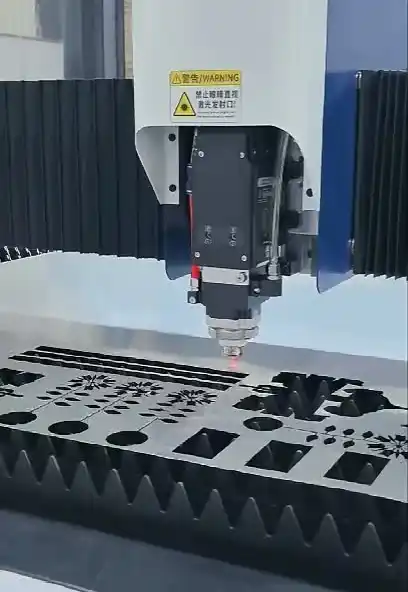
1. High-Power Fiber Laser Source
Fiber laser technology dominates modern sheet metal cutting for good reason. With wall-plug efficiencies of 25–30%—roughly double that of CO₂ systems—and minimal maintenance requirements, fiber sources reduce operating costs while delivering superior cut quality on reflective metals like aluminum, brass, and copper.
2. Intelligent Nesting and CAD/CAM Integration
Look for systems that integrate seamlessly with popular CAD platforms and offer true-shape nesting, common-line cutting, and automatic remnant management. These software capabilities directly determine how efficiently a fabrication shop converts raw material into revenue.
3. Robust Machine Bed and Motion System
Positioning accuracy of ±0.01 mm and repeatability of ±0.005 mm are baseline requirements for industrial-grade equipment. A rigid, stress-relieved bed frame dampens vibration during high-speed traversal, ensuring consistent edge quality across long production runs.
4. Adaptive Process Control
Modern CNC systems dynamically adjust laser power, cutting speed, and assist gas pressure based on real-time feedback. This adaptability is essential when cutting varying material thicknesses within a single nested sheet—a common scenario in HMLV environments.
Table 3: Essential Laser Cutter Features for Contract Manufacturers
| Feature | 仕様 | Business Impact |
|---|---|---|
| Laser Source | Fiber, 3–12 kW | Cuts reflective metals, low maintenance, high efficiency |
| Nesting Software | True-shape, common-line, remnant tracking | 10–25% material yield improvement |
| Motion System | ±0.01 mm accuracy, ±0.005 mm repeatability | Consistent quality, reduced rework |
| Automation | Auto load/unload, unattended cutting | 85–95% machine utilization, labor savings |
| 制御システム | CAD-integrated, adaptive parameters | Faster programming, fewer errors |
Table 4: Recommended Laser Power by Material and Thickness
| 素材 | Thickness Range | 推奨電力 | Assist Gas |
|---|---|---|---|
| Mild Steel | 0.5–6 mm | 3~6 kW | Oxygen (fast) / Nitrogen (clean) |
| Mild Steel | 6–20 mm | 6~12 kW | Oxygen |
| Stainless Steel | 0.5–12 mm | 3~6 kW | Nitrogen (99.99%) |
| Stainless Steel | 12–30 mm | 6~12 kW | Nitrogen (high pressure) |
| Aluminum | 0.5–8 mm | 3~6 kW | Nitrogen / Compressed Air |
| Aluminum | 8–20 mm | 6~12 kW | Nitrogen (high pressure) |
| Brass / Copper | 0.5–6 mm | 3~6 kW | Nitrogen |
Ⅴ. FAQ
Q1: What makes sheet metal cutting with lasers better than traditional methods for job shops?
Laser cutting eliminates tooling costs, reduces setup time from hours to minutes, and handles complex geometries that punching or stamping cannot. For a fabrication shop with diverse orders, this flexibility directly improves throughput and margin.
Q2: How much can automated nesting software really save on material costs?
Advanced nesting platforms with true-shape algorithms can improve material yield by 10–25% compared to manual or rectangular nesting methods. On expensive materials like stainless steel or aluminum, this translates to thousands of dollars in monthly savings.
Q3: What is the typical ROI timeline for a fiber laser cutting system in contract manufacturing?
Most well-managed operations see payback within 18 to 36 months, depending on utilization rate, material mix, and labor costs. Profit margins of 20–40% are achievable when operations emphasize efficiency over commodity pricing.
Q4: Can laser cutting handle both prototyping and production volumes?
Yes. The same fiber laser platform excels at both single-piece prototypes and high-volume production. Zero tooling changeover means a custom cut sheet metal prototype and a 1,000-piece production run can share the same machine without retooling.
Q5: What industries are driving demand for contract metal fabrication services?
The automotive sector—particularly electric vehicle manufacturing—along with aerospace, data center infrastructure, and renewable energy are the primary growth drivers. The global metal contract manufacturing market is projected to expand from USD 168.4 billion in 2025 to USD 298.7 billion by 2034.
Ⅵ. Conclusion
Sheet metal cutting with advanced fiber laser technology has become the defining capability for competitive contract manufacturers. In an era where the sheet metal fabrication services market is projected to exceed USD 136 billion by 2035, the shops that thrive will be those that combine agile HMLV production, intelligent nesting-driven material efficiency, and strategically specified equipment. Whether you operate a dedicated fabrication shop or manage diversified manufacturing services, the right laser cutting platform transforms custom cut sheet metal from a cost center into a profit engine. For more technical insights on optimizing your production workflow, visit our technical blog.