
Содержание
Введение
The global manufacturing landscape is undergoing a structural transformation as consumer demand shifts toward lighter, more durable, and aesthetically refined metal products. From stainless steel kitchen cabinets to precision electronics enclosures, fabricators face mounting pressure to deliver complex geometries at mass-production scale without sacrificing edge quality. In this evolving environment, the thin metal laser cutting machine has become the cornerstone technology for commercial and consumer goods production. At WSLLASER, we engineer fiber laser cutting systems and laser welding equipment that empower manufacturers to meet these demands with precision, speed, and measurable operational efficiency.
Ⅰ. Основные области применения в сфере коммерческих и потребительских товаров
1. Производство кухонной посуды и «революция нержавеющей стали»
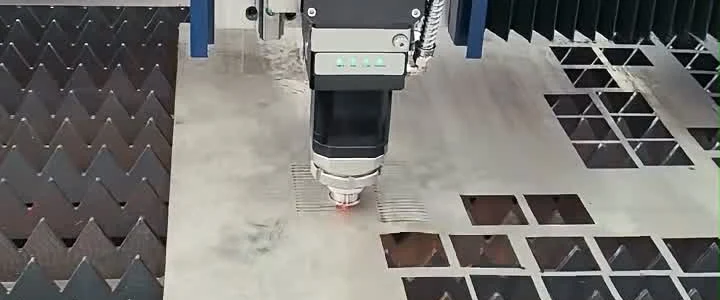
Сайт global cookware market was valued at USD 37.5 billion in 2025 and is projected to reach USD 56.5 billion by 2035, expanding at a CAGR of 4.1%. Stainless steel dominates this sector, accounting for 34% of total market value at approximately USD 12.8 billion. In kitchenware fabrication, manufacturers predominantly process stainless steel sheets ranging from 0.5 mm to 2.0 mm—a thickness range where fiber laser technology delivers optimal results. The non-contact cutting process preserves protective surface films on coated sheets, ensuring flawless cosmetic finishes while eliminating the need for stamping dies. This capability enables rapid changeovers between product specifications, from delicate tableware to large-scale commercial kitchen equipment.
| Kitchenware Segment | Материал | Thickness | Laser Processing Advantage |
|---|---|---|---|
| Household cabinets | 304/316 SS | 0.8–1.5 mm | No die changes, film intact |
| Commercial sinks | 304 SS | 1.0–2.0 mm | Precise drain holes, smooth edges |
| Cutlery blanks | 18/10 SS | 0.5–1.0 mm | Consistent weight and balance |
| Appliance panels | 430 SS | 1.0–1.5 mm | High-speed batch production |
2. Корпуса для электронного оборудования и компоненты бытовой техники
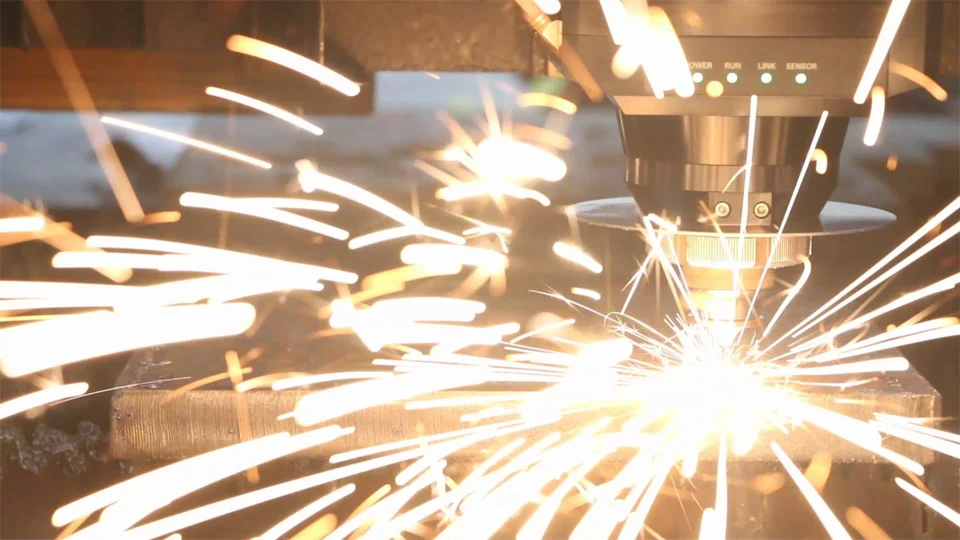
Consumer electronics and home appliances require intricate ventilation patterns, precise mounting holes, and aesthetic edge quality on thin-gauge metals. A thin metal laser cutting machine processes aluminum and galvanized steel enclosures with feature sizes as small as 0.05 mm, achieving hole position accuracy of ±0.1 mm. The narrow heat-affected zone preserves material integrity for subsequent bending and coating operations. As the electronics sector continues miniaturizing, this precision processing capability has become essential for producing server chassis heat dissipation plates, air conditioning panels, and power box covers.
3. Архитектурные металлоконструкции и декоративные панели
Architectural applications leverage laser cutting for hollow-carved decorative panels, railing grids, and façade elements on stainless steel and carbon steel thin plates up to 3 mm. The ability to execute complex patterns without tooling costs allows designers to iterate rapidly, while the clean kerf edges eliminate post-cut dressing. This design flexibility is driving adoption across commercial building projects where customized metalwork commands premium pricing.
Ⅱ. Why Fiber Lasers are Built for the “Thin Metal” Economy
1. Непревзойденная скорость при толщине до 5 мм
Fiber laser systems fundamentally outperform legacy technologies on thin materials. On 1 mm carbon steel, a 3 kW fiber laser achieves cutting speeds of approximately 55 m/min, while optimized 6 kW configurations reach over 90 m/min. The key physics principle is counterintuitive: higher power combined with proportionally higher speed reduces heat accumulation per unit length, producing cleaner edges than lower-power, lower-speed configurations. For 1 mm mild steel, running 3,000W at 22 m/min generates superior edge quality compared to 2,000W at 15 m/min because the increased velocity removes heat faster than it can propagate laterally.
| Material (1 mm) | 2 kW Speed | 3 kW Speed | 6 kW Speed | 12 kW Speed |
|---|---|---|---|---|
| Углеродистая сталь | ~18 m/min | ~55 m/min | ~55 m/min | ~90 m/min |
| Нержавеющая сталь | — | ~55 m/min | ~70 m/min | ~80 m/min |
| Алюминий | — | ~50 m/min | ~60 m/min | ~70 m/min |
2. Резка в полете: многократное повышение эффективности

Flying cutting technology—also known as scan cutting—represents a paradigm shift from sequential to intelligent path optimization. Instead of completing each individual cut before repositioning, the laser head executes grid-pattern movements while strategically activating and deactivating the beam at precise edges. For production runs involving more than 50 repeated graphics, flying cutting can save over 60% of working hours compared to conventional methods. In sheet metal dense hole processing for heat sinks and filters, fly cutting achieves speeds more than three times faster than traditional sequential cutting while maintaining hole position accuracy within ±0.1 mm. This technology is particularly effective on thin plate materials where mechanical repositioning wear is minimized and thermal distortion remains negligible.
| Cutting Method | Cycle Time (100 holes) | Relative Efficiency | Best Application |
|---|---|---|---|
| Traditional Sequential | ~8.5 minutes | Исходные данные | Large single parts, complex contours |
| Flying Cutting (Grid) | ~2.8 minutes | 3.0× faster | Dense hole patterns, repeated features |
| Flying Cutting (Optimized) | ~2.2 minutes | 3.9× faster | Regular arrays, thin gauge materials |
3. Преимущества в плане выхода материала и качества кромок
Intelligent nesting software integrated with modern thin metal laser cutting machines achieves steel utilization rates exceeding 92%, significantly reducing raw material waste. The non-contact cutting process produces edges with surface roughness values suitable for direct progression to bending and welding, eliminating secondary grinding operations that add 15–25% to total processing time. For kitchenware manufacturers, this translates to immediate cost savings on expensive stainless steel stock while maintaining the cosmetic standards demanded by premium brands.
Ⅲ. Расширение масштабов: автоматизация и рентабельность инвестиций при массовом производстве
1. Системы автоматической загрузки для лазерной резки
As production volumes scale, manual material handling becomes the primary bottleneck. Laser cutting automatic loading systems—integrated with tower storage and ERP platforms—transform standalone machines into continuous production cells. These systems handle raw sheet dimensions up to 160″ × 80″ and weights exceeding 1,800 lbs, transferring materials from warehouse stacks to shuttle tables without operator intervention. The integration enables automatic cycle execution where the machine communicates directly with loading equipment, facilitating lights-out manufacturing during off-shift hours.
2. Анализ производственного цикла и затрат на рабочую силу
Research analyzing the integration of automatic sheet metal warehouses with dual laser stations and ERP platforms reveals transformative efficiency gains. Production cycle time decreased by 58% (from 4,160 seconds to 1,730 seconds), while operator operational time dropped by 71% (from 3,720 seconds to 1,080 seconds). Machine efficiency improved by 40%, and material losses were reduced by 20%. The number of required operators was halved from two to one, yielding annual labor cost savings of approximately USD 12,500 per station based on standard European wage benchmarks.
| Performance Metric | Before Automation | After Automation | Improvement |
|---|---|---|---|
| Production cycle time | 4,160 seconds | 1,730 seconds | –58% |
| Operator operational time | 3,720 seconds | 1,080 seconds | –71% |
| Machine efficiency (M/T) | 2,240 seconds | 650 seconds | +40% |
| Material losses | 100% (базовый вариант) | 80% | –20% |
| Operators required | 2 | 1 | –50% |
| Annual labor cost | USD 25,000 | USD 12,500 | –USD 12,500 |
3. Расчет срока окупаемости для предприятий с большими объемами производства
For a fabrication shop transitioning from outsourced thin-gauge component production to in-house manufacturing, the financial case is compelling. Consider a facility producing 2,000 stainless steel kitchenware components monthly. Outsourcing at USD 3.50 per part generates an annual expenditure of USD 84,000. In-house production using a 3 kW thin metal laser cutting machine with automatic loading reduces per-part material and operating costs to approximately USD 1.20, yielding total annual in-house costs of USD 28,800. The resulting annual savings of USD 55,200 achieve break-even on equipment investment within 14–16 months, assuming a mid-range system acquisition cost. When factoring in the 30% material waste reduction and eliminated die costs, the payback period shortens further for shops with diverse product portfolios.
| Компонент затрат | Outsourced (Annual) | In-House (Annual) | Annual Savings |
|---|---|---|---|
| Component production (2,000/month) | USD 84,000 | USD 28,800 | USD 55,200 |
| Material waste (30% reduction) | Included in outsource | –USD 8,400 | USD 8,400 |
| Die and tooling costs | USD 6,000 | USD 0 | USD 6,000 |
| Total annual impact | USD 90,000 | USD 20,400 | USD 69,600 |
Часто задаваемые вопросы
Q1: What thickness range qualifies as “thin metal” for laser cutting purposes?
A: In industrial laser cutting, thin metal typically refers to gauges from 0.3 mm to 5.0 mm. Fiber lasers demonstrate optimal performance and cost efficiency within this range, particularly on stainless steel, carbon steel, and aluminum alloys.
Q2: How does flying cutting differ from standard laser cutting?
A: Flying cutting utilizes continuous head movement with strategic laser activation, processing multiple features in a single pass rather than completing cuts sequentially. For repeated patterns exceeding 50 units, it reduces cycle time by over 60% compared to conventional methods.
Q3: What ROI timeline should I expect when adding automatic loading to a thin metal laser cutting machine?
A: Based on production cycle reductions of 58% and labor savings of 50%, automated loading systems typically achieve payback within 12–18 months for shops processing more than 1,500 sheets monthly.
Q4: Is a 3 kW fiber laser sufficient for kitchenware fabrication?
A: Yes. A 3 kW system efficiently processes stainless steel up to 12 mm and achieves optimal high-speed thin plate cutting on 0.5–3.0 mm gauges at speeds exceeding 50 m/min—more than adequate for cookware, sinks, and cabinet components.
Q5: What industries beyond kitchenware benefit most from thin metal laser cutting?
A: Electronics enclosures, HVAC components, architectural decorative panels, automotive exhaust parts, and medical device housings all rely heavily on precision thin-gauge laser processing.
Заключение
The thin metal laser cutting machine represents more than an equipment upgrade—it is a strategic enabler for manufacturers competing in high-volume, precision-driven markets. From kitchenware fabrication to automated mass production, fiber laser technology delivers the speed, accuracy, and material efficiency that modern fabrication demands. By integrating flying cutting capabilities and laser cutting automatic loading systems, shops can reduce cycle times by over 50% while achieving payback periods under 18 months. At WSLLASER, we engineer laser cutting and welding solutions that transform thin-gauge processing from a cost center into a competitive advantage.ntage.