

A fabrication shop that has decided to finance a fiber laser still faces one more decision: which contract structure to sign. A rent to own laser cutter agreement and an FMV operating lease look similar on the payment schedule. They are not similar on the balance sheet, on the tax return, or on what happens at the end of the term.
This guide compares the two structures on the four dimensions that determine the actual cost of capital: asset ownership, accounting treatment, tax timing, and end-of-term flexibility.
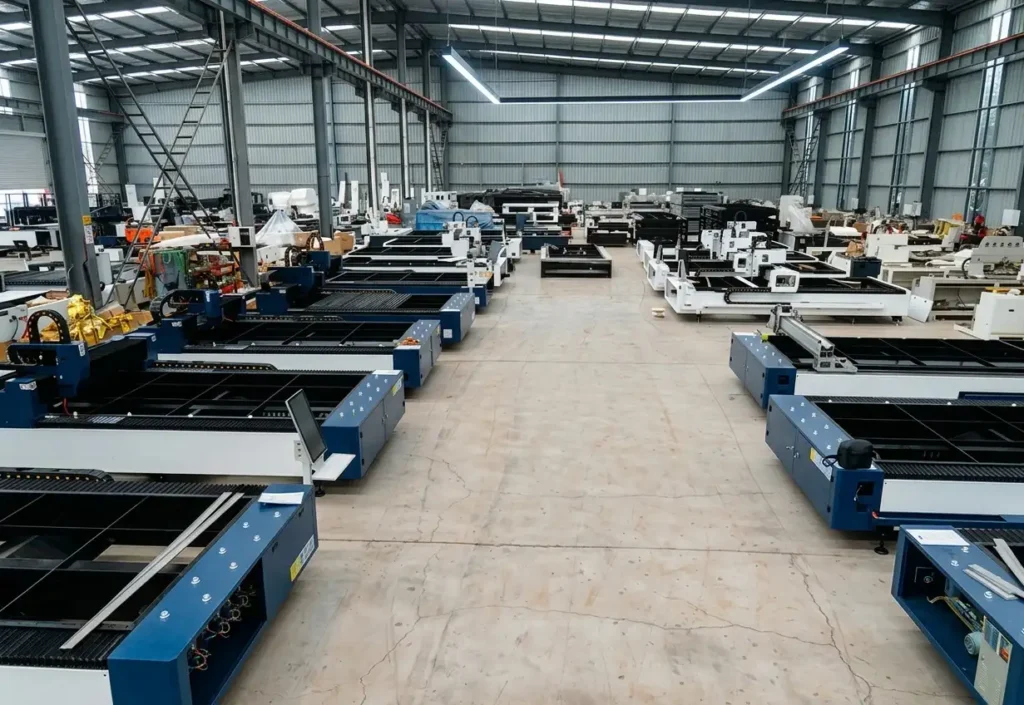
Ⅰ. Contract Structure: $1 Buyout vs. FMV Operating Lease
1. The $1 Buyout capital lease
Under a $1 buyout agreement, the lessee makes fixed monthly payments for a defined term — typically 36 to 60 months — and then purchases the equipment for a nominal $1 at the end. The lessee is treated as the owner of the asset from the start.
The accounting treatment follows ASC 842. The equipment appears on the balance sheet as a right-of-use asset, with a corresponding lease liability. The lessee depreciates the asset and can claim Section 179 expensing in the year the equipment is placed in service.
2. The FMV operating lease
Under an FMV operating lease, the lessee makes lower monthly payments for the term, and at the end has three options: return the equipment, extend the lease, or purchase it at fair market value. The lessee is not treated as the owner during the term.
If the lease qualifies for the ASC 842 short-term or low-value exemption, it stays off the balance sheet. The monthly payment is treated as an operating expense, deductible against revenue in the year it is paid.
3. The difference is not the interest rate
The two structures can carry the same effective APR and still produce different financial outcomes. The difference is ownership. The $1 buyout transfers ownership at the end. The FMV lease transfers a disposal decision at the end.
Ⅱ. Three-Year Cash Flow Comparison
1. The comparison basis
The model below uses a $150,000 fiber laser system, financed over 36 months at an effective APR of 6.5%–10.5%. A 60-month variant is noted where relevant for shops with longer capital planning horizons.
2. What the numbers show
The $1 buyout carries a higher monthly payment but ends with the shop owning the asset. The FMV lease carries a lower monthly payment but ends with no residual equity. The cash purchase has no monthly payment but ties up $150,000 in working capital for the full term.
3. The opportunity cost of cash
A shop that pays cash avoids interest but gives up the return it could have earned on that capital elsewhere — raw material inventory, a second machine, or simply a working capital buffer. At an 8% internal cost of capital, $150,000 held for three years carries a $39,000 opportunity cost.
Table 1: 3-Year Cash Flow Comparison — $150,000 Fiber Laser System
| Параметр | $1 Buyout Capital Lease | FMV Operating Lease | Cash Purchase |
|---|---|---|---|
| Down payment | 10%–20% | 1–2 monthly payments | 100% |
| Monthly payment | Higher | Lower | $0 |
| 36-month cumulative outflow | Умеренный | Самый низкий | Highest (upfront) |
| End-of-term ownership | Lessee ($1 buyout) | Lessor | Lessee |
| Residual equity at end | Full | Нет | Full |
| Opportunity cost of capital | Низкий | Низкий | High ($150k tied up) |
Based on North American Metal Fabricating Equipment Benchmark, typical for 6kW–12kW fiber laser systems.
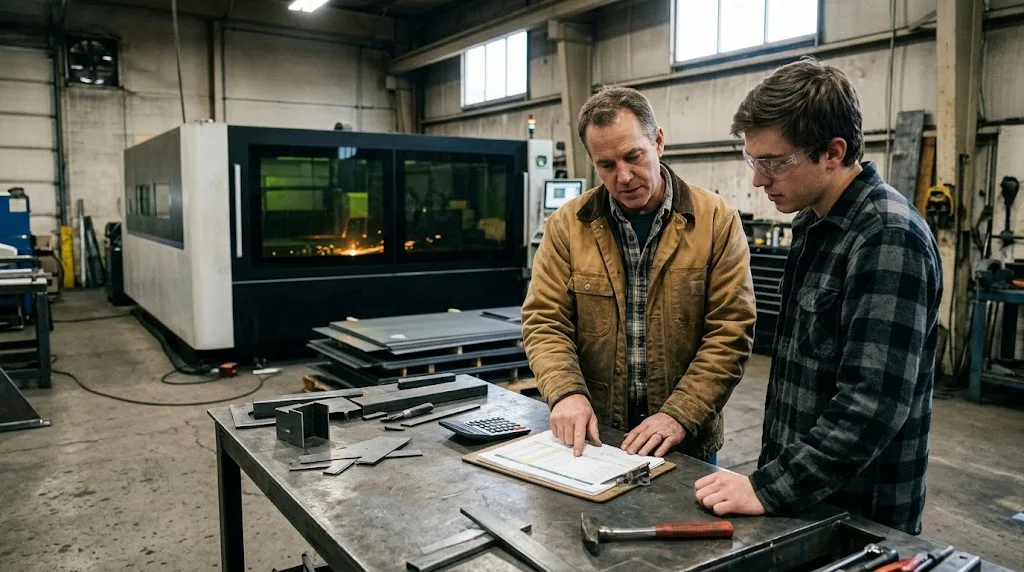
Ⅲ. Tax Shields: Section 179 and Depreciation Timing
1. Section 179 under a $1 buyout
Under a $1 buyout capital lease, the lessee is treated as the owner for tax purposes. The full equipment cost can be expensed under Section 179 in the year the equipment is placed in service, subject to the annual limit.
At a 21%–25% corporate tax rate, a $150,000 machine produces a first-year tax reduction of $31,500–$37,500. That is real cash back in the first year.
2. Tax treatment under an FMV operating lease
Under an FMV operating lease, the lessee does not own the asset and cannot claim Section 179. The monthly lease payment is deductible as an operating expense in the year it is paid.
The total tax deduction over the lease term is usually lower than the Section 179 deduction under a capital lease, because the rent deduction is spread across the term and does not include the residual value.
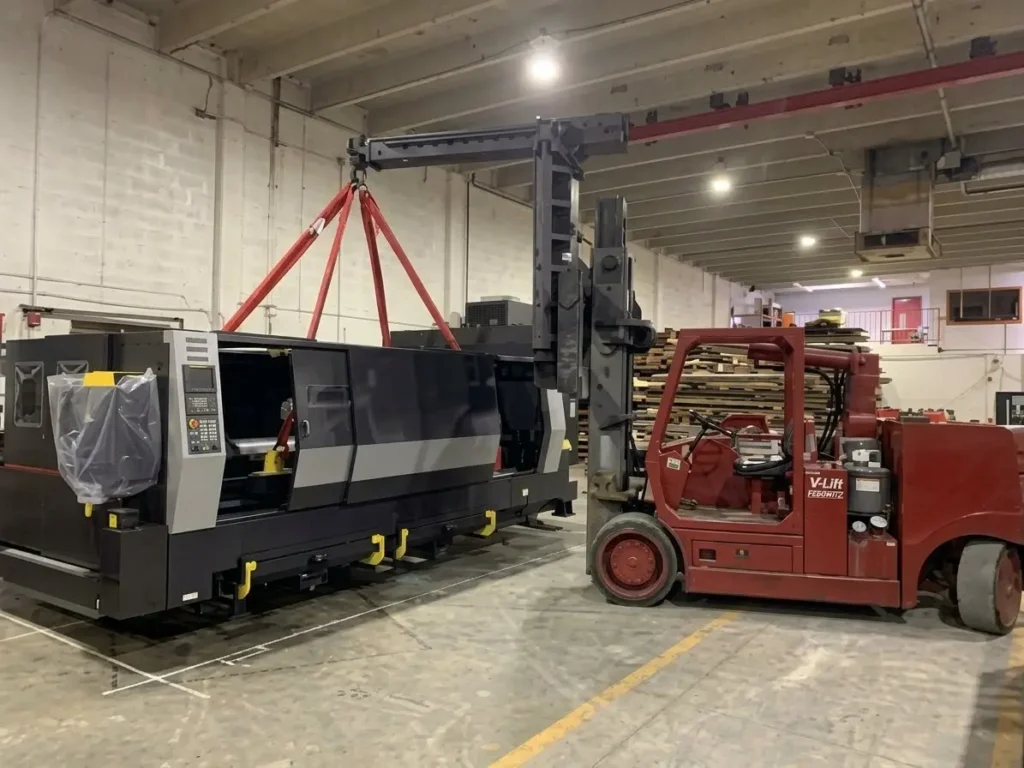
3. Which structure produces the better tax outcome
For a profitable shop with high current-year taxable income, the $1 buyout produces the stronger first-year tax shield. For a shop with low or volatile taxable income, the FMV lease produces a smoother annual deduction that matches the rent expense to revenue.
Ⅳ. Balance Sheet and Working Capital Protection
1. Why the revolving credit line should stay available
A bank revolving credit line is meant for working capital — raw material inventory, accounts receivable gaps, and short-term cash timing. It should not be drawn down to purchase a fixed asset.
A shop that uses its credit line to buy a laser machine has converted liquid working capital into a machine that cannot be sold quickly. If a large steel order arrives, the credit line is already committed.
2. Balance sheet impact of the two structures
Under a $1 buyout, the equipment and the corresponding lease liability both appear on the balance sheet. The debt-to-equity ratio rises, and the shop’s borrowing capacity for future equipment or real estate may be reduced.
Under an FMV operating lease that qualifies for the ASC 842 exemption, the lease stays off the balance sheet. The debt-to-equity ratio is unaffected, and the shop retains its borrowing capacity for other uses.
3. Which structure protects the balance sheet
A shop planning to finance additional equipment in the next 24 months should consider the FMV lease to preserve balance sheet capacity. A shop with no near-term financing plans can use the $1 buyout to build asset equity.
Ⅴ. Lender Qualification and Contract Review
1. The underwriting standards
Most North American equipment finance lenders apply the same baseline criteria for both structures. A shop that qualifies for one usually qualifies for the other, though the FMV lease may carry a lower down payment requirement.
Table 2: Equipment Lease Underwriting Benchmarks
| Underwriting Criterion | Typical Threshold | Примечания |
|---|---|---|
| Time in business | ≥ 2 years | Some lenders accept 1 year with personal guarantee |
| PayNet score | 650+ | Commercial credit score |
| Personal FICO | 680+ | Required for sole proprietors and small LLCs |
| Bank balance | 2–3× monthly payment | Demonstrates repayment capacity |
| Approval timeline | 3–10 business days | Depends on machine value and down payment |
Based on North American commercial equipment finance underwriting benchmarks (typical underwriting standards for metal fabrication machinery).
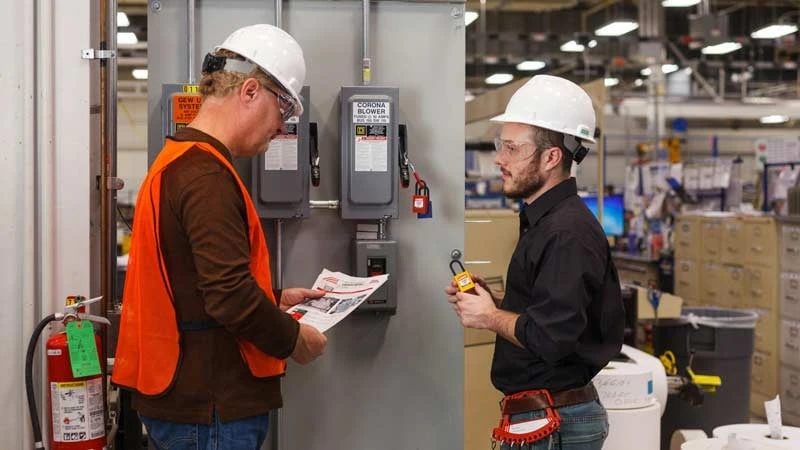
2. The fine print to review before signing
Prepayment penalty. Some contracts charge a penalty if the lease is paid off early. The penalty is usually a percentage of the remaining interest. A shop that expects to pay off the lease early should negotiate this clause out.
Origination fees. Document preparation, credit check, and processing fees are sometimes added at signing. Ask for the total cost of the lease in writing, including all fees, before signing.
Forced-place insurance. If the lessee fails to maintain the required insurance, the lessor can purchase coverage on the lessee’s behalf and charge the premium. The premium is usually higher than the open market rate.
Return condition fees. Under an FMV lease, the equipment must be returned in a defined condition. Wear beyond the standard results in a refurbishment charge. The standard should be documented in the lease and understood before signing.
Ⅵ. Decision Framework by Business Stage
1. By business stage
A startup under two years old should use the FMV operating lease to preserve cash and balance sheet capacity. A growing shop in years 2–5 should use the $1 buyout to build asset equity. A mature shop with stable cash flow can use a bank loan or cash purchase to minimize the cost of capital.
2. By equipment iteration cycle
A shop planning to upgrade the laser within three years should use the FMV lease. The lower payments and end-of-term return option avoid being locked into a machine that will be outdated before the lease ends. A shop planning to hold the machine for five years or more should use the $1 buyout.
3. By tax position
A shop with high current-year taxable income benefits from the $1 buyout’s Section 179 expensing. A shop with low or volatile income benefits from the FMV lease’s annual rent deduction.
4. Linking to the financing basics
For the foundational structure of lease versus buy — including the initial qualification process and Section 179 basics — see our guide on финансирование волоконных лазеров. This article assumes that decision has been made and focuses on the contract structure that follows.
Ⅶ. Finance FAQ
Q1: Can a startup with less than two years of business history qualify for a $1 buyout lease?
Some lenders will approve a $1 buyout lease for a business with less than two years of history if the owner provides a personal guarantee and a strong personal FICO. The down payment requirement is usually higher — 20%–30% instead of 10%–20%. The PayNet score requirement may also be relaxed in exchange for the personal guarantee.
Q2: Does an FMV operating lease qualify for Section 179?
No. Under an FMV operating lease, the lessee is not the owner of the asset and cannot claim Section 179. The monthly rent is deductible as an operating expense. A shop that needs the Section 179 deduction must use a $1 buyout capital lease or a purchase.
Q3: If the shop plans to upgrade from 12kW to 20kW in three years, which structure is better?
The FMV operating lease is the better fit. The lower monthly payments preserve cash for the upgrade, and the end-of-term return option avoids the problem of selling a 12kW machine into a market that has moved to higher power. The $1 buyout would leave the shop owning a machine that is harder to resell after three years.
Q4: Is vendor financing from the machine supplier better than a third-party equipment finance company?
Vendor financing is often faster to approve and may offer promotional rates on specific models. Third-party finance companies may offer more flexibility on terms and structures. The right choice depends on the specific rate, the term, and the fine print. Compare the total cost of the lease — not just the monthly payment — across both options before deciding.
Engineering / Investment Verdict
The rent to own laser cutter decision is not about which structure is cheaper on the monthly payment. It is about which structure fits the shop’s balance sheet, tax position, and equipment iteration cycle.
A shop that needs Section 179 and plans to hold the machine for five years should use the $1 buyout. A shop that needs to preserve cash and expects to upgrade in three years should use the FMV operating lease. A shop that has the capital and no near-term growth plans can pay cash.
Before signing any lease, verify four things: the total cost including all fees, the prepayment terms, the end-of-term options, and the insurance and return condition clauses. The monthly payment is only one number in a contract that governs four years of capital structure.
Список литературы
- Раздел 179 Налогового кодекса США (IRS) — Выбор в отношении отнесения на расходы определенных амортизируемых активов предприятия, Налоговая служба США
- FASB ASC 842 — Leases, Financial Accounting Standards Board
- Equipment Leasing and Finance Association — Industry Standards and Benchmark Data, Equipment Leasing & Finance Association
Дополнительная литература
- Финансирование волоконных лазеров: аренда оборудования в 2026 году или покупка — The foundational lease-vs-buy decision and Section 179 basics.
- 12kW Fiber Laser Cutting Machine Price: Upgrade Decision & Payback — The machine price and power upgrade payback model.
- Стоимость часа работы лазерного резака: полный учетный журнал эксплуатационных расходов — The hourly operating cost behind every financing model.
- Used Fiber Laser Cutting Machine: 2026 Guide vs New — Residual value and refurbishment risk on used equipment.





