

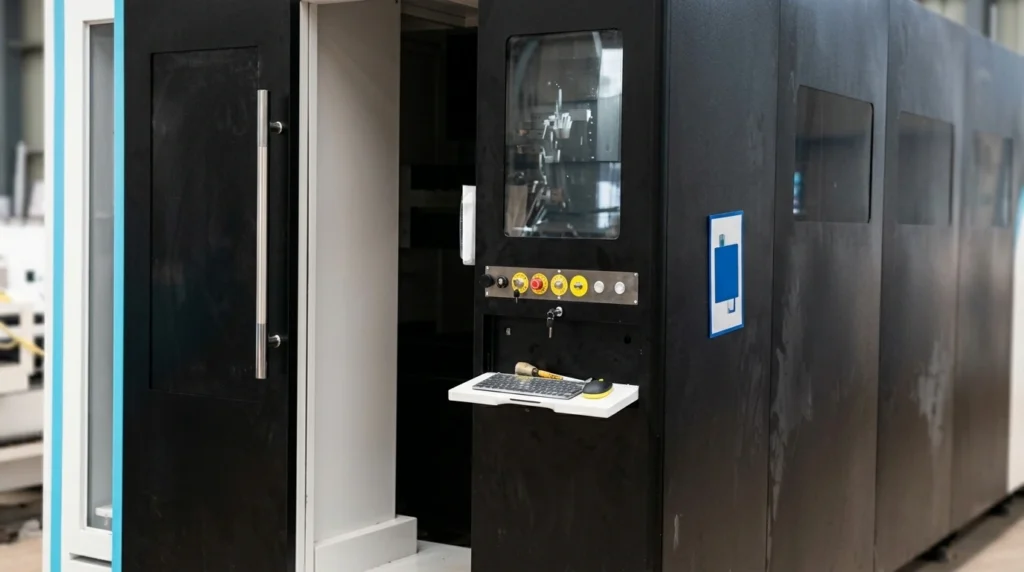
A 6kW fiber laser cutting machine reaches its practical ceiling on 10mm carbon steel. Below that thickness, it cuts fast and clean. Above it, the machine slows down, the oxygen cut leaves an oxidized edge, and the nitrogen cut burns through gas budget. The shop starts sending the thicker work out.
A 12kW fiber laser cutting machine is the point where that trade-off reverses. This guide analyzes the true 12kW fiber laser cutting machine price spectrum, benchmarks cutting speed gains against 6kW systems, and models the capital payback for a dual-shift job shop.
Ⅰ. The 12kW Commercial Price Matrix: $32,000–$75,000
1. Three configuration tiers
The 12kW market splits into three tiers. The entry tier lists at $32,000–$42,000 and uses an open single table. The production tier lists at $45,000–$58,000 with a full enclosure and dual exchange tables. The heavy-duty tier lists at $60,000–$75,000 with a reinforced frame rated for 24/7 operation.
2. What the price difference actually buys
The $13,000 jump from entry to production tier pays for the enclosure, the second table, the zone-controlled fume extraction, and the safety interlocks. The $15,000 jump from production to heavy-duty pays for the annealed heavy frame, the bus-level control system, and the high-pressure dynamic gas valve.
3. Where the tiers diverge in service life
The entry tier is designed for one-shift operation on mixed thickness. The production tier runs two shifts without thermal fatigue. The heavy-duty tier runs continuously, and its frame holds geometry under sustained thermal load.
Table 1: 12kW Fiber Laser Cutting Machine Price & Configuration Matrix
| Tier | Price Range (USD) | Table Configuration | Frame Type | Duty Cycle |
|---|---|---|---|---|
| Entry | $32,000–$42,000 | Open single table | Welded, stress-relieved | Single shift |
| Production | $45,000–$58,000 | Enclosed dual exchange | Welded, stress-relieved | Two shifts |
| Heavy-Duty | $60,000–$75,000 | Enclosed dual exchange | Annealed heavy frame | Continuous |
Based on public procurement configuration benchmarks. Actual pricing varies with options, delivery terms, and regional support.
Ⅱ. 6kW vs 12kW Productivity Benchmarks & Thickness Thresholds
1. Where 6kW runs out of headroom
On 10mm carbon steel, a 6kW source cuts at 2.8–3.2 m/min with oxygen assist. On 16mm, the speed drops to 1.2–1.5 m/min. On 20mm, it falls below 1.0 m/min. The machine is no longer competitive on thicker plate.
2. Where 12kW changes the equation
A 12kW source cuts 10mm carbon steel at 5.0–6.0 m/min with air assist. On 16mm, it holds 2.2–2.8 m/min. On 20mm, it still cuts at 1.5–2.0 m/min. The speed gain over 6kW ranges from 1.7× on 10mm to more than 2× on 16mm.
3. Stainless steel behavior
Stainless cuts slower than carbon steel at every power level because the nitrogen assist must clear a more viscous melt. The 12kW advantage over 6kW is still roughly 1.8× on 10mm stainless and 2.2× on 16mm stainless.
4. The assist gas cost factor
High-pressure air at 16–18 bar costs $3.2–$4.5 per cutting hour in electricity and filter consumption. Liquid nitrogen costs $20–$30 per cutting hour at the same pressure. The 12kW machine running air assist on 16mm carbon steel costs less per meter than a 6kW machine running nitrogen, which is consistent with comprehensive laser cutting gas cost benchmarks across medium plate.
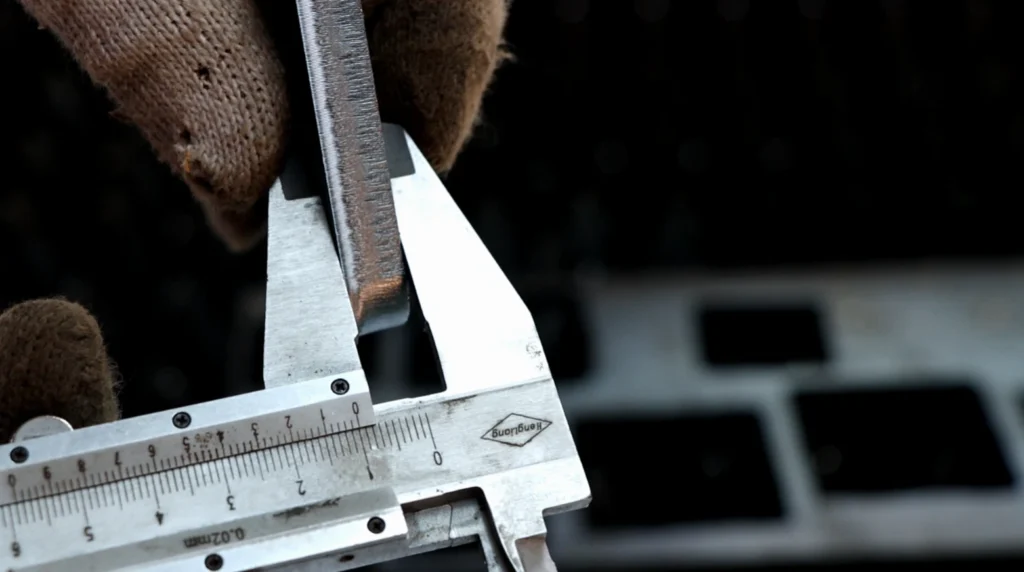
Table 2: 6kW vs 12kW Cutting Speed & Assist Gas Benchmark
| Material | Thickness | 6kW Speed (m/min) | 12kW Speed (m/min) | Speed Gain | 6kW Gas | 12kW Gas |
|---|---|---|---|---|---|---|
| Carbon steel | 6mm | 6.0–7.5 | 12.0–15.0 | ~2.0× | O₂ | Air |
| Carbon steel | 10mm | 2.8–3.2 | 5.0–6.0 | ~1.8× | O₂ | Air |
| Carbon steel | 16mm | 1.2–1.5 | 2.2–2.8 | ~1.9× | O₂ | Air |
| Carbon steel | 20mm | 0.8–1.0 | 1.5–2.0 | ~2.0× | O₂ | Air |
| Stainless 304 | 6mm | 5.0–6.0 | 10.0–12.0 | ~2.0× | N₂ | Air |
| Stainless 304 | 10mm | 2.2–2.6 | 4.0–5.0 | ~1.9× | N₂ | Air |
| Stainless 304 | 16mm | 0.9–1.2 | 2.0–2.5 | ~2.2× | N₂ | Air |
Verified industrial benchmark data. Actual speeds vary with material grade, nozzle selection, and gas purity.
Ⅲ. Facility Infrastructure & Hidden Capex Checklist
1. Transformer and grid capacity
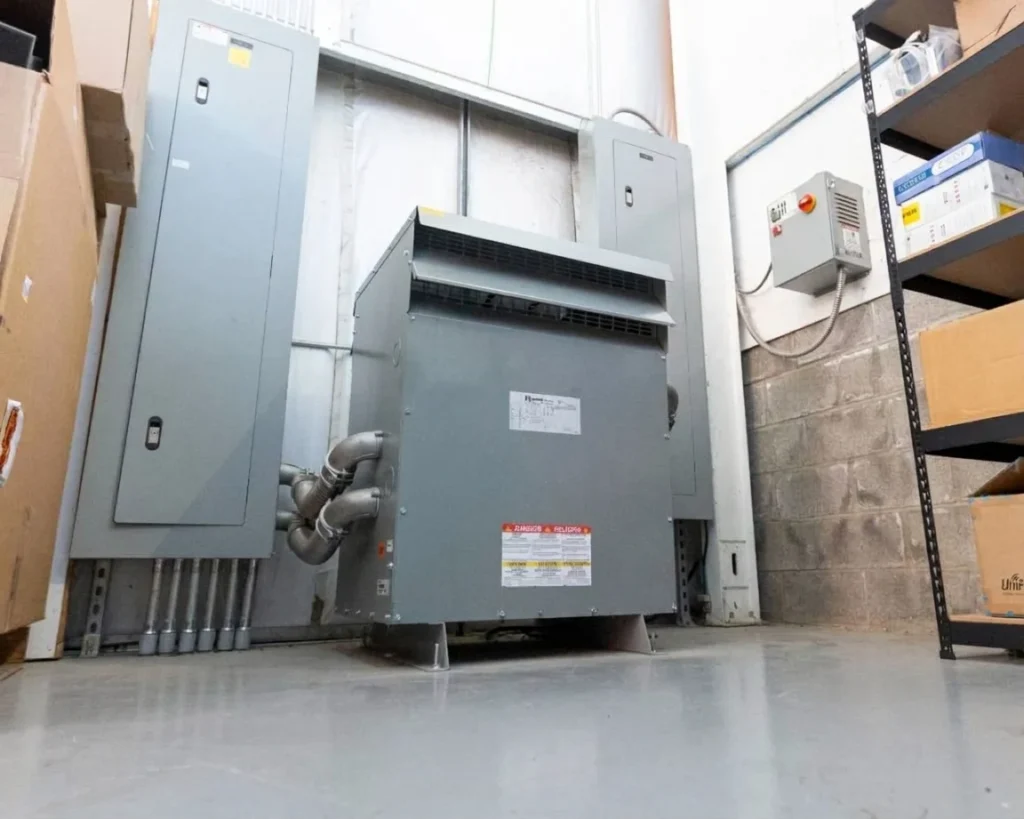
A 12kW source draws 55–70 kW from the wall including chiller and extraction. The transformer must be rated for 100–125 kVA to handle the peak load with margin. If the existing transformer is undersized, the upgrade cost is $3,000–$6,500 for a new transformer and switchgear.
2. Air compressor station
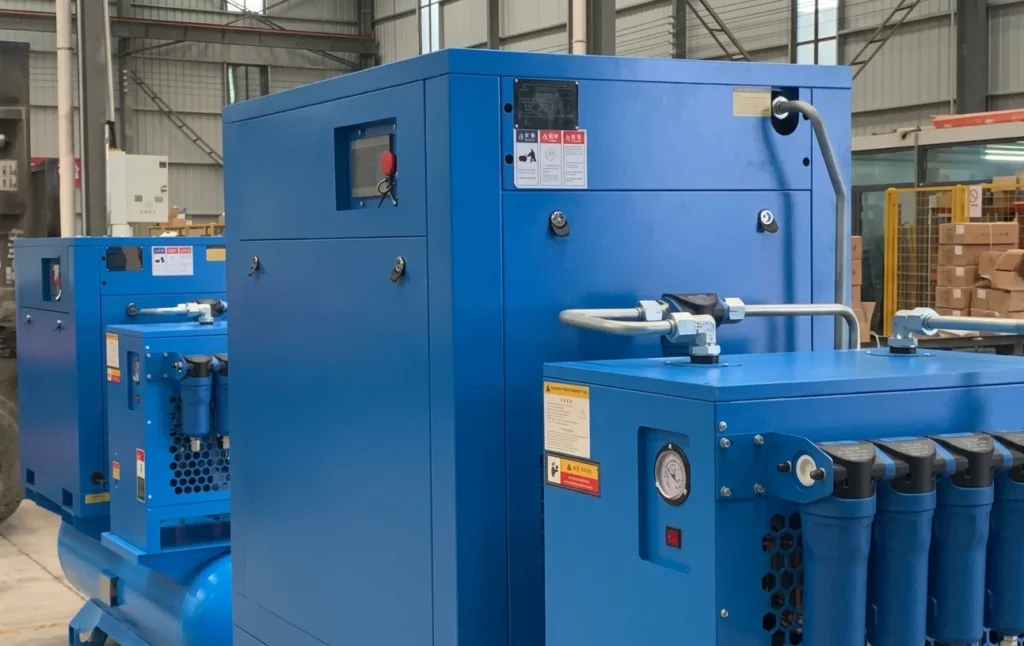
If the shop runs air assist, a 16–18 bar high-pressure compressor with a refrigerated dryer and four-stage filtration costs $6,500–$9,500 installed. This is a one-time cost that is recovered inside the first year of gas savings on thick plate.
3. Floor load and material handling
A 12kW machine with a heavy frame weighs 8–12 tons. The floor must be rated for 4.5 tons per square meter or higher. If the existing slab is not rated, the reinforcement cost is $8,000–$15,000 depending on the area.
Table 3: Facility Infrastructure Capex Checklist for 12kW Upgrade
| Item | Specification | Estimated Cost | Notes |
|---|---|---|---|
| Transformer & switchgear | 100–125 kVA | $3,000–$6,500 | If existing is undersized |
| Air compressor station | 16–18 bar, 4-stage filtration | $6,500–$9,500 | Required for air cutting |
| Floor reinforcement | 4.5 t/m² minimum | $8,000–$15,000 | If slab is underrated |
| Electrical wiring | High-current feed | $1,500–$3,000 | Depends on distance |
| Installation & commissioning | On-site assembly | $2,500–$5,000 | Includes alignment |
Based on typical job shop equipment capital expenditure benchmarks. Costs vary with site conditions and local labor rates.
Ⅳ. Insourcing Economics: Recovering Outsourced Thick Plate Work
1. The outsourcing loss
A job shop evaluating in-house vs outsourcing laser cutting for 12–20mm carbon steel pays the subcontractor’s material markup plus a 30%–40% gross margin. On a $10,000 monthly outsourcing bill, the shop is paying $3,000–$4,000 in subcontractor margin alone.
2. The hidden costs of outsourcing
Beyond the invoice, outsourcing adds lead time of 5–10 business days, freight cost, and the risk of fit-up rejects that come back at the shop’s expense. These costs do not appear on the quote but appear in the production log.
3. The insourcing benefit
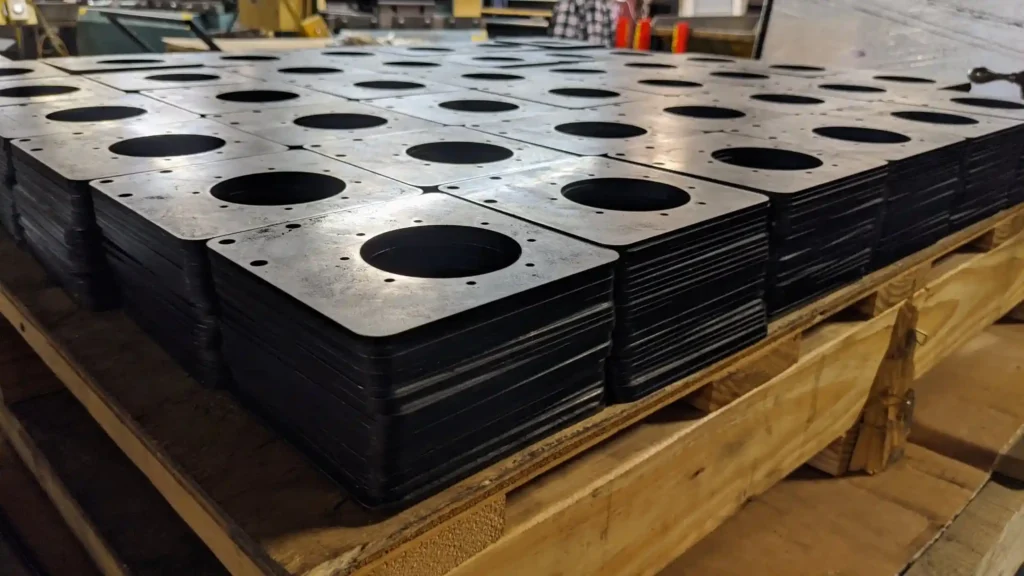
A 12kW machine brings the work in-house. The material markup disappears, the lead time drops to hours, and the fit-up quality is controlled internally. The shop recovers the margin it was paying out.
Ⅴ. 3-Year TCO & Financial Payback Modeling
1. The baseline assumptions
Dual-shift operation at 3,200 cutting hours per year. Sixty percent of outsourced 12–20mm work is recovered in-house. Air assist replaces part of the nitrogen consumption. Equipment is financed over 36–48 months.
2. The annual cash flow
The machine generates cash from three sources: the insourced work that was previously outsourced, the gas saving from switching thick plate to air assist, and the additional capacity that the higher speed creates.
3. The payback
At a purchase price of $52,000 (production tier) financed over 48 months at 8.5% APR, the monthly payment is roughly $1,280. The monthly cash benefit from insourcing and gas savings is $5,500–$6,800. The cumulative cash position reaches breakeven in 8.5–10.8 months.
Table 4: 3-Year TCO & Payback Model for 12kW Upgrade
| Cost / Benefit | Year 1 | Year 2 | Year 3 | 3-Year Total |
|---|---|---|---|---|
| Machine financing | $15,360 | $15,360 | $15,360 | $46,080 |
| Electricity & gas | $28,800 | $30,240 | $31,752 | $90,792 |
| Consumables & maintenance | $6,500 | $7,000 | $7,500 | $21,000 |
| Insourced work recovered | $66,000 | $69,300 | $72,765 | $208,065 |
| Gas savings (air vs N₂) | $18,000 | $18,900 | $19,845 | $56,745 |
| Net cash position | +$33,340 | +$35,600 | +$37,998 | +$106,938 |
Payback is calculated on cumulative cash position against total capex. The 8.5–10.8 month range assumes 60% insourcing and dual-shift operation. At single shift, payback extends to 14–17 months.
Ⅵ. CFO Equipment Acquisition Checklist
1. Thickness mix
A 12kW upgrade pays back fastest when more than 30% of cutting hours are on plate 10mm or thicker. Below that threshold, the machine’s speed advantage is underused, and a 6kW machine with higher acceleration may deliver better throughput on thin sheet.
2. Monthly outsourcing bill
If the shop spends more than $4,000 per month on outsourced 12–20mm work, the insourcing case is strong. Below $2,500 per month, the payback extends beyond 18 months and the upgrade is harder to justify.
3. Electrical capacity
The shop must confirm available transformer capacity before signing. A 100–125 kVA feed is the minimum. If the existing transformer is close to its limit, the upgrade cost must be added to the payback model.
4. Support and service radius
A 12kW machine is a production asset. Downtime cost is high. Verify the service response time and spare part availability in the shop’s region before finalizing the purchase.
Ⅶ. Finance & Operations FAQ
Q1: How much more does a 12kW machine cost per hour to run than a 6kW?
The electricity draw rises from 35–45 kW on 6kW to 55–70 kW on 12kW. At $0.12 per kWh, the difference is $2.40–$3.00 per hour. However, on thick plate the 12kW machine cuts faster and uses air assist instead of nitrogen, so the per-meter cost is often lower.
Q2: What is the annual maintenance and consumable cost difference?
Consumable cost rises roughly 40%–60% with power, driven by higher thermal load on the nozzle and protective lens. On a dual-shift operation, the annual difference is $2,000–$3,500. The heavier frame and bus-level control system have longer service intervals than the entry tier.
Q3: What is the residual value of a 12kW machine after 3–5 years?
A 12kW machine from a recognized manufacturer typically retains 45%–60% of its original value after three years, and 30%–40% after five years. Machines with an annealed heavy frame and documented service history retain the higher end of the range.
Q4: If the shop’s electrical capacity is insufficient, is a rented transformer or off-peak scheduling financially viable?
A rented transformer costs $400–$800 per month. Off-peak scheduling shifts the cutting hours to lower electricity rates. Both are viable short-term measures, but neither replaces a permanent capacity upgrade if the shop runs the machine continuously.
Engineering / Investment Verdict
A 12kW fiber laser cutting machine is not an incremental upgrade from 6kW. It is a change in the shop’s capability ceiling. The machine cuts thick plate fast enough to bring outsourced work in-house, and it runs air assist at a fraction of the nitrogen cost.
Before signing a purchase order, verify four things: the thickness mix of the shop’s cutting hours, the monthly outsourcing bill on thick plate, the available transformer capacity, and the service response radius. The machine specification follows from those four parameters.
At WSL, the 12kW platform is configured against the shop’s actual thickness mix and outsourcing profile. The machine is not sold as a standard package. It is specified to the insourcing opportunity the shop actually faces.
References
- ISO 9013:2017 — Thermal cutting — Classification of thermal cuts, ISO, 2017
- AWS D1.1/D1.1M — Structural Welding Code — Steel, American Welding Society
- IRS Section 179 — Election to Expense Certain Depreciable Business Assets, Internal Revenue Service
Further Reading
- 20kW Fiber Laser Cutting Machine: Cost & Payback — The next step up in power and payback.
- Laser Cutting Gas Cost: Nitrogen vs. Compressed Air TCO — The gas economics behind the 12kW air assist case.
- Laser Cutter Cost Per Hour: The Full Operating Ledger — The hourly cost model behind the payback.
- In-House vs Outsourcing Laser Cutting: Cost & ROI — The insourcing decision framework.





