
목차
Ⅰ. 서론
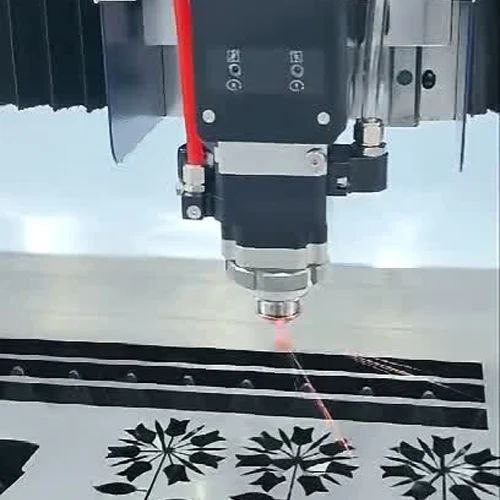
High precision laser cutting has transformed thick plate fabrication across heavy industry. Manufacturers processing steel plates over 20 mm traditionally relied on oxy acetylene cutting and plasma systems. Today, fiber laser technology at 12 kW to 30 kW shatters thickness barriers while delivering ±0.1 mm tolerances. Business Research Insights reports global fiber laser installations exceeded 92,000 units in 2024, with systems above 10 kW capturing 21% of heavy industrial applications. This shift signals a generational leap where material integrity directly impacts safety.
Ⅱ. Conquering the Thick Plate Challenge in Heavy Machinery
- The Evolution from Oxy Acetylene Cutting to Fiber Laser Technology
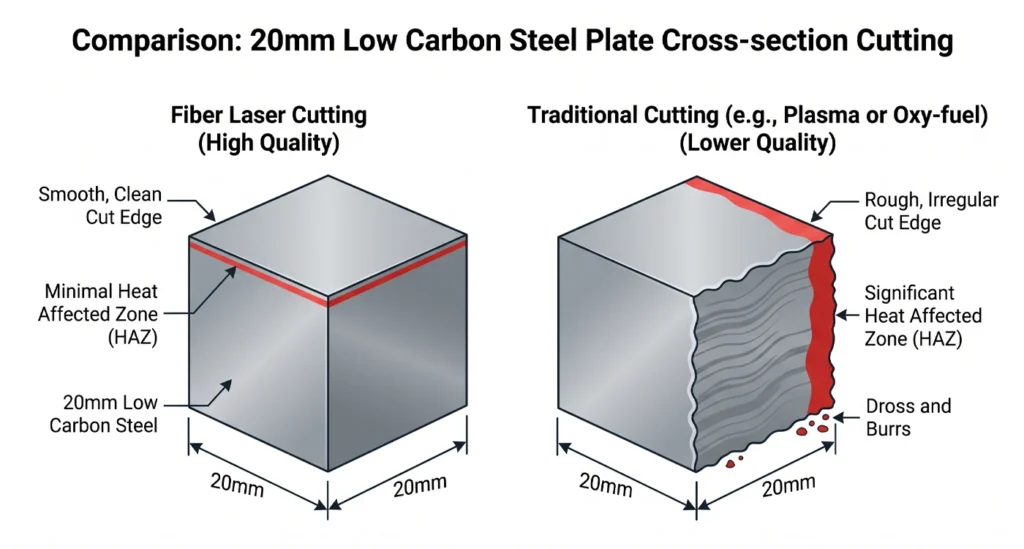
Traditional oxy acetylene cutting generates HAZ exceeding 3 mm and requires substantial grinding. High precision laser cutting restricts HAZ to 0.1–0.5 mm, preserving metallurgical properties of high-strength steels. Comparative studies confirm oxy acetylene cutting struggles with burn-through and thermal distortion, while high precision laser cutting maintains geometry integrity across all thicknesses.
- Material Thickness Capabilities in Modern Systems
Contemporary fiber lasers deliver production-grade cutting across previously plasma-dominated thicknesses:
| 레이저 출력 | Carbon Steel (Production) | Carbon Steel (Max) | Stainless Steel (Production) |
|---|---|---|---|
| 6 kW | 20–25 mm | ~30 mm | 12–20 mm |
| 12 kW | 30–40 mm | ~50 mm | 20–30 mm |
| 20 kW | 40–60 mm | ~80 mm | 30–40 mm |
| 30 kW | 40–50 mm | ~100 mm | 30–40 mm |
These figures show 12 kW systems handle most heavy machinery requirements, while 20 kW+ penetrates thicknesses previously reserved for plasma.
- Precision Demands in Heavy Equipment Manufacturing
Heavy machinery components demand repeatability plasma cannot deliver. High precision laser cutting achieves ±0.03 mm positioning accuracy, enabling bolt holes ready for immediate assembly. This capability eliminates secondary machining, reducing labor and shortening lead times by 30–40% compared to conventional workflows.
Ⅲ. Powering Large-Scale Transportation: Rail & Shipbuilding
- Railway Component Fabrication
The railway sector now operates large-volume, multi-variety production. High precision laser cutting processes carbon steel, stainless steel, and aluminum alloys within one cell. Components like engine brackets benefit from 0.1–0.3 mm kerf widths and minimal thermal distortion. Rail industry data confirms non-contact cutting prevents surface scratching while controlling deformation for fatigue-critical parts.
- Shipbuilding Applications
Marine construction demands exacting standards for hull curves and bulkhead penetrations. High precision laser cutting achieves ±0.1 mm accuracy, replacing mold stamping methods. Advanced 3D heads process contoured hull sections from digital models. Controlled heat input prevents corrosion-susceptible zones in stainless steel pipes, extending saltwater service life.
- Transport Infrastructure Tolerances
Transportation components must satisfy strict interoperability standards:
| Industry Sector | Typical Materials | 두께 범위 | Critical Requirements | Laser Advantage |
|---|---|---|---|---|
| Railway | Carbon steel, SS, aluminum | 6–30 mm | Fatigue resistance, exact fit | ±0.1 mm tolerance, minimal HAZ |
| Shipbuilding | Marine-grade steel, SS | 10–40 mm | Corrosion resistance | Clean edges, controlled heat input |
| Heavy trucks | High-strength low-alloy | 8–25 mm | Structural integrity | Narrow kerf, complex nesting |
| Aerospace | Titanium, aluminum alloys | 3–20 mm | Zero thermal distortion | Cold-process precision |
Ⅳ. Fiber Laser vs. Plasma: A No-Brainer for Heavy Industry
- Cutting Speed and Throughput
Conventional wisdom held plasma superior above 16 mm. IPG Photonics data overturns this. On 40 mm mild steel, a 60 kW fiber laser cuts 2.5× faster than 460 A plasma. For stainless steel, the advantage reaches 3.2×. A 40 kW laser at 8 m/min on 20 mm steel generates 38,000 meters monthly—double plasma output. High precision laser cutting thus delivers superior throughput even on traditionally plasma-dominated thicknesses.
- Edge Quality and Post-Processing
High precision laser cutting produces Ra 3.2–6.3 μm surface roughness on mild steel under 10 mm, with weld-ready edges. Plasma-cut edges require grinding—a secondary operation adding labor cost. The Kjellberg whitepaper confirms fiber lasers maintain ISO 1 perpendicularity while eliminating plasma’s taper and dross issues.
- Total Cost of Ownership
The comparison below shows why buyers favor high precision laser cutting:
| 요인 | 파이버 레이저 | Plasma | Oxy Acetylene |
|---|---|---|---|
| 절단 폭 | 0.1–0.3 mm | 1.5–3.0 mm | 3–6 mm |
| HAZ | 0.1–0.5 mm | 1–3 mm | 5–10 mm |
| Tolerance | ±0.1 mm | ±0.5–1.0 mm | ±1–2 mm |
| Edge Finish | Weld-ready | Requires grinding | Requires extensive cleanup |
| Speed (20 mm) | 4–8 m/min | 2–3 m/min | <1 m/min |
| Post-Processing | Rarely needed | Almost always | Always required |
Data from AMN Engineering and Kjellberg Finsterwalde. At $20,000 monthly operating costs for both systems, the laser’s doubled output achieves payback within 20 months.
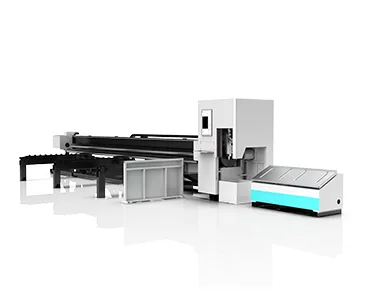
Ⅴ. Crucial Features of a Heavy-Duty Flatbed Laser Cutter
- Power Configuration and Beam Quality
A 12 kW system serves as the sweet spot for 10–20 mm material, while 20 kW+ justifies its premium for 30 mm+ plate. Beam parameter product (BPP) directly impacts thick-material edge quality; premium systems achieve lower BPP values maintaining focus through deep penetration. High precision laser cutting performance depends heavily on matching power rating to daily production requirements.
- Bed Size and Material Handling
Heavy-duty flatbed cutters need reinforced frames for multi-ton loads. Exchange tables minimize idle time. Beds of 4020 mm × 2000 mm accommodate standard mill stock. Automated handling—integrated in 47% of new U.S. installations—improves safety with 25 mm+ plates.
- Automation and Smart Manufacturing
Modern systems use AI-driven nesting that reduces material waste by 12%. Real-time monitoring adjusts parameters for rust or thickness variations. These Industry 4.0 features enable predictive maintenance maximizing availability across shifts.
The matrix below outlines essential capabilities:
| Feature Category | Entry Heavy-Duty | Professional Heavy-Duty | Industrial Heavy-Duty |
|---|---|---|---|
| Power Range | 6–8 kW | 12–15 kW | 20–30 kW+ |
| Max Plate Thickness | 25 mm | 40 mm | 60–100 mm |
| 위치 측정 정확도 | ±0.05 mm | ±0.03 mm | ±0.03 mm |
| 침대 크기 | 3015 × 1525 mm | 4020 × 2000 mm | 6020 × 2500 mm |
| Automation | Manual loading | Exchange table | Full automatic flow |
Ⅵ. 자주 묻는 질문
What thickness can high precision laser cutting handle? Modern systems process carbon steel up to 60 mm at production speeds using 20 kW, with 12 kW handling 30–40 mm plate.
How does high precision laser cutting compare to oxy acetylene cutting? Oxy acetylene produces HAZ exceeding 5 mm with extensive post-processing. High precision laser cutting reduces HAZ to 0.1–0.5 mm with weld-ready edges.
Can a 12 kW laser replace plasma and oxy fuel equipment? For shops where 90% of work falls below 30 mm, a 12–20 kW fiber laser replaces legacy systems while eliminating grinding stations.
Which industries benefit most from heavy-duty flatbed laser cutters? Heavy machinery, railway production, shipbuilding, and structural steel fabrication require the precision and versatility that high precision laser cutting delivers consistently.
How does automation impact ROI? Automated handling and AI nesting reduce labor by 20–25% and material waste by 12%, achieving ROI within 18–24 months.
Ⅶ. 결론
High precision laser cutting has evolved from thin-sheet specialist to dominant force in thick plate manufacturing. The convergence of high power, refined beam quality, and intelligent automation outperforms plasma and oxy acetylene cutting on speed, accuracy, and economics. For manufacturers in heavy machinery, railway, and shipbuilding, heavy-duty flatbed laser technology represents strategic competitive positioning. Explore more insights on our 기술 블로그 covering advanced fabrication solutions and equipment selection guidance.