
In semi-trailer manufacturing, the main chassis rail is the structural backbone of the entire vehicle. These components are exceptionally long, typically ranging from 40 to 53 feet (12 to 16 meters). Historically, fabricators have relied on high-definition plasma or oxy-fuel cutting for these thick-gauge high-strength steels.
Because traditional flatbed lasers maxed out at 6 meters, manufacturers were forced to cut the rails in two pieces and splice them together with a butt weld. This introduced a critical point of failure under cyclic road loads and required expensive non-destructive testing (NDT).
This guide examines the operational and financial shift enabled by integrating a large format laser cutter into your workshop. We analyze the elimination of the 13-meter weld seam, the transition to gantry laser cutting machine architectures, and the true 5-year Total Cost of Ownership (TCO) compared to traditional multi-step fabrication.
Ⅰ. The Weld Seam Penalty: Why 13-Meter Beams Cannot Be Spliced
When a 13-meter chassis rail is cut in half on a standard 6-meter bed and welded back together, the weld seam becomes a structural liability. In a fully loaded trailer, the main beam undergoes extreme cyclic bending and torsion.
To ensure safety, the spliced joint requires 100% radiographic or ultrasonic testing (NDT). This QA step slows down the production line and adds significant labor costs. Furthermore, the heat-affected zone from the splice weld can alter the metallurgical properties of high-strength steel (like Q550 or ASTM A572), reducing fatigue life and requiring post-weld straightening, a core limitation overcome by investing in a modern large format laser cutter system.
2. The single-pass alternative
A large format laser cutter equipped with a 12-meter or 16-meter bed processes the entire rail in a single setup. The CNC system utilizes dynamic thermal expansion compensation across the massive span to ensure that the kingpin holes and suspension mounting holes maintain absolute pitch tolerance.
This eliminates the weld seam entirely, guaranteeing structural integrity and removing the need for post-weld straightening and NDT inspection.
Ⅱ. Machine Architecture: Moving to Gantry Ground Rails
1. The physical limits of standard beds
Engineering a dedicated large format laser cutter is not simply stretching a standard 3015 machine bed to 13 meters. The thermal expansion of a 13-meter steel frame would warp the guide rails, making precision cutting impossible.
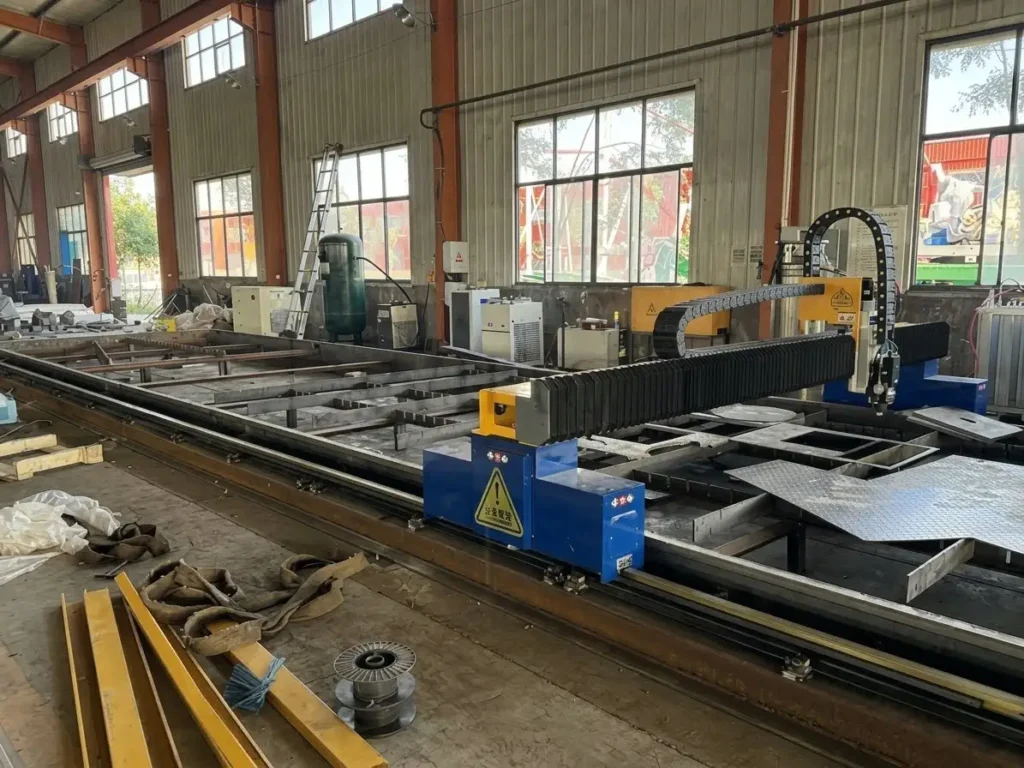
To process ultra-long plates, fabricators must adopt a gantry laser cutting machine with ground rails. Instead of the machine moving on a bed, the gantry bridge travels along heavy steel rails anchored directly to the factory floor.
2. Dual-drive synchronization
On a gantry system spanning 12 to 24 meters, the bridge is driven by independent servo motors on parallel rails. If the two sides are not perfectly synchronized, the gantry will twist (crab-walking), resulting in out-of-square cuts. Modern CNC systems monitor motor torque and position in real-time to keep the bridge perfectly square across its entire span.
Table 1: Standard Bed vs. Gantry Ground Rail Architecture
| Parameter | Standard 6m Bed | Large Format Gantry (12m–16m) |
|---|---|---|
| Max Plate Length | 6,000 mm | 12,000 mm – 16,000 mm |
| Bed Structure | Self-contained moving gantry | Fixed ground rails, isolated foundation |
| Splicing Requirement | Required (13m cut in two) | Not required (Single-pass) |
| Precision Retention | High (≤6m) | High (via dynamic thermal compensation) |
| Floor Load Requirement | 150 mm standard slab | Engineered isolated plinth / piling |
Ⅲ. High-Power Laser vs. Plasma: The TCO on 10mm Steel
1. The consumable bleed
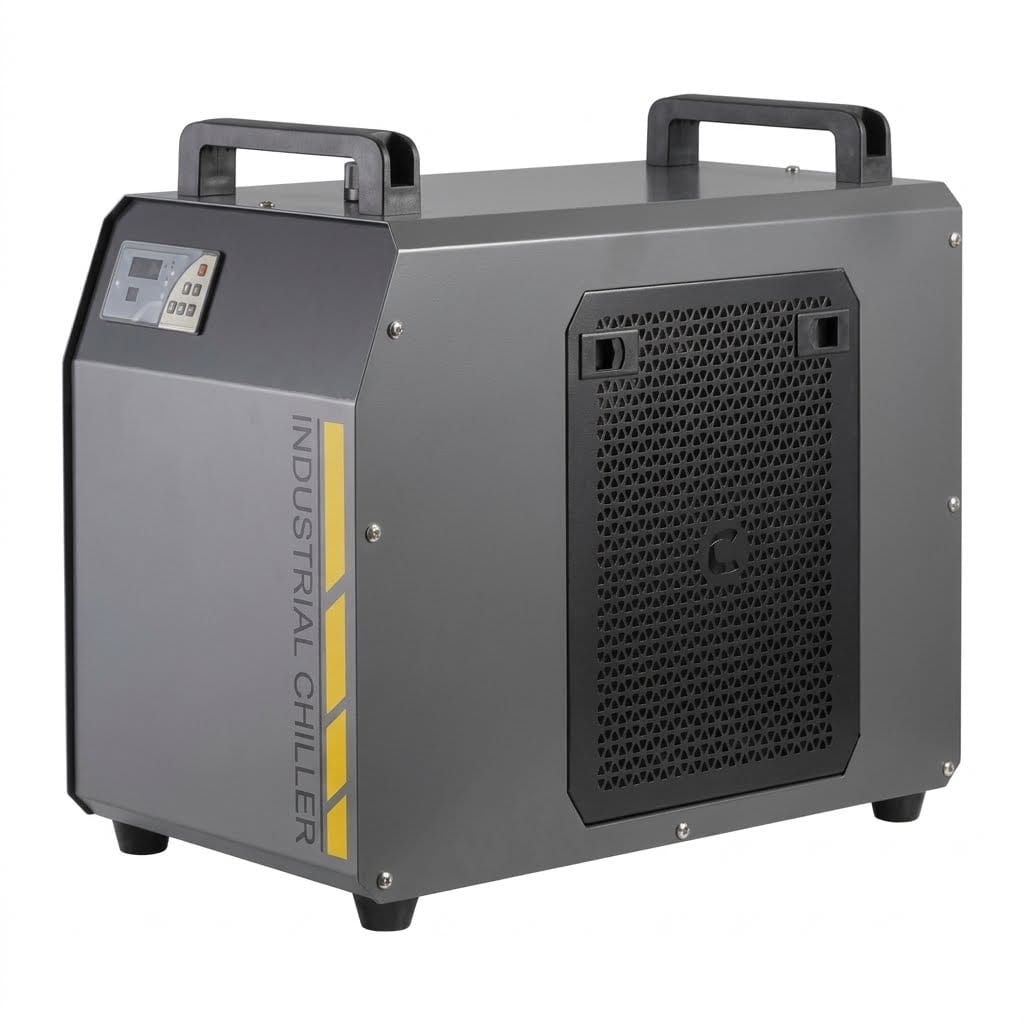
While plasma has a lower initial purchase price, its operating expenditure (OpEx) on thick plate is brutal. A plasma torch consumes electrodes and nozzles rapidly. On a 10mm chassis rail, a plasma cut produces a distinct edge taper.
This taper means the suspension brackets will not sit flush,requiring secondary grinding or excessive weld wire to bridge the gap, driving shops toward an industrial large format laser cutter for clean perpendicularity.
2. The laser advantage
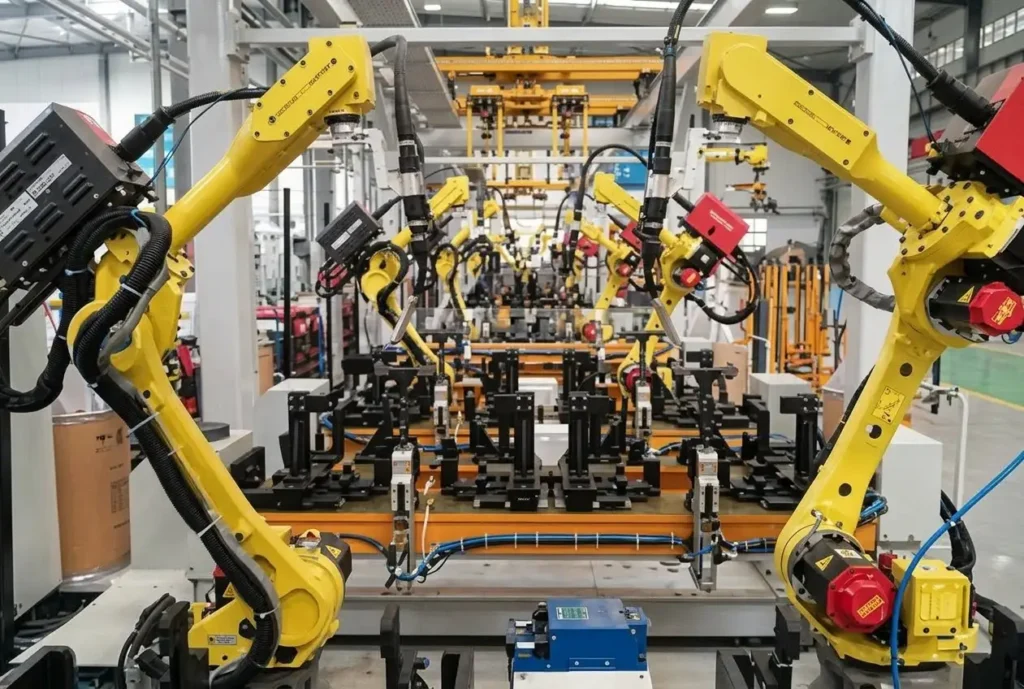
A high-power fiber laser (12kW to 20kW) cuts 10mm carbon steel at high speeds using oxygen or filtered compressed air. Maintaining clean assist gas compliant with ISO 8573-1 Class 1.2.2 prevents edge contamination and porosity during automated assembly. The cut edge satisfies ISO 9013 Range 2-3 tolerances, allowing downstream robotic cells to achieve a tight fit-up without manual grinding, as detailed in our 12kW fiber laser cutting machine price and factory upgrade guide.
Table 2: 10mm Carbon Steel Cutting OpEx Comparison (Per 8-Hour Shift)
| Cost Category | High-Definition Plasma (260A) | Fiber Laser (12kW) | Operational Impact |
|---|---|---|---|
| Consumable Cost / Shift | $80 – $120 | $15 – $25 | Electrodes vs. lenses and nozzles |
| Assist Gas Cost / Shift | $40 – $60 | $30 – $45 | High volume vs. O₂ reaction |
| Secondary Grinding Labor | $120 – $200 | $0 | Laser eliminates edge taper cleanup |
| Total Variable Cost / Shift | $240 – $380 | $45 – $70 | 80% reduction in variable costs |
Ⅳ. Workshop Logistics: Feeding the Machine
1. The crane and material flow challenge
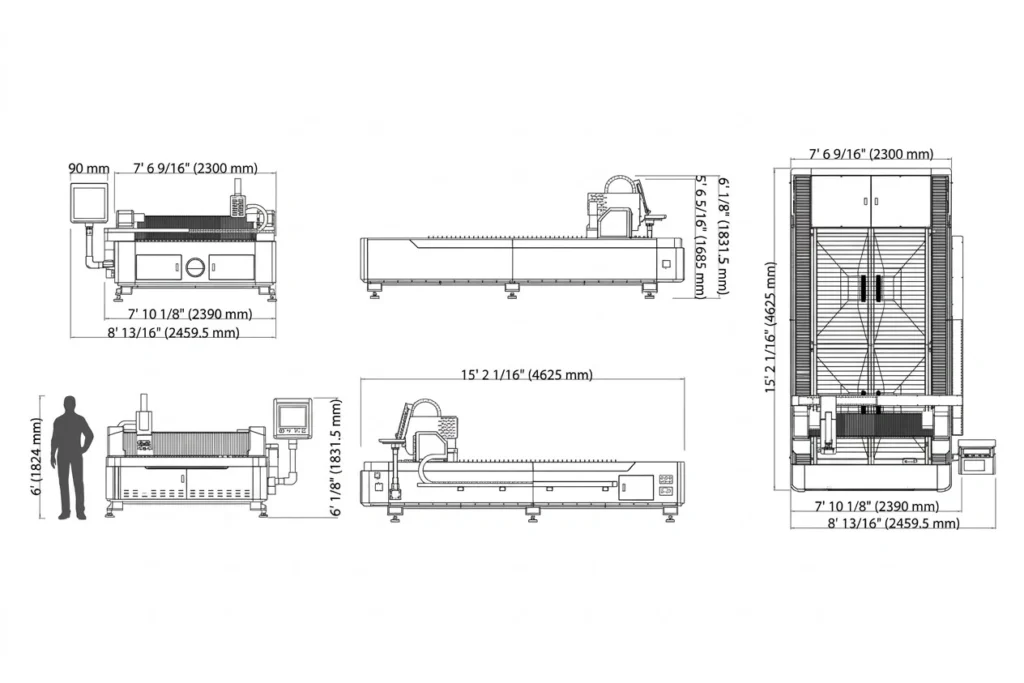
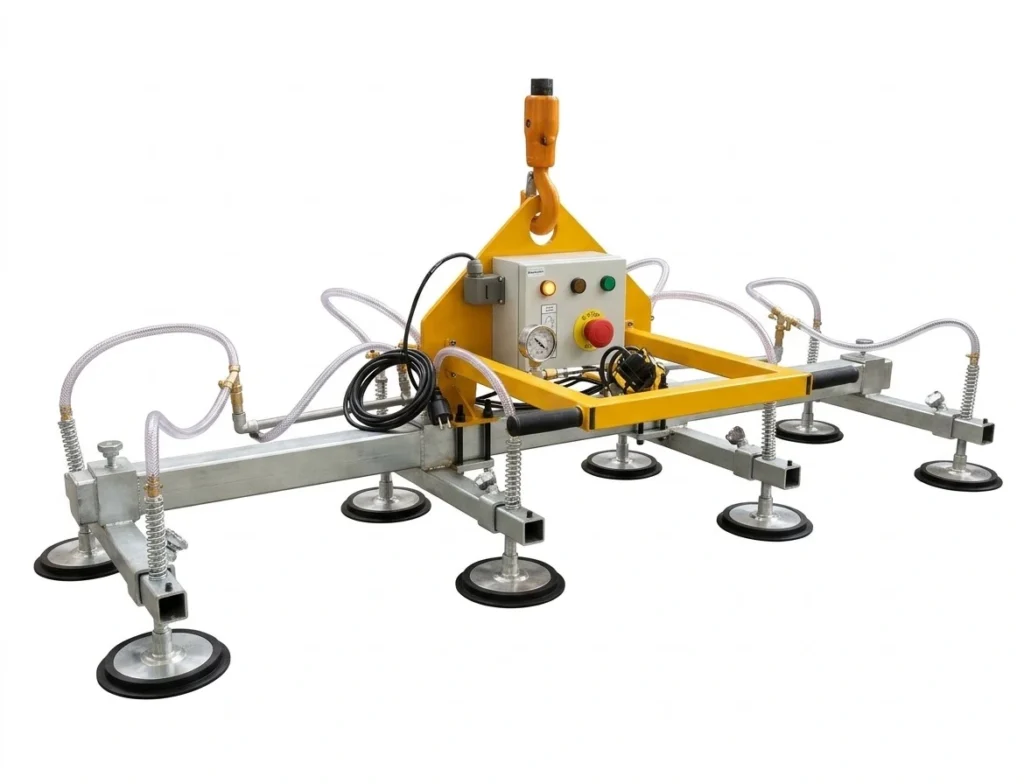
Operating an extra-long large format laser cutter introduces severe shop floor logistics challenges. A full 13-meter plate of 10mm steel weighs over 1,000 kg. The workshop must be equipped with overhead cranes (at least 10-ton capacity) that span the entire length of the loading zone.
The layout must follow a strict linear flow: raw plate storage at one end, loading onto the gantry bed in the middle, and offloading the cut chassis rails at the far end.
2. Foundation and footprint
Integrating a large format system requires a substantial capital investment in the facility. The foundation must be isolated to prevent shop floor vibration from affecting cut tolerances, as outlined in our analysis on machine bed structural rigidity and foundation vibration control.
Table 3: Facility Space & Infrastructure Requirements
| Equipment Platform | Operating Footprint | Nominal Weight | Foundation Requirement | Power (kVA) |
|---|---|---|---|---|
| Standard 3015 Laser | 15.73 m² | 1,318 kg | 150mm standard reinforced slab | 45 kVA |
| 6025 Heavy Bed | 32.53 m² | ~5,500 kg | 200–250mm reinforced concrete | 85 kVA |
| 13m+ Custom Gantry | > 45.00 m² | > 8,000 kg | Isolated piling / anti-vibration trench | 120 kVA – 150 kVA |
Ⅴ. Financial Payback and Section 179
1. The capital expenditure
A fully equipped 12kW large-format gantry system (12m bed) represents a significant capital investment. However, deploying a heavy-duty large format laser cutter eliminates secondary operations to create a massive cumulative cash advantage.
2. Accelerated cash flow
The primary financial driver is the elimination of splicing, NDT, and post-weld straightening. Furthermore, in the United States, the IRS Section 179 deduction allows fabricators to deduct the full purchase price of qualifying equipment in the tax year it is placed in service. This creates a significant cash shield that drastically shortens the payback period.
Table 4: 5-Year TCO Comparison (Annual Production: 500 Chassis Rails)
| Cost Category | Plasma + Splice Weld | 12kW Laser (13m Gantry) | Savings / Impact |
|---|---|---|---|
| Equipment CapEx | $250,000 | $650,000 | Higher initial investment |
| 5-Year Consumables & Gas | $380,000 | $120,000 | $260,000 saved |
| Secondary Grinding & NDT | $175,000 | $0 | Eliminates weld inspection |
| Scrap & Rework (Splice Failure) | $60,000 | $5,000 | Higher first-pass yield |
| Total 5-Year TCO | $865,000 | $775,000 | $90,000 Net Savings |
Ⅵ. Frequently Asked Questions
Can a fiber laser cut a 13-meter chassis rail in one piece?
Yes. Custom large format laser cutters are built with bed lengths of 12 to 16 meters. The machine is equipped with dynamic thermal compensation to ensure that the hole pitch remains accurate across the entire length of the beam, eliminating the need for splicing.
What is the difference between a standard bed and a gantry laser cutter?
A traditional CNC unit carries the gantry on a moving frame, whereas an industrial large format laser cutter utilizes fixed ground rails, limiting the length to about 6 meters. A gantry laser cutter uses fixed ground rails anchored to the floor, allowing the bridge to travel across 12 to 24 meters without losing structural rigidity.
How does plasma cutting compare to laser for thick trailer beams?
Plasma is faster to set up but slower in the long run. Plasma leaves a tapered edge that must be ground before robotic welding. Laser cutting produces a square, weld-ready edge, significantly reducing the labor required to assemble the chassis.
What floor foundation is needed for a 13-meter large format laser cutter?
A 13-meter ground rail gantry system requires an engineered concrete foundation with an anti-vibration trench. This isolates the ground rails from nearby overhead cranes and stamping presses, preventing mechanical deflection and preserving cut perpendicularity across long spans.
References
- ISO 9013:2017 — Thermal cutting — Classification of thermal cuts, International Organization for Standardization
- ISO 8573-1:2010 — Compressed air — Contaminants and purity classes, International Organization for Standardization
- IRS Section 179 — Election to Expense Certain Depreciable Business Assets, Internal Revenue Service
Further Reading
- Laser vs Plasma Cutting: Real TCO & Payback — Detailed 5-year operating ledger comparing thick-plate plasma vs high-power fiber laser cutting.
- Heavy Plate Laser Processing: Railway & Shipbuilding Standards — Precision tolerance control and beveling standards for heavy structural plates.
- CNC Laser Cutting Machine: Metal Fabrication & Workshop Setup Guide — Complete guide to factory power, foundation, and layout.
- Fiber Laser Financing: Capital Lease, Bank Financing & Section 179 — Structuring the CapEx for large-format equipment.