
The sheet metal punching machine built the modern electrical enclosure industry. For decades, a turret punch press with a full tooling library was the fastest way to turn a 4×8 sheet into a cabinet back panel with dozens of knockouts, mounting holes, and ventilation slots.
That assumption no longer holds for most shops. A modern fiber laser cuts the same parts at comparable speed on thin gauge, with zero tooling cost, higher nesting yield, and no changeover time between jobs. The calculation has shifted—but not uniformly. There is still a case for the laser punch combo in specific production environments. This guide compares the three architectures—pure turret punch, laser punch combo, and pure fiber laser—across tooling capex, material yield, thickness capability, and high-mix low-volume (HMLV) economics.
1. The physical tool library inventory burden
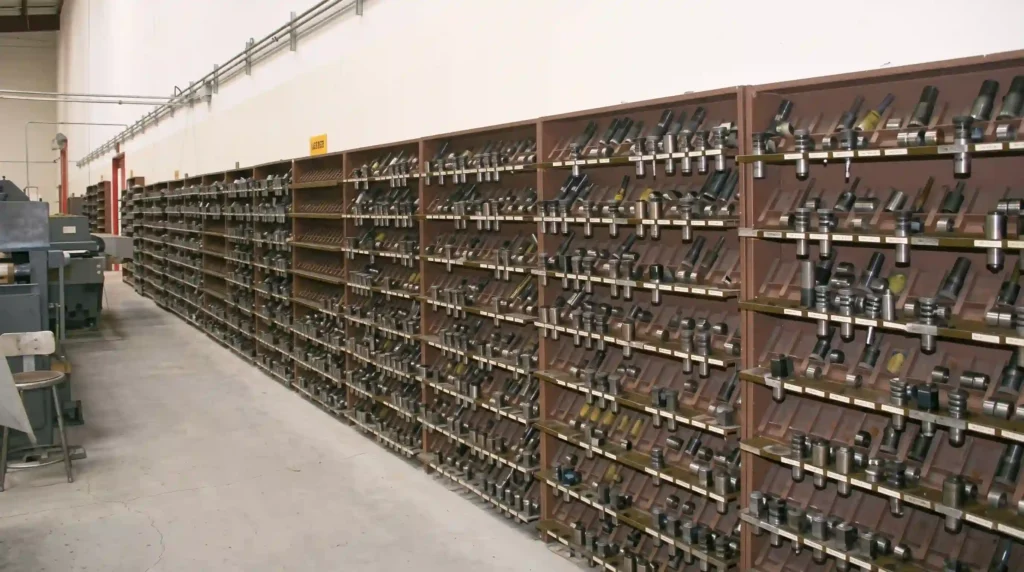
A standard turret punch press requires 30–50 sets of standard tooling plus custom forming dies for shaped features. Each custom die costs $3,000–$8,000 to design and manufacture, and each standard tool requires periodic regrinding, TiN coating renewal, and replacement when the cutting edge chips.
For a shop running 200 different part numbers, the tooling library becomes a significant capital asset sitting on shelving—and a recurring maintenance cost that never appears in the machine’s purchase price.
2. Setup, indexing, and station changeover latency
A turret punch press must load the correct tool into the correct station and verify alignment before each job. On an HMLV schedule where the next job uses a different set of tools, changeover runs 30–60 minutes per batch. The machine sits idle while the operator swaps and aligns tooling.
A fiber laser reads the CAD file and cuts. There is no tool to load, no station to verify, no alignment to dial in. The changeover time between two laser jobs is the time required to load the next sheet—typically under two minutes on a shuttle table.
3. Drafting-to-part production cycles
A new part on a punch press requires tooling design, die fabrication, and press setup—a 2–3 week cycle from drawing to first part. On a fiber laser, the same drawing becomes a cut part in 15 minutes. For operations transitioning away from hard dies, integrating continuous laser blanking line and stamping solutions demonstrates how eliminating mechanical dies unlocks immediate production agility for custom enclosure manufacturing.
Table 1: Tooling Costs, Maintenance & Setup Time: Fiber Laser vs. Turret Punch
| Cost Category | Fiber Laser | Turret Punch Press | Laser Punch Combo |
|---|---|---|---|
| Initial tooling library | $0 | $45,000–$120,000 | $45,000–$120,000 |
| Custom die per new feature | $0 | $3,000–$8,000 | $3,000–$8,000 |
| Tool regrinding/coating per year | $0 | $4,000–$8,000 | $4,000–$8,000 |
| Setup time per job change | < 2 min | 30–60 min | 30–60 min (punch side) |
| Drawing-to-first-part cycle | ~15 min | 2–3 weeks | 2–3 weeks (with new tooling) |
Ⅱ. Nesting Yield & Scrap Reduction: Clamp Margins vs. Common-Line Laser Cutting
1. The structural dead zone of sheet metal punching machines
A turret punch press grips the sheet with pneumatic clamps that must remain clear of the punching zone. Combined with the skeleton webbing required to hold parts in place during the punching sequence, the clamp dead zone and bridge margins eliminate approximately 150–250 mm of usable sheet edge on a standard 1500 × 3000 mm format.
That structural loss represents 18–22% of the sheet. The practical nesting yield for a sheet metal punching machine on a typical enclosure part mix lands at 78–82%.
2. Edge-to-edge common-line cutting and micro-joints
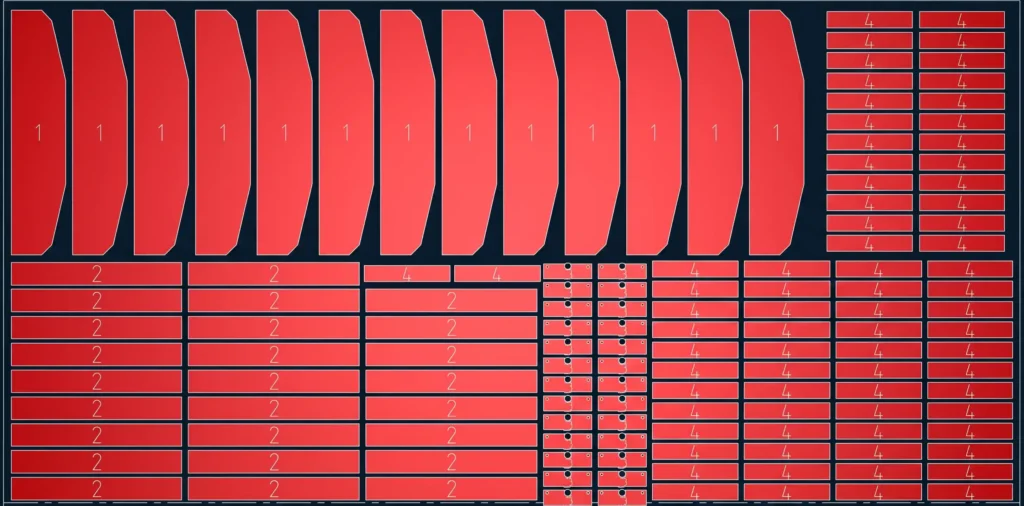
A fiber laser does not need to grip the sheet at the edge. The cutting head moves over the entire surface, and adjacent parts can share a common cut line (common-line nesting) with micro-joints holding the skeleton together until the nest is complete. The practical nesting yield rises to 92–95%.
The difference between 80% and 93% yield on the same sheet is not a marginal improvement—it is 13 percentage points of raw material that either becomes finished parts or becomes scrap.
3. The cumulative raw material cost ledger
For a shop consuming 50 tons of cold-rolled steel (SPCC) and stainless sheet per month, a 13% yield improvement saves 6.5 tons of material per month. At a blended rate of $800/ton, that is $5,200 per month, or $62,400 per year in raw material savings alone.
Table 2: Nesting Yield & Sheet Metal Scrap Delta Ledger
| Parameter | Turret Punch Press | Fiber Laser | Delta |
|---|---|---|---|
| Standard sheet | 1500 × 3000 mm | 1500 × 3000 mm | — |
| Clamp/bridge dead zone | 150–250 mm edge loss | 0 mm (no clamps) | — |
| Practical nesting yield | 78–82% | 92–95% | +13–14 points |
| Monthly material consumption | 50 tons | 50 tons | — |
| Material wasted per month | ~10 tons | ~3.5 tons | −6.5 tons |
| Annual material savings at $800/ton | Baseline | — | $62,400 |
Ⅲ. Thickness Boundaries & Contour Complexity: Mechanical Shear vs. Thermal Beam
1. Mechanical tonnage limits on medium-gauge plate
A 20–30 ton turret punch press operates efficiently up to 3–4 mm thickness. Beyond that, punching force requirements rise sharply, tooling chipping becomes a frequent failure mode, and the stripping mechanism struggles to release the part cleanly from the die.
A fiber laser cuts from 1 mm to 16 mm (and up to 25 mm on high-power systems) without any tooling change. The same machine that cuts 1 mm electrical cabinet panels cuts 12 mm mounting brackets without a setup adjustment.
2. Geometric freedom and inner contour micro-features
A mechanical punch cannot cut a hole smaller than the punch diameter, and the punch diameter is limited by the die strength and the material thickness. The practical minimum for a punched hole is roughly 1:1 with the material thickness, and smaller holes require a custom die.
A fiber laser cuts any contour the CAD file defines—slots narrower than the material thickness, irregular inner cutouts, and high-aspect-ratio features that no punch could produce.
3. Secondary edge deburring and mechanical burr elimination
Punching shears the metal, leaving a shear zone, a fracture zone, and a burr on the exit edge. That burr must be removed before the part can be painted or welded. Deburring is manual labor—typically 0.5–1.5 hours per ton of punched parts.
A fiber laser with correctly tuned parameters produces an edge that meets ISO 9013 Range 2–3 without secondary deburring. The part goes directly from the cutting table to the press brake or the weld station.
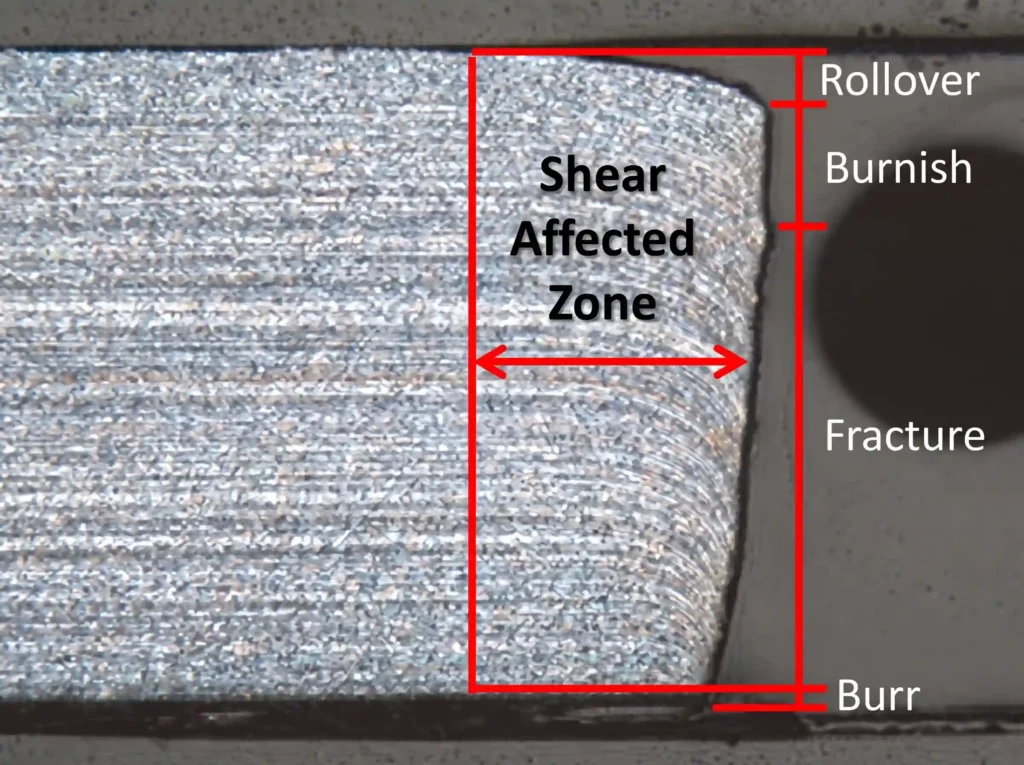
Table 3: Material Thickness & Contour Capability Comparison (1mm–16mm)
| Capability | Turret Punch Press | Fiber Laser |
|---|---|---|
| Efficient thickness range | 0.5–3 mm | 1–16 mm (25 mm high power) |
| Max thickness before tool failure | 4–6 mm | No tooling limit |
| Minimum hole diameter | ~1× material thickness | 0.5× material thickness or smaller |
| Complex irregular contours | Custom die required | Free from CAD |
| Edge burr | Shear burr, requires deburring | ISO 9013 Range 2–3, minimal burr |
| Post-cut deburring labor | 0.5–1.5 hr/ton | < 0.1 hr/ton |
Ⅳ. Production Economics: When Does a Laser Punch Combo Still Justify Its Investment?
1. The engineering role of laser punch combo machines
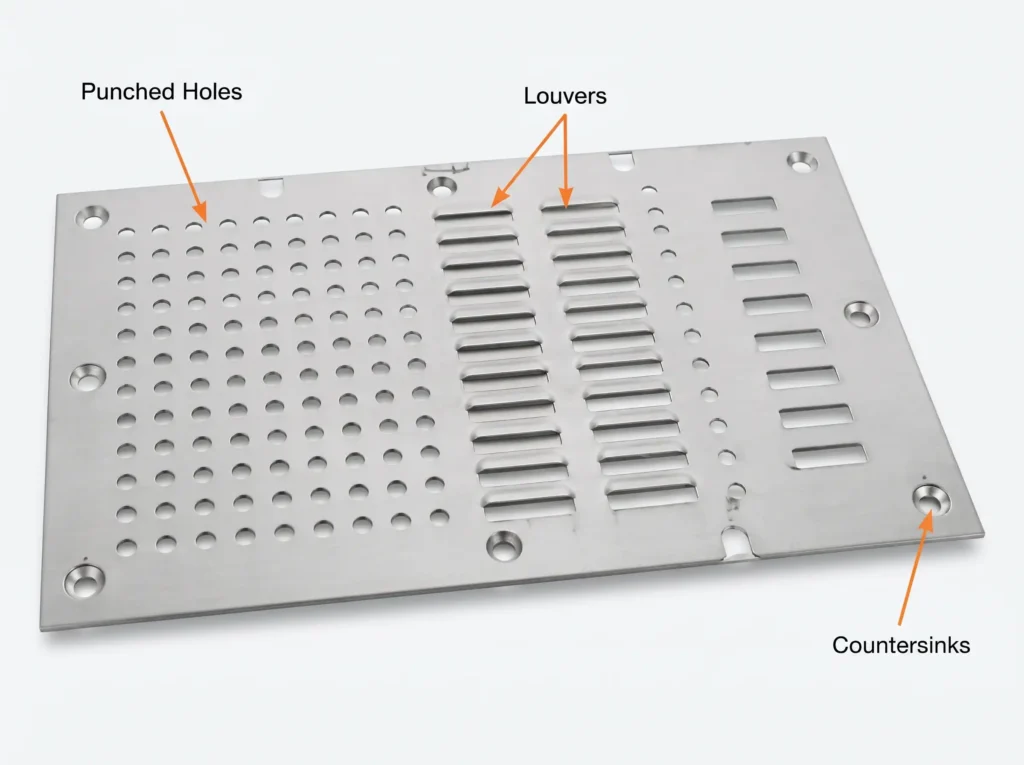
The laser punch combo is not obsolete. It combines a fiber laser head with a reduced turret for forming operations that a laser cannot perform: louvers, countersinks, extruded and tapped holes, and embossed features. In a shop that manufactures standardized electrical enclosures with dozens of these features per panel, the combo machine eliminates a secondary forming operation.
The question is not whether the combo machine is useful—it is whether the production volume justifies the capital.
2. Capex, footprint, and maintenance complexity
A laser punch combo carries 2–2.5× the initial capex of a pure fiber laser, plus the maintenance burden of hydraulic and servo multi-axis systems, plus the tooling library. The failure mode risk is also higher: a hydraulic fault or a turret indexing error stops the entire machine, including the laser function.
3. The hybrid shop configuration rule
For most mid-size fabrication shops, the optimal asset layout is not a combo machine. It is a dedicated high-speed fiber laser cutting 80% of the volume—general blanking, prototypes, complex contours—supported by a small number of dedicated forming machines for the specific features that punching handles better.
Reviewing shop floor utility data via operational laser cutter cost per hour calculations confirms that isolating high-speed sheet profiling on an independent exchange platform fiber laser cutting machine yields significantly lower machine-hour rates than running forming tasks on an expensive multi-axis combo station.
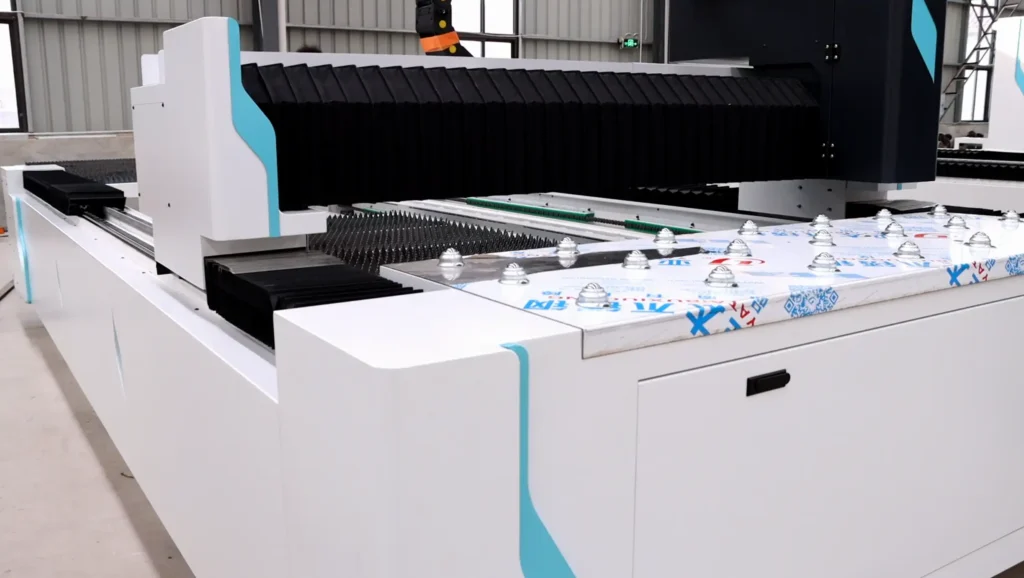
Table 4: 5-Year Capital Payback: High-Mix Low-Volume (HMLV) Production Model
| Cost Category | Fiber Laser + Forming Press | Laser Punch Combo |
|---|---|---|
| Initial capex | $280,000 + $60,000 | $450,000–$550,000 |
| Tooling library (5 years) | $30,000 (forming only) | $60,000–$100,000 |
| Annual maintenance | $8,000 | $20,000–$30,000 |
| Annual electricity | $18,000 | $28,000 |
| 5-year total operating cost | $340,000 | $610,000–$740,000 |
| Payback vs. combo baseline | — | 3–4 years (only at high volume) |
Ⅴ. Frequently Asked Questions
Is a fiber laser faster than a CNC turret punch press?
For standard round hole patterns on thin gauge, a turret punch is faster because it can hit multiple holes per second without repositioning. For complex outer contours, irregular shapes, and mixed hole sizes, a fiber laser is faster and requires no tooling change. The speed advantage depends on the part geometry.
Can a fiber laser perform forming operations like louvering or tapping?
No. A fiber laser cuts and drills, but it cannot form louvers, emboss features, or extrude and tap holes in a single pass. Those operations require a punch press or a laser punch combo. For shops with significant forming content, a hybrid configuration of laser plus forming press is the efficient solution.
How much material does common-line laser nesting save compared to punching?
On a standard 1500 × 3000 mm sheet, a laser punch combo machine’s clamp dead zone and skeleton bridge margins eliminate 18–22% of usable sheet area. Laser common-line nesting recovers most of that loss, raising utilization from roughly 80% to 93%—a 13-point yield improvement that translates to over $60,000 annually on 50 tons per month.
References
- ISO 9013:2017 — Thermal cutting — Classification of thermal cuts, International Organization for Standardization
- ISO 8573-1:2010 — Compressed air — Contaminants and purity classes, International Organization for Standardization
- IRS Section 179 — Election to Expense Certain Depreciable Business Assets, Internal Revenue Service
Further Reading
- In-House vs Outsourcing Laser Cutting: 2026 Financial Ledger — Break-even model for bringing outsourced cutting in-house.
- Gaining a Competitive Edge in Contract Sheet Metal Fabrication — HMLV agility and the economics of small-batch production.
- Fiber Laser vs. CO2 Laser Cutting for Metal — The full technology comparison behind the fiber laser selection decision.
- CNC Fiber Laser Cutting Table Selection Guide — Table dimensions, shuttle options, and throughput planning.