
Buying a laser cutting table is not a catalog decision. The bed you choose determines the sheet sizes you can run, the throughput your shop can sustain across a shift, the safety compliance burden your facility carries, and the concrete foundation under your floor.
Most shops default to whatever table size is advertised, then discover six months later that the 5’×10′ mill-run sheet does not nest efficiently on a 4’×8′ bed, or that the exchange pallet they skipped is now the bottleneck capping output at 45% OEE. This guide works through the four decisions that actually matter when selecting a laser cutting table for an industrial shop. For full electrical utility provisioning before rigging, review our fiber laser electrical load and foundation setup guide, and to evaluate upstream raw material logistics, see our breakdown on sheet metal automation and lights-out manufacturing.

Ⅰ. Standard Laser Table Dimensions: Why 5’×10′ (1530) Dominates Fabrication
1. The 5’×10′ standard: Nesting efficiency for mill-run steel sheets
The 1,500 mm × 3,000 mm format—5’×10′ in imperial shops, 1530 in metric—is the default because it matches how steel mills cut and ship sheet. A 5’×10′ table accepts the standard mill-run sheet with minimal edge trim, so nesting yield stays high and offcut waste stays low.
Smaller tables force you to order cut-to-size stock or accept trim loss on every sheet. Larger tables handle oversize plate but sit idle when the job mix is standard-gauge work. For most job shops, the 5’×10′ laser table cutter is the correct default.
2. When to scale: 4’×8′ compact shops vs. 6’×20′ heavy plate gantries
A 4’×8′ table makes sense for shops running cabinetry-scale sheet metal or limited floor space. A 6’×20′ gantry makes sense for trailer frames, ship panels, and structural plate where the sheet is longer than the table.
Between those extremes, the 5’×10′ format handles the majority of commercial sheet-metal work without compromising nesting yield or floor efficiency.
Table 1: Industrial Laser Cutting Table Dimensions & Footprint Ledger
| Machine Class | Representative Model | External Dimensions (L × W × H mm) | Operating Footprint | Machine Weight | Foundation Note |
|---|---|---|---|---|---|
| 3015 single bed | YH3015F | 4,580 × 2,250 × 1,700 | 15.73 m² | 1,318 kg | Standard 150 mm hardened floor |
| 3015 enclosed shuttle | YH3015BD | 6,575 (+5,271) × 2,277 × 2,308 | 30.45 m² | 4,391 kg | 200–250 mm reinforced slab |
| 6020 large format | YH6020A | 7,916.5 × 2,882 × 2,040 | 22.81 m² | TBD per configuration | End-feed channel required |
| 6025 gantry | YH6025AG | 7,880 × 4,127.58 × 2,119.54 | 32.53 m² | ~5,500 kg | Overhead crane infeed required |
Ⅱ. Single Bed vs. Dual Shuttle Pallet Changer: The OEE & Throughput Dividend
1. The non-cutting idle tax: Loading downtime in single-table setups
Every minute the laser is not cutting is a minute the capital is not earning. On a single-bed machine, loading the next sheet and unloading finished parts happens while the laser is idle. For a typical 5’×10′ sheet, that is 8–15 minutes per cycle.
Over a dual shift, that idle time compounds into hours of lost output per week. The machine is technically capable of cutting 20 hours a day; the single-bed workflow holds it to 9–11 effective cutting hours.
2. The 15-second pallet swap: Driving machine OEE from 45% to 85%+
A dual shuttle exchange pallet changes the equation. While the laser cuts on one pallet, the operator loads the next sheet on the second pallet outside the cutting zone. When the cut finishes, the pallets swap in roughly 15 seconds.
Effective cutting time rises to 16–17 hours per dual shift. This is what moves OEE from the 40–50% range on a single-bed machine to 80–88% on a properly planned shuttle system.
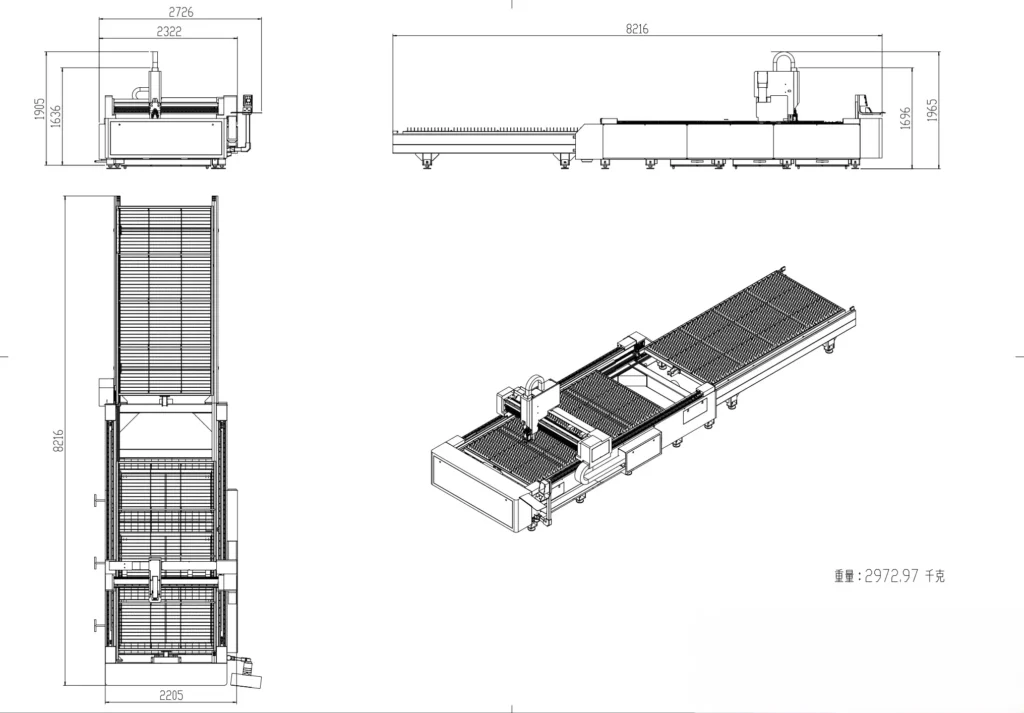
Table 2: Single Table vs. Dual Shuttle Pallet OEE & Throughput Model
| Metric | Single Bed | Dual Shuttle Exchange | Delta |
|---|---|---|---|
| Load/unload downtime per cycle | 8–15 min | ~15 seconds (swap) | −95% downtime |
| Effective cutting time (dual shift) | 9–11 hours | 16–17 hours | +55% cutting time |
| Machine OEE (typical) | 40–50% | 80–88% | +38 points |
| Annual throughput (dual shift) | Baseline | 1.7–1.9× baseline | +70–90% volume |
| Incremental capex | Baseline | +$30,000–$55,000 | — |
| Payback on shuttle premium | — | 4–7 months | Rapid amortization |
Throughput and payback assume dual-shift operation with manual sheet loading; automated storage towers compress cycle times further.
Ⅲ. Open Frame vs. Fully Enclosed Laser Housing (Safety & Environmental Compliance)
1. OSHA, CE Class 4 compliance, and OD6+ protective viewing glass
A fiber laser source is inherently a Class 4 laser hazard under IEC 60825-1. An open-frame machine leaves that Class 4 beam path accessible during operation, which places the entire surrounding shop floor inside the nominal ocular hazard distance unless extensive physical barricades and strict PPE policies are enforced.
A fully enclosed machine does not alter the fundamental laser classification—it changes operator exposure. The safety enclosure integrates dual-channel safety interlocks, labyrinth light containment seals, and OD6+ certified viewing glass to maintain an equivalent Class 1 protective environment while the beam is firing. When the shuttle extends for loading or access doors open for maintenance, the interlocks force optical shutoff or engage safety light curtains to restrict access to the active hazard area.
For CE certification and OSHA facility audits, this distinction is decisive: the inspection evaluates verified exposure at the operator workstation during routine production cycles.

2. Partitioned negative-pressure dust extraction
Fiber laser cutting generates sub-micron metallic fumes and respirable particulate. An open-frame machine relies entirely on general ambient shop ventilation, allowing airborne smoke to migrate across crane aisles and failing negative-pressure containment thresholds enforced in regulated Western plants.
An enclosed laser cutting table enables partitioned negative-pressure extraction: high-velocity dampers isolate the active cutting zone, capturing particulate immediately beneath the torch before it escapes. Sizing requires 4,500–6,000 CFM across dedicated ducting networks to maintain stable air capture during continuous multi-kilowatt piercing.
Table 3: Open Frame vs. Fully Enclosed Systems: Safety & Ventilation Matrix
| Parameter | Open Frame System | Fully Enclosed Shuttle System |
|---|---|---|
| Operator exposure during cutting | Class 4 beam accessible | Class 1 equivalent (interlocked housing) |
| Exposure during loading/service | Class 4, managed by procedure | Class 4, controlled by light curtain/interlocks |
| Viewing window rating | None or unrated acrylic | OD6+ CE-certified laser glass |
| Dust extraction requirement | General shop ventilation | 4,500–6,000 CFM partitioned ducting |
| OSHA/CE facility compliance | Administrative controls required | Compliant by engineered design |
| Typical equipment price premium | Baseline | +$25,000–$50,000 |
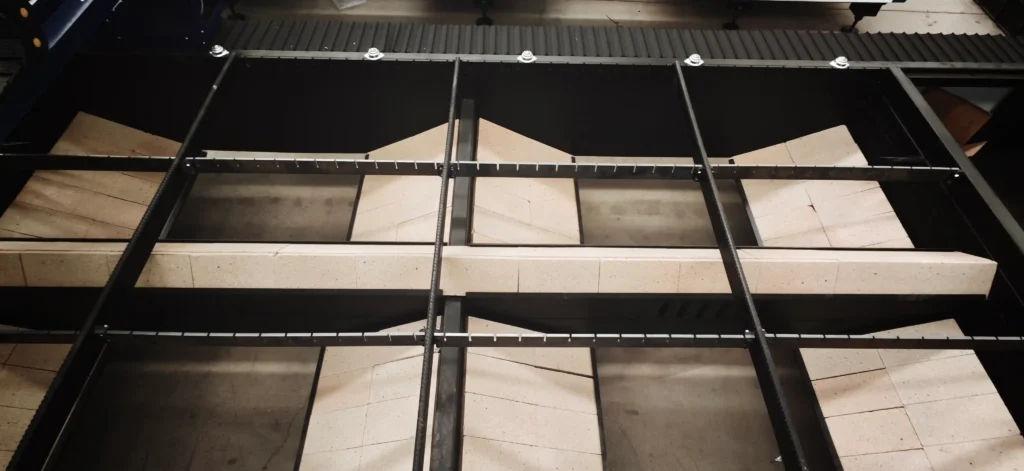
Ⅳ. Workshop Siting & Rigging: Floor Load, Crane Clearance, and Workflow Routes
1. Dynamic foundation loads: Preventing bed twist and settling
When installing a heavy laser cutting table, the machine does not merely impart a static deadweight; it transfers dynamic acceleration and deceleration torque through its leveling feet directly into the floor slab. A 4,391 kg enclosed shuttle (such as the YH3015BD) requires a 200–250 mm thick C30 reinforced slab poured with double-layer bidirectional Φ12 rebar on 200 mm centers.
A compact single-bed machine like the YH3015F at 1,318 kg can operate reliably on a standard 150 mm industrial hardened floor. The distinction lies in gantry inertia: heavy acceleration on an unreinforced slab produces micro-settling and bed twist, leading directly to focus drift and squareness errors across long travel axes.
Where a heavy laser cutting table sits near mechanical stamping presses, forging hammers, or heavy shear lines, cut a continuous 10–15 mm isolation joint filled with elastomeric sealant around the machine foundation pad. This barrier dampens structural floor shockwaves and preserves sub-millimeter positioning accuracy.
2. Material flow logistics: Overhead crane clearance and console clearance
Operating a 5’×10′ laser cutting table requires coordinated material rigging. Unloading raw flat plate from a flatbed truck requires an overhead crane hook height of at least 4.5 m above floor level, or clear forklift aisles of at least 3.5 m width. The machine operator console—frequently mounted on a 2.8 m swing arm—must retain full rotational travel without forcing personnel into forklift traffic lines.
Slag drawer extraction requires a minimum 1.2 m clear corridor along the rear discharge track. Finished part sorting and skeleton offload demand 2.5 m of unimpeded staging area at the outfeed pallet. Allocating these clearances during pre-delivery facility planning ensures your pallet cycle times translate into realized floor productivity.
Table 4: Facility Floor Load, Foundation & Anchoring Specifications
| Machine Weight Class | Representative Model | Foundation Depth | Concrete Grade | Rebar Reinforcement | Vibration Isolation | Anchor Spec |
|---|---|---|---|---|---|---|
| 1,300–1,800 kg | YH3015F | 150 mm | C25 | Single-layer mesh | Standard floor isolation | M16 wedge anchors |
| 3,400–4,400 kg | YH3015BD | 200–250 mm | C30 | Double-layer Φ12 @ 200 mm | 10 mm perimeter joint | M20 chemical anchors |
| 5,000–5,500 kg | YH6025AG | 250–300 mm | C35 | Double-layer Φ14 @ 200 mm | 15 mm perimeter joint | M24 chemical anchors |

Ⅴ. Frequently Asked Questions
What is the standard size of an industrial laser cutting table?
The 5’×10′ (1,500 mm × 3,000 mm) format is the global standard because it matches mill-run steel sheet with minimal trim loss. Most job shops default to this size. Smaller 4’×8′ tables suit cabinetry-scale work; 6’×20′ gantries handle trailer frames and structural plate.
How much space do you need around an enclosed laser cutter?
Plan for at least 1.5 m perimeter clearance for maintenance access, 4.5 m overhead hook clearance for sheet loading, 1.2 m on the slag discharge side, and 2.5 m on the finished-parts outfeed side. The operating footprint of a 3015 enclosed shuttle is 30.45 m² before these clearances are added.
Does an exchange table justify the cost for small job shops?
Yes, if the machine runs more than one shift or cuts more than 40 sheets per week. The shuttle premium is typically $30,000–$55,000, and the OEE gain from 45% to 85% pays it back in 4–7 months on dual-shift operation. Single-shift shops below 30 sheets per week may not recover the premium quickly.
References
- ISO 9013:2017 — Thermal cutting — Classification of thermal cuts — Geometric product specification and quality tolerances, International Organization for Standardization
- ISO 8573-1:2010 — Compressed air — Contaminants and purity classes, International Organization for Standardization
- IRS Section 179 — Equipment Depreciation and Tax Deduction Guidelines, Internal Revenue Service
Further Reading
- Laser Automation ROI: Pallet Changers, Compact Towers & OEE — Detailed economic ledger comparing manual shuttle tables against automated multi-shelf storage towers.
- Machine Bed Structural Rigidity and Foundation Vibration Control — Stress-relieved welded gantry construction, modal dampening, and foundation settling criteria.
- Fiber Laser Cutting Machine for Sale: Industrial Buyer’s Evaluation Guide — Key structural checks, linear drive specifications, and optical integration procurement checklist.
- Rent-to-Own Laser Cutter: $1 Buyout Lease vs FMV Structure — Equipment capital financing models to structure shuttle machine acquisitions without straining working capital.