

Starting or scaling an industrial laser cutting business is not about desktop engraving, hobby machines, or craft markets. We are talking about running a dedicated fiber laser cutting shop with 3kW to 12kW machines, cutting steel sheet and plate for paying industrial customers. If you are thinking about buying a small desktop laser for wooden signs, this is not the article for you.
The laser cutting business is a serious capital equipment business. The machines cost real money. The customers demand real tolerances. The margins come from throughput, uptime, and cost control. This article explains how the business works, where the money comes from, and how long it takes to get your investment back.
En WSL Laser, we supply fiber laser cutting machines to job shops and manufacturers around the world. We know what makes these businesses profitable, and we know what kills them.
Ⅰ. How a Laser Cutting Shop Makes Money
1. The Two Standard Pricing Models
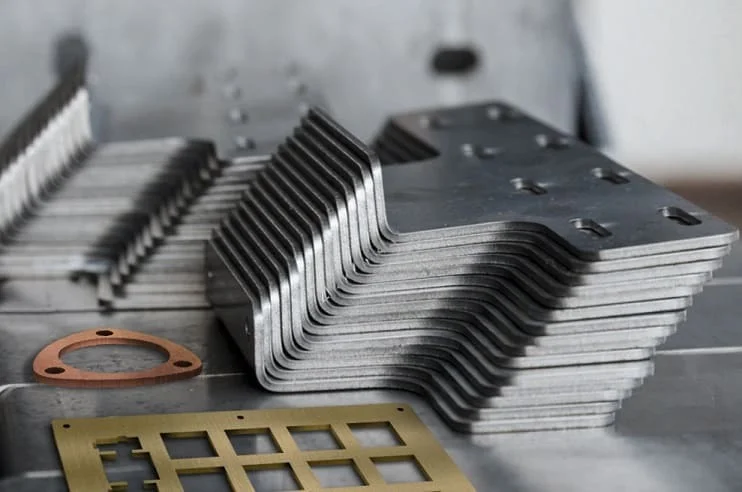
Industrial laser cutting shops price their work in two ways. The first is hourly rate pricing. The shop charges a fixed rate per machine hour, typically between $80 and $150 depending on the region, the machine power, and the competitive landscape. This rate covers the machine, the operator, the gas, the electricity, and a profit margin.
The second model is per-part pricing, based on cutting meters and pierce count. The shop calculates the cost per meter of cut, adds a cost per pierce, and multiplies by the part geometry. This is more precise and more common for high-volume repeat work. It allows the shop to quote accurately and protect its margin on complex parts with many holes.
A professional job shop usually works with both models. Hourly pricing for short-run and prototype work. Per-meter pricing for production quantities. The shop that understands both is the shop that stays profitable.
| Pricing Model | How It Works | Ideal para |
|---|---|---|
| Hourly Rate | Fixed charge per machine hour, typically $80–$150 | Short runs, prototypes, one-off jobs |
| Per-Meter / Per-Pierce | Cost per cut meter + cost per pierce × part geometry | High-volume repeat production |
2. What a Productive Machine Earns per Hour
A 6kW fiber laser cutting 3mm carbon steel can produce between $60 and $120 per hour in cutting revenue, depending on the local market rate and the material mix. A 12kW machine cutting thicker plate can earn more per hour, but the jobs are often longer and the material cost is higher.
The revenue per hour is not the same as profit per hour. Out of that $60 to $120 comes electricity, assist gas, consumables, the operator’s wage, and a share of the shop overhead. The shop that understands its true hourly cost is the shop that quotes correctly and keeps its margin. A detailed breakdown of those costs is covered in our guide on coste del gas para el corte por láser.
Ⅱ. The Cost Side of the Business
1. What It Costs to Run the Machine
The operating cost of a fiber laser cutting machine breaks down into four categories: electricity, assist gas, consumables, and labor. Electricity is predictable. A 6kW machine draws 25 to 30 kilowatt-hours per hour including the chiller and motion system. At $0.12 per kWh, that is $3.00 to $3.60 per hour.
Assist gas is the wildcard. A shop cutting stainless steel with nitrogen can spend $15 to $30 per hour on gas alone. A shop cutting carbon steel with compressed air spends $2 to $5. The difference is not marginal. It is the difference between profit and break-even on thin carbon steel work.
Consumables—nozzles, protective windows, ceramic rings, and filters—add another $0.50 to $1.50 per hour. Labor depends on the region, but a machine operator typically costs $20 to $35 per hour including burden. The shop that knows these numbers exactly is the shop that quotes with confidence.
| Categoría de costes | Typical Range per Hour | Notas |
|---|---|---|
| Electricity | $3.00–$3.60 | 6kW machine including chiller and motion |
| Assist Gas | $2–$30 | Compressed air $2–$5, nitrogen $15–$30 |
| Consumibles | $0.50–$1.50 | Nozzles, protective windows, filters |
| Labor | $20–$35 | Operator including burden |
2. Fixed Costs That Do Not Go Away
Beyond the hourly operating cost, the business carries fixed costs regardless of how many hours the machine runs. Shop rent, machine financing, insurance, and administrative staff are the same every month whether the laser cuts 100 hours or 400 hours.
This is why machine utilization is the single most important metric in the laser cutting business. A machine that runs 200 hours per month is spreading its fixed costs over far more cutting volume than a machine that runs 80 hours. The fixed cost per cutting hour drops as utilization rises, and the profit margin expands accordingly.
Ⅲ. The Laser Cutting Business Profit Model
1. A Realistic Monthly Scenario
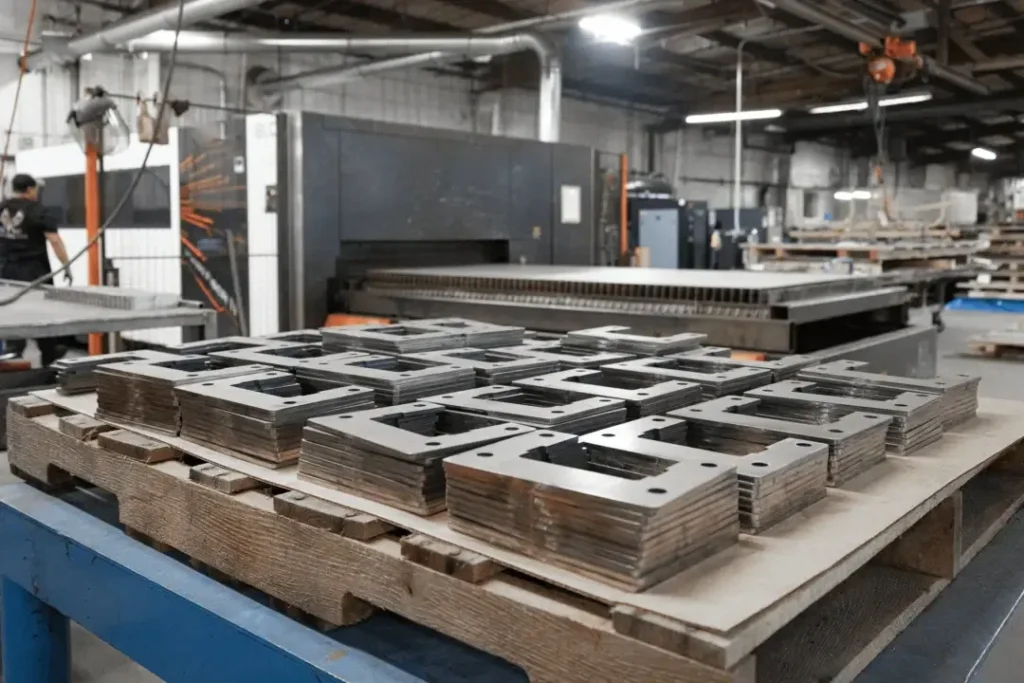
Consider a job shop with one 6kW fiber laser running 200 cutting hours per month. The revenue at $90 per hour is $18,000. The operating cost at $15 per hour for gas, electricity, and consumables is $3,000. The operator costs $4,000 per month. Shop rent and overhead take another $3,000. The machine payment, if financed, is $2,000.
That leaves a gross operating profit of roughly $6,000 per month from one machine in a single-shift operation. The numbers shift with the local market and the material mix, but the structure is consistent: the laser cutting business is profitable when the machine runs, and it bleeds when the machine sits idle.
| Line Item | Monthly Amount |
|---|---|
| Gross Revenue (200 hrs × $90) | $18,000 |
| Operating Cost (200 hrs × $15) | $3,000 |
| Operator | $4,000 |
| Rent & Overhead | $3,000 |
| Machine Payment | $2,000 |
| Gross Operating Profit | $6,000 |
2. Where the Profit Actually Comes From
The profit in laser cutting does not come from the machine itself. It comes from the management of three things: utilization, gas strategy, and quoting discipline.
Utilization is the utilization of the machine’s available hours. Every idle hour is a fixed cost with no revenue. Gas strategy is the choice between nitrogen and compressed air on carbon steel work. Quoting discipline is the ability to price a job accurately without leaving money on the table or losing the job to a competitor.
A shop that runs two shifts, uses compressed air on carbon steel, and quotes accurately will generate dramatically more profit than a shop that runs one shift, uses nitrogen on everything, and quotes by guesswork. The machine is the same. The management is the difference.
Ⅳ. Payback Period: Three Scenarios
1. The Self-Use Manufacturer
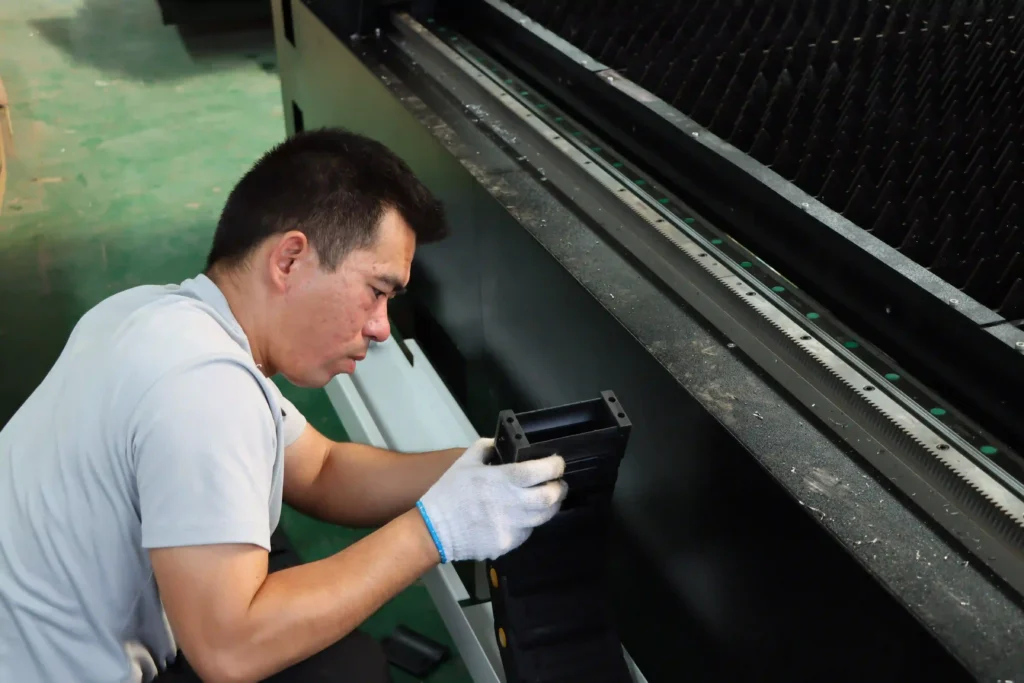
A manufacturer that buys a laser cutting machine to bring outsourced cutting in-house has a simple payback calculation. The machine replaces an external cutting bill. If the manufacturer was spending $12,000 per month on outsourced cutting, and the machine costs $180,000, the payback period is 15 months before accounting for operating costs. With operating costs included, the realistic payback is 18 to 24 months.
The advantage of self-use is stable demand. The machine does not need to find work. The work is already there. The risk is that the manufacturer underutilizes the machine and never reaches the volume that justifies the purchase.
2. The Pure Job Shop
A job shop buying a laser cutting machine must find its own work. The payback depends entirely on the shop’s ability to fill the machine’s schedule. A well-connected shop that reaches 200 cutting hours per month by month six will pay back the machine in 24 to 30 months. A shop that struggles to fill 100 hours per month will take far longer.
The job shop model carries more risk but also more upside. A successful job shop can run two or three shifts, take on overflow work from manufacturers, and grow from one machine to three machines within a few years.
3. The Hybrid Model
Many successful laser cutting businesses start as hybrid operations: the owner is also a manufacturer who uses the machine for their own products and takes on outside cutting work to fill the spare capacity. This is the lowest-risk entry into the laser cutting business because the machine always has a baseline workload.
The hybrid model is how many of our customers at WSL Laser grow their business. Their own products keep the machine busy, and the outside work fills the gaps and adds profit.
| Business Model | Payback Period | Risk Level |
|---|---|---|
| Self-Use Manufacturer | 18–24 months | Bajo |
| Pure Job Shop | 24–30 months | Alto |
| Hybrid Model | 18–24 months | Medio |
Ⅴ. How to Protect the Profit Margin
1. Gas Strategy Is the Fastest Win
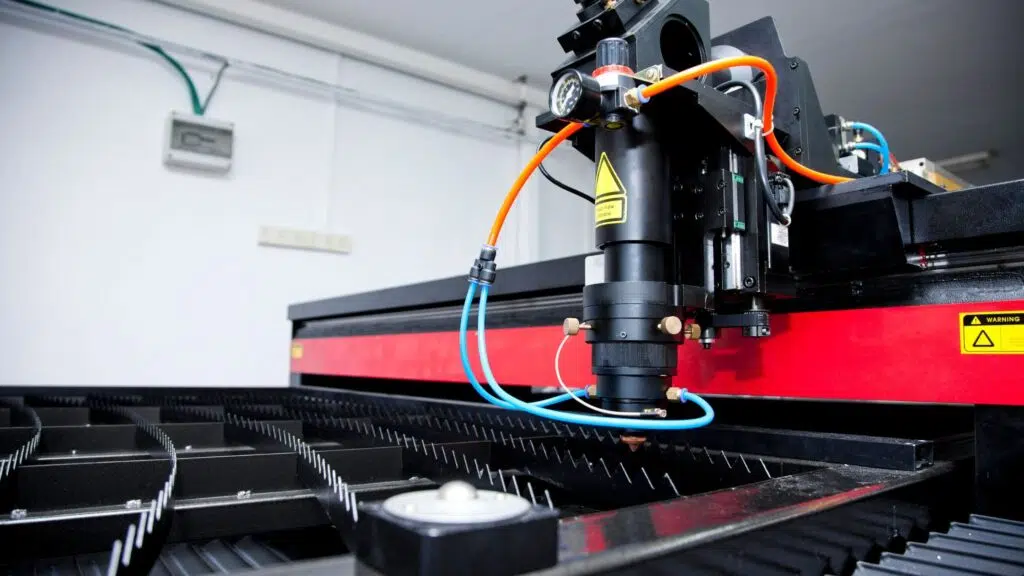
The fastest way to improve profitability in a laser cutting business is to stop wasting nitrogen on carbon steel work that does not need it. Compressed air costs $2 to $5 per cutting hour. Nitrogen costs $15 to $30. A shop that moves its thin carbon steel work to compressed air can save $20,000 to $50,000 per year with no change in machine, labor, or customers.
This is not a technical decision. It is a business decision. The full financial picture is covered in our guide on coste del gas para el corte por láser.
2. Utilization and Order Mix
The second profit lever is utilization. A machine that runs 300 hours per month instead of 200 hours per month increases revenue by 50 percent while fixed costs stay the same. The extra 100 hours are almost pure margin.
The third lever is order mix. High-volume repeat work with low setup time is more profitable than one-off prototypes. A shop that builds a stable base of repeat production work, and fills the gaps with short-run jobs, is building a business that can survive downturns and grow in good times.
Ⅵ. FAQ: Laser Cutting Business Questions
1. How much money can a laser cutting machine make per month?
A single 6kW machine running 200 cutting hours per month at $90 per hour generates $18,000 in gross revenue. After operating costs, labor, and overhead, the monthly profit is typically $4,000 to $7,000 depending on the market and the management. A two-shift operation can roughly double that figure.
2. How long does it take to pay back a laser cutting machine?
For a self-use manufacturer replacing outsourced cutting, the realistic payback is 18 to 24 months. For a job shop that fills its schedule by month six, the payback is 24 to 30 months. The payback accelerates dramatically for two-shift operations.
3. What is the biggest mistake new laser cutting businesses make?
Underquoting. New shops often price jobs too low to win work, then discover that the gas, electricity, and consumables have eaten the entire margin. The fix is to know your true hourly cost before you quote the first job. If you do not know your cost, you cannot know your price.
4. Is the laser cutting business still profitable with all the competition?
Yes, but the profit has moved from the machine to the management. The shops that succeed are the ones that control gas costs, keep utilization high, and quote accurately. The shops that fail are the ones that treat a laser cutting machine like a magic money printer and ignore the numbers.
5. Should I buy a laser cutting machine or outsource the cutting?
If your cutting volume is high enough to keep a machine running 150 hours per month or more, buying usually wins. If your volume is lower, outsourcing is often more cost-effective. The break-even point depends on your local outsourcing rates and your in-house operating costs.
Ⅶ. Conclusion: The Machine Is the Easy Part
The laser cutting business is not about the machine. The machine is a tool. The business is built on utilization, cost control, and quoting discipline. A well-managed shop with a mid-range machine will outperform a poorly managed shop with a top-tier machine every time.
En WSL Laser, we supply the machine. Our customers supply the management. The ones who succeed understand that the machine is the easy part. The business is the real work.
Referencias
- ISO 9013: Corte térmico — Clasificación de los cortes térmicos, Tienda online de ANSI.
- Improving Compressed Air System Performance: A Sourcebook for Industry, U.S. Department of Energy.
- Industrial Metal Fabrication and Job Shop Benchmarking Surveys, Asociación de Fabricantes y Productores.





