

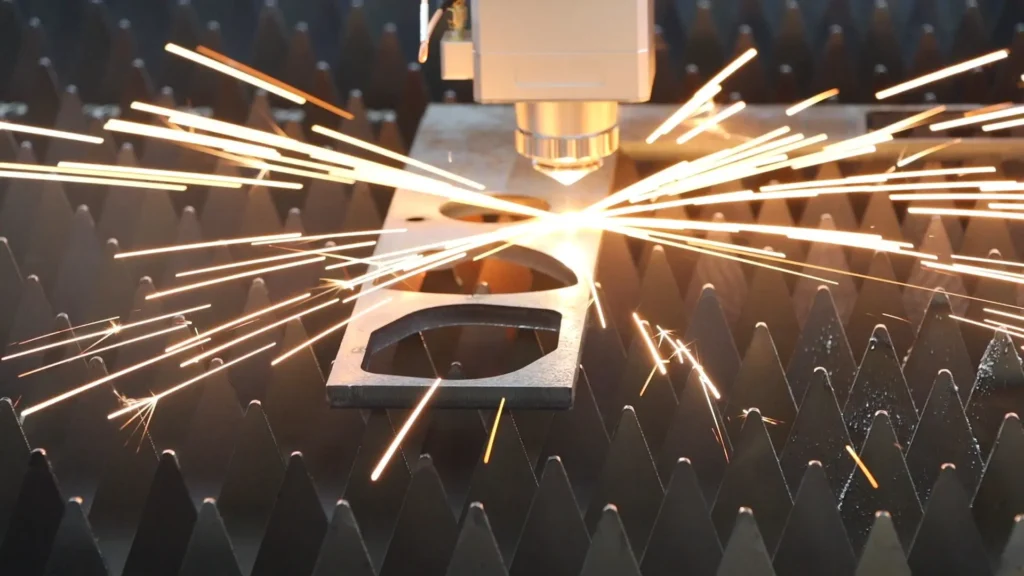
A 20kW fiber laser cutting machine costs $45,000 more than a 12kW machine. The 30kW costs $95,000 more. The buyer’s question is not whether the higher power cuts faster. It does. The question is whether the speed gain pays back the capital delta inside a reasonable horizon.
This guide answers that question with three cost layers: hourly operating cost, per-meter cutting cost, and annual payback across three thick-plate throughput tiers.
Ⅰ. The High-Power Capex Dilemma: Why Unit Cost Beats Sticker Price
1. Why sticker price misleads
A 12kW machine and a 20kW machine look similar on a quote sheet. They differ by $45,000. That difference buys a larger laser source, a reinforced bed, a higher-flow cutting head, a larger chiller, and a dust extraction system sized for higher fume volume. None of those upgrades reduce cost per part on their own.
2. The metric that decides the purchase
The metric is cost per meter cut, not cost per hour run. Investing in a 20kW fiber laser cutting machine increases the hourly operating burden, but it also cuts thick plate two to four times faster. When the speed gain exceeds the hourly cost premium, the per-meter cost drops.
3. What the buyer should calculate before signing
Three numbers: the hourly operating cost of each power class, the cutting speed on the buyer’s dominant thickness, and the monthly thick-plate tonnage. Those three numbers produce the payback period on the capital delta.
Ⅱ. Cutting Speed & Piercing Dynamics: 12kW vs. 20kW vs. 30kW Throughput Benchmark
1. The thick-plate speed gap
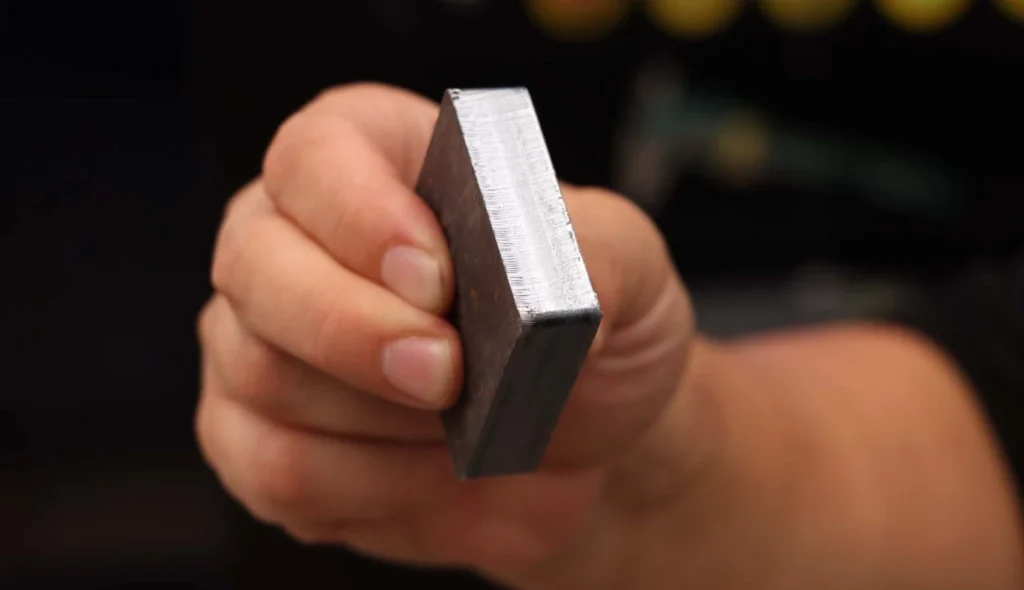
In any empirical 20kw fiber laser cutting speed comparison on 20mm carbon steel with oxygen assist, a 12kW source cuts at 0.5–0.7 m/min. Upgrading to a 20kW source accelerates throughput to 1.8–2.3 m/min — roughly three times faster. A 30kW high power fiber laser cutting machine reaches 3.0–4.0 m/min, another 1.7× gain over 20kW. These are production-validated ranges from Yihai’s bench matrix.
2. Piercing time on thick plate
Piercing is where high power changes the cycle time most. A 12kW source pierces 20mm carbon steel in roughly 3 seconds. A 20kW source pierces in under 1 second with staged modulation. On a nest with 40 pierces, that saves over 80 seconds per sheet — time the machine would otherwise spend not cutting.
3. Why stainless behaves differently
Stainless steel cuts slower than carbon steel at every power level because the nitrogen assist must clear a more viscous melt. The speed gap between 12kW and 20kW on stainless is still large, but the absolute speeds are lower. Nozzle selection and nitrogen pressure matter more on stainless than on carbon steel.
Table 1: Thick Plate Cutting Speed & Piercing Time Matrix (20mm Carbon Steel)
| Power | Cutting Speed (m/min) | Piercing Time (sec) | Source | Ghi chú |
|---|---|---|---|---|
| 12kW | 0.5–0.7 | ~3.0 | Yihai bench matrix | Baseline |
| 20kW | 1.8–2.3 | <1.0 | Yihai bench matrix | ~3× speed gain |
| 30kW | 3.0–4.0 | <0.5 | Industry benchmark | ~1.7× over 20kW |
Speeds are for 20mm carbon steel with oxygen assist. Stainless steel speeds are lower and depend on nitrogen pressure, nozzle selection, and dross control.
Ⅲ. Hourly Operating Cost Breakdown: Electricity, Assist Gas, Consumables
1. Electricity
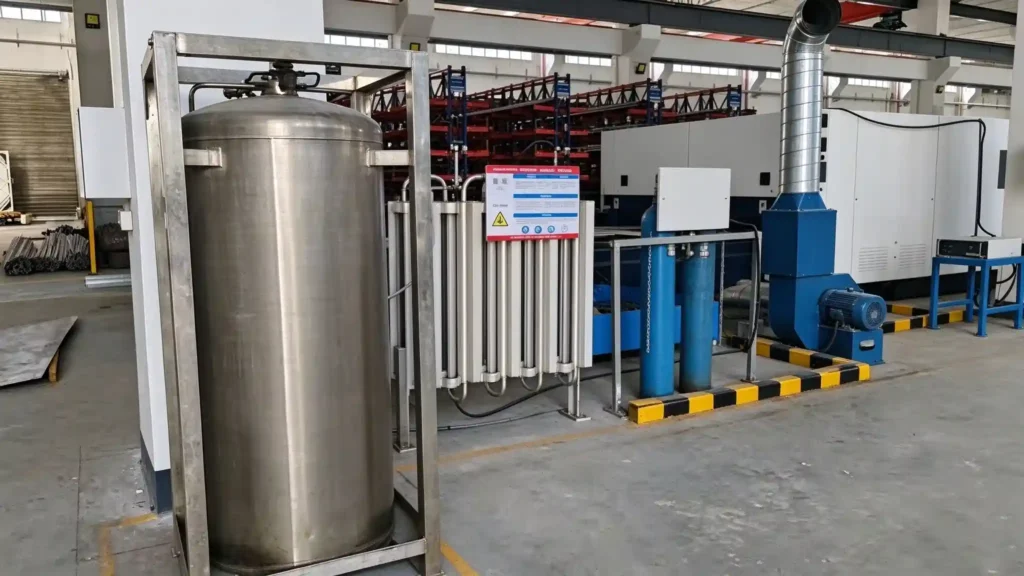
A 12kW source draws roughly 40–50 kW from the wall including the chiller and extraction. A 20kW source draws 60–75 kW. A 30kW source draws 90–110 kW. At $0.12 per kWh, the electricity cost per hour is $4.80–$6.00 for 12kW, $7.20–$9.00 for 20kW, and $10.80–$13.20 for 30kW.
2. Assist gas
As evaluated in our benchmark on laser cutting gas cost, oxygen consumption on 20mm carbon steel remains relatively stable across power classes because nozzle diameter does not scale linearly with kilowatt rating. The assist gas cost per hour hovers between $6.00 and $10.00 for all three tiers at this thickness.
3. Consumables and depreciation
Consumable cost per hour rises with power because the nozzle and protective lens see higher thermal load. Depreciation scales with the capital cost of the machine. On a 60-month financing schedule, the hourly depreciation is roughly $9.50 for a 12kW, $12.50 for a 20kW, and $16.50 for a 30kW.
Table 2: Hourly Operating Cost Model by Power Class (USD/hour)
| Thành phần chi phí | 12kW | 20kW | 30kW |
|---|---|---|---|
| Electricity (at $0.12/kWh) | $4.80–$6.00 | $7.20–$9.00 | $10.80–$13.20 |
| Assist gas (20mm CS, O₂) | $6.00–$10.00 | $6.00–$10.00 | $6.00–$10.00 |
| Consumables | $1.50–$2.50 | $2.50–$4.00 | $4.00–$6.00 |
| Depreciation (60-month) | $9.50 | $12.50 | $16.50 |
| Total per hour | $21.80–$28.00 | $28.20–$35.50 | $37.30–$45.70 |
Ⅳ. Per-Meter & Per-Ton Cutting Cost Matrix
1. The reversal that decides the ROI
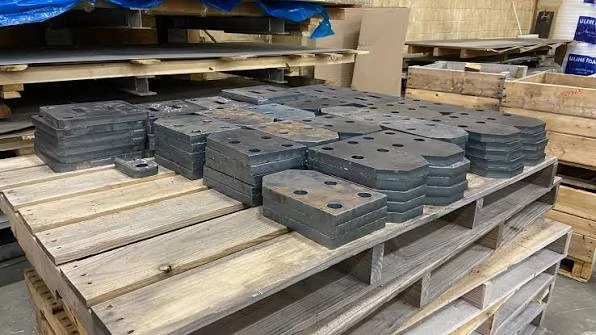
The 20kW machine costs about 25% more per hour to run. It cuts 20mm carbon steel about 3× faster. The per-meter cost therefore drops by roughly 60%. That reversal is where the ROI lives.
2. Per-meter cost calculation
Divide the hourly cost by the cutting speed in meters per hour. At 0.6 m/min, the 12kW cuts 36 meters per hour. At 2.0 m/min, the 20kW cuts 120 meters per hour. The per-meter cost is $24.90 ÷ 36 = $0.69 for the 12kW, and $31.85 ÷ 120 = $0.27 for the 20kW.
3. Per-ton cost and monthly capacity
The per-ton cost follows the same logic. A 20kW machine can process roughly three times the tonnage of a 12kW machine in the same cutting hours. For a shop with the work to fill those hours, the per-ton cost drops by the same proportion.
Table 3: Per-Meter Cutting Cost & Monthly Capacity Benchmark (20mm CS)
| Metric | 12kW | 20kW | 30kW |
|---|---|---|---|
| Hourly cost (midpoint) | $24.90 | $31.85 | $41.50 |
| Cutting speed (m/min) | 0.6 | 2.0 | 3.5 |
| Meters per hour | 36 | 120 | 210 |
| Per-meter cost | $0.69 | $0.27 | $0.20 |
| Monthly capacity at 160 hrs | ~5.8 t | ~19.2 t | ~33.6 t |
Monthly capacity assumes 160 cutting hours per month on 20mm carbon steel. Actual tonnage depends on nest density and part geometry.
Ⅴ. Payback Period & Breakeven Model
1. The three throughput tiers
The payback on the $45,000 capex delta depends on how much thick plate the shop actually cuts. Three tiers: 600 tons per year (light thick-plate work), 1,800 tons per year (medium structural shop), 3,600 tons per year (heavy plate specialist).
2. The saving per ton
On 20mm carbon steel, the per-meter cost drops from $0.69 to $0.27, a saving of $0.42 per meter. A ton of 20mm plate at 1,500mm width contains roughly 42 meters of cut length in a typical nest. That is $17.64 saved per ton.
3. The payback across tiers
At 600 tons per year, the annual saving is $10,584, and the $45,000 delta pays back in 51 months. At 1,800 tons, the saving is $31,752, and payback drops to 17 months. At 3,600 tons, the saving is $63,504, and payback is 8.5 months.
Table 4: 20kW & 30kW Capex Delta Breakeven Matrix
| Annual Thick Plate Volume | Annual Saving (20kW vs 12kW) | 20kW Delta Payback | Annual Saving (30kW vs 12kW) | 30kW Delta Payback |
|---|---|---|---|---|
| 600 t | $10,584 | 51 months | $13,230 | 86 months |
| 1,800 t | $31,752 | 17 months | $39,690 | 29 months |
| 3,600 t | $63,504 | 8.5 months | $79,380 | 14 months |
Payback is simple (capex delta ÷ annual saving) and excludes Section 179 treatment. Volume refers to thick plate ≥12mm only, not total shop tonnage. Savings are based on the per-meter cost reduction from Table 3.
Ⅵ. Commercial Buyer’s Decision Matrix & Procurement Checklist
1. When 12kW is the right answer
If thick plate above 12mm is less than 20% of the shop’s cutting hours, a 12kW machine is the correct purchase. The capex delta on a 20kW will not pay back inside five years, and the extra power sits idle.
2. When 20kW is the right answer
If thick plate above 12mm represents 30% or more of total cutting hours and monthly throughput exceeds 100 tons, a 20kW fiber laser cutting machine pays back the capital delta inside 24 months. This is the financial sweet spot for the $45,000 upgrade.
3. When 30kW is the right answer
Only for shops running thick plate above 20mm as the dominant work, with monthly throughput above 250 tons. Below that, the $95,000 delta does not pay back inside 30 months, and the 20kW machine covers the same work at lower capital risk.
4. What to verify before signing
Before signing a high-power purchase order, verify four things: the pierce strategy on the buyer’s dominant thickness, the dust extraction capacity rated for the higher fume volume, the chiller capacity rated for the source’s thermal load, and the bed’s protection against spatter and thermal distortion at the higher pierce energy.
Frequently Asked Questions (FAQ)
At what material thickness does a 20kW fiber laser economically beat a 12kW laser?
A 20kW fiber laser reaches its economic tipping point on carbon steel and stainless steel plate exceeding 16 mm (5/8 in) in thickness. While a 12kW system cuts 20 mm plate at roughly 1.2–1.5 m/min using oxygen or nitrogen, a 20kW laser processes the same gauge at 3.0–3.8 m/min with high-pressure air or nitrogen—more than doubling throughput per shift. For shops cutting plate over 20 mm for more than 40% of production hours, the 20kW power tier delivers a 35% lower cost-per-part despite higher initial equipment Capex.
Can high-pressure shop air replace liquid nitrogen for 20kW thick plate cutting?
Yes. On 20kW systems, high-pressure compressed air (16 bar to 20 bar with dedicated 4-stage filtration and a desiccant air dryer) is widely used to cut mild carbon steel up to 20 mm and aluminum up to 25 mm. Because high-power density vaporizes material rapidly, air cutting avoids the exorbitant vaporization and delivery expenses of bulk liquid nitrogen, reducing assist gas OpEx by up to 70% while maintaining acceptable edge squareness and minimal bottom dross for structural fabrication.
What are the facility transformer and power infrastructure requirements for a 20kW laser?
A 20kW fiber laser workstation—including the laser power engine, high-capacity dual-circuit water chiller, dust extraction blower, and CNC motion platform—typically draws between 75 kVA and 95 kVA under peak cutting load. Job shops generally need a dedicated 400V/480V three-phase electrical drop with a 150A to 200A main circuit breaker. Facilities operating near grid capacity must factor in potential utility transformer upgrades or voltage stabilization equipment during preliminary Capex budgeting.
How does a 20kW fiber laser compare to high-definition plasma cutting for heavy plate?
A 20kW fiber laser outpaces high-definition plasma on plate up to 30 mm (1.2 in) in cut precision, vertical edge squareness, and processing speed. Fiber laser cutting achieves tight hole-to-thickness ratios (such as 1:1 diameter-to-thickness holes) and eliminates plasma-induced edge beveling and hard dross. This eliminates downstream CNC milling, hole reaming, and weld edge preparation labor, easily recovering the higher equipment Capex through downstream structural assembly savings.
What is the expected capital payback period for a 20kW fiber laser cutter?
For a production job shop or heavy equipment manufacturer operating on a two-shift schedule (3,500 to 4,000 annual cutting hours) with steady plate work between 12 mm and 30 mm, an investment in a 20kW fiber laser ($120,000 to $180,000 fully configured) typically achieves breakeven and full capital payback within 11 to 16 months. The financial payback is primarily driven by doubling daily plate throughput, eliminating outsourcing markups, and slashing assist gas expenses via high-pressure air cutting.
Tài liệu tham khảo
- ISO 9013:2017 — Thermal cutting — Classification of thermal cuts, ISO, 2017
- AWS C7.2 — Recommended Practices for Laser Beam Cutting, American Welding Society
- Điều 179 của Luật Thuế Thu nhập Liên bang (IRS) — Lựa chọn hạch toán vào chi phí một số tài sản kinh doanh có thể khấu hao, Cục Thuế Liên bang
Tài liệu tham khảo thêm
- Laser Cutting Gas Cost: Nitrogen vs. Compressed Air TCO — The assist gas economics that sit inside every hourly cost model.
- Chi phí máy cắt laser tính theo giờ: Sổ cái vận hành đầy đủ — The baseline hourly cost before the power decision.
- In-House vs Outsourcing Laser Cutting: Cost & ROI — The break-even between self-cutting and subcontracting.
- Tài chính cho máy laser sợi quang: So sánh giữa thuê và mua thiết bị vào năm 2026 — Monthly payment structures and Section 179 treatment.





