

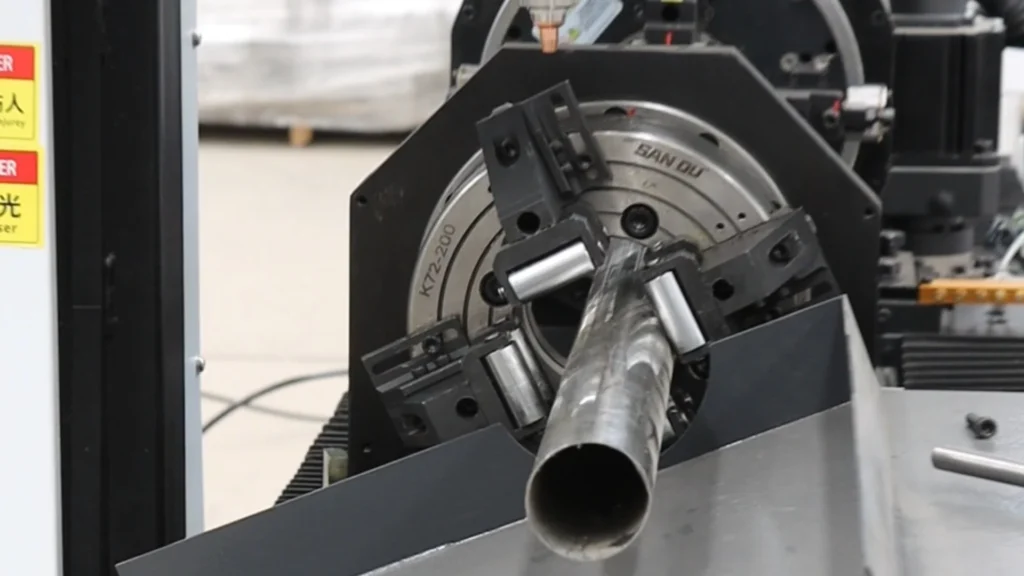
A tube laser cutting machine is usually evaluated on cutting speed and price. Both numbers matter. Neither one determines whether an investment makes money. Investing in a dedicated fiber laser tube cutting machine or industrial laser pipe cutting machine requires evaluating the remnant left in the chuck after every cycle — and most shops never price it.
This guide values that remnant in dollars, across stainless and carbon steel, at three production volumes. It then calculates two payback tracks: the incremental chuck upgrade, and the full machine investment.
Ⅰ. The Hidden Material Tax in Tube Fabrication: Why 250mm Remnants Kill Margins
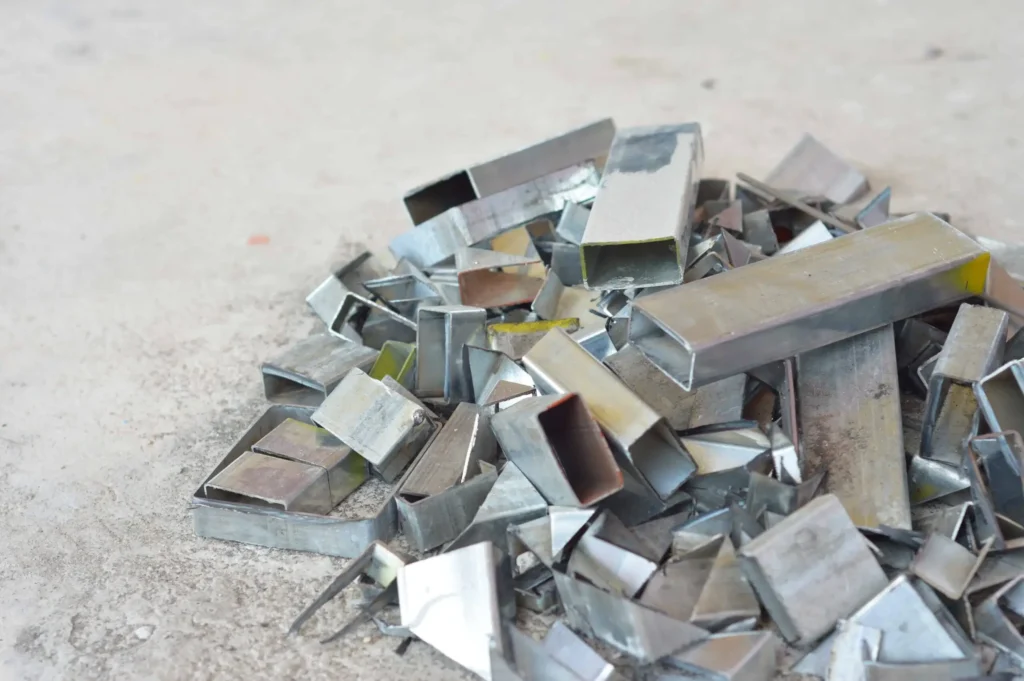
1. The dual-chuck clamping dead zone
A traditional two-chuck tube laser holds the tube at the front and back. The rear chuck must grip the tube to feed it, which means the last 200–250mm cannot be cut — the chuck body is in the way. That segment becomes remnant, and it is scrapped at full material cost.
2. What 250mm actually costs per tube
On a 6m standard tube, a 250mm remnant is 4.17% of the purchased length. On a 200mm remnant it is 3.33%. Either way, the shop paid for metal it never cut and never sold.
3. How a through-chuck design recovers the loss
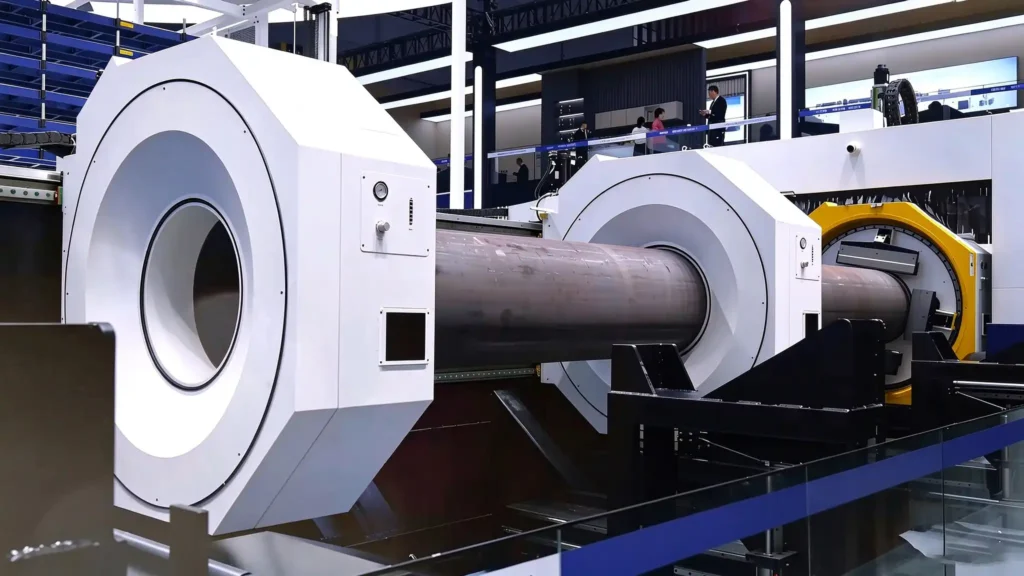
On a modern tube laser cutting machine, a zero-tailing system uses a rear chuck that penetrates or retracts, allowing the cutting head to pass the chuck plane. The remnant drops to roughly 50mm — the minimum length needed for the last clamp. That is 0.83% waste, and it recovers 150–200mm of usable tube per length.
Table 1: Tube Remnant Loss Ledger: Traditional Dual-Chuck vs. Zero-Tailing System
| Параметр | Traditional Dual Chuck | Zero-Tailing System | Разница |
|---|---|---|---|
| Tail remnant length | 200–250 mm | 50 мм | 150–200 mm recovered |
| Material waste rate | 3.33%–4.17% | 0.83% | 2.50%–3.34% recovered |
| Usable tube length | 5,750–5,800 mm | 5,950 mm | +150–200 mm |
| Chuck clamping zone loss | Included in remnant | Eliminated by through-chuck | — |
| Annual loss (500 t baseline) | 20.85 t | 4.15 t | 16.70 t recovered |
Ⅱ. Material Scrap Valuation: Stainless Steel vs. Structural Carbon Steel
1. Why the alloy choice changes the math
The remnant is the same length whether the tube is 304 stainless or ASTM A500 carbon steel. But 304 stainless costs $3,000 per ton, and A500 costs $1,000 per ton. The same 16.70 tons of recovered material is worth three times more in stainless.
2. The 500-ton baseline in shop terms
At Φ60×2mm, a 6m tube weighs 17.34 kg. A 500-ton annual volume equals 28,836 tube lengths. Spread across 250 working days and 2,000 cutting hours per year, that is 160 cutting hours per month and a 4.16-minute cycle per tube.
3. Why the saving scales linearly
The remnant percentage does not change with volume. A shop cutting 200 tons recovers the same 3.34% as a shop cutting 1,200 tons. The only variable is the tonnage, which makes the saving predictable for any production tier.
Table 2: Annual Material Scrap Savings Matrix (200t, 500t, 1,200t)
| Annual Volume | Tube Count | Material Saved (t) | 304 SS Saving ($3,000/t) | A500 CS Saving ($1,000/t) |
|---|---|---|---|---|
| 200 t (light) | 11,534 | 6.68 t | $20,040 | $6,680 |
| 500 t (baseline) | 28,836 | 16.70 t | $50,100 | $16,700 |
| 1,200 t (high) | 69,204 | 40.08 t | $120,240 | $40,080 |
Savings calculated at the 3.34% recovery rate (250mm traditional remnant reduced to 50mm). At the conservative 2.50% rate (200mm traditional remnant), reduce all figures by 25%.
Ⅲ. Dual-Track Payback Modeling: Incremental Chuck Capex vs. Total Machine Investment
1. Track 1 — the incremental chuck upgrade
A shop that already owns a tube laser can upgrade from a two-chuck to a zero-tailing three- or four-chuck system. The incremental hardware cost is approximately $15,000. At the 500-ton baseline, that upgrade pays back in 3.6 months on 304 stainless and 10.8 months on A500 carbon steel.
2. Track 2 — the full machine investment
For a fabricator evaluating the overall tube laser cutting machine price against shop cash flow, the material saving is only one revenue line. Tube cutting also bills at a premium: $110–$160 per hour versus $60–$80 per hour for flat sheet. Eliminating secondary end-deburring adds labor savings on top. Combined, the full machine recovers its investment in about 18 months at medium production.
3. Why both tracks matter
The incremental track answers the shop that already cuts tube. The full machine track answers the shop still outsourcing or cutting on a saw. Both calculations use the same remnant numbers, so the two tracks never contradict each other.
Table 3: Dual-Track Equipment Payback Schedule
| Payback Track | Capex Basis | 500t Annual Saving | Payback (Months) |
|---|---|---|---|
| Incremental chuck upgrade — 304 SS | $15,000 | $50,100 | 3.6 |
| Incremental chuck upgrade — A500 CS | $15,000 | $16,700 | 10.8 |
| Full machine — 304 SS (with premium rate) | $85,000–$180,000 | $50,100 + premium revenue | 15–18 |
| Full machine — A500 CS (with premium rate) | $85,000–$180,000 | $16,700 + premium revenue | 18–24 |
Full machine payback assumes allocating 40–60 billable cutting hours per month (out of the 160 total monthly operational hours) to external contract cutting at the $110–$160/hr premium rate, combined with annual material savings from Table 2.
Ⅳ. Tube Profile & Chuck Selection Engineering: Preventing Thin-Wall Crushing
1. Matching chuck size to tube diameter
Configuring a fiber laser tube cutting machine requires ensuring the chuck spans the target diameter with enough jaw travel to clamp securely without over-closing. Yihai’s sizing rule pairs each chuck class with a specific diameter band, from 120 to 360.
2. Servo versus pneumatic clamping
A pneumatic chuck applies a fixed clamping force. On thin-wall tube, that force can ovalize the section. A servo chuck controls jaw position and force independently, which is why zero-tailing systems use servo chucks on thin-wall work.
3. Loading method by profile type
Round, square, and rectangular tube in volume suits a fully automatic bundle loader. Mixed profiles, angle iron, and special sections suit semi-automatic loading, where the operator positions each piece.
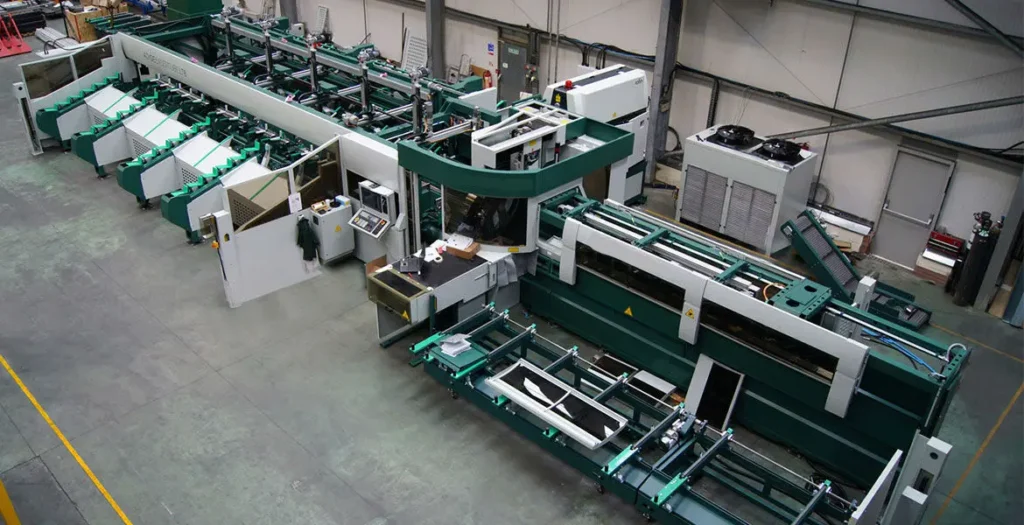
Table 4: Tube Diameter, Profile & Chuck Configuration Sizing Matrix
| Tube Diameter Range | Chuck Class | Clamping Type | Loading Method | Типичная область применения |
|---|---|---|---|---|
| Φ60–120 mm | 120 chuck | Servo for zero-tailing | Auto or semi-auto | Railing, furniture tube |
| Φ60–160 mm | 160 chuck | Servo or pneumatic | Auto or semi-auto | General fabrication |
| Φ100–240 mm | 240 chuck | Servo for thin wall | Auto bundle loader | Structural tube |
| Φ150–280 mm | 280 chuck | Servo | Auto bundle loader | Heavy structural |
| Φ200–360 mm | 360 chuck | Servo | Auto bundle loader | Large-diameter pipe |
Zero-tailing configurations use servo chucks across all classes. Pneumatic chucks remain suitable for thick-wall, non-cosmetic work where clamping deformation is not a risk.
Ⅴ. Frequently Asked Questions
How much material does a zero-tailing chuck actually save per tube?
On a 6m tube, reducing the remnant from 250mm to 50mm recovers 200mm, or 3.34% of the purchased length. At the conservative 200mm traditional remnant, the recovery is 150mm, or 2.50%.
Is the incremental cost of a zero-tailing chuck worth it for carbon steel?
Yes. At the 500-ton baseline, a $15,000 incremental chuck upgrade pays back in 10.8 months on A500 carbon steel and 3.6 months on 304 stainless. Both are inside one year for carbon steel and inside four months for stainless.
How do chuck sizes match profiles on a laser pipe cutting machine?
Chuck models match the outer diameter band (from 120 chucks for Φ60–120mm to 360 chucks for Φ200–360mm). Across all sizes, the 50mm zero-tailing remnant applies when equipped with extending rear chucks. On thin-wall profiles, servo chucks are required to hold clamping force without ovalizing the section.
Can a traditional dual-chuck machine be retrofitted with zero-tailing capability?
On many platforms, yes — the rear chuck assembly and control firmware are the primary changes. The retrofit cost varies by machine builder, but the incremental payback math in Table 3 applies to any retrofit at the $15,000 order of magnitude.
Ⅵ. Commercial Verdict & Executive Procurement Checklist
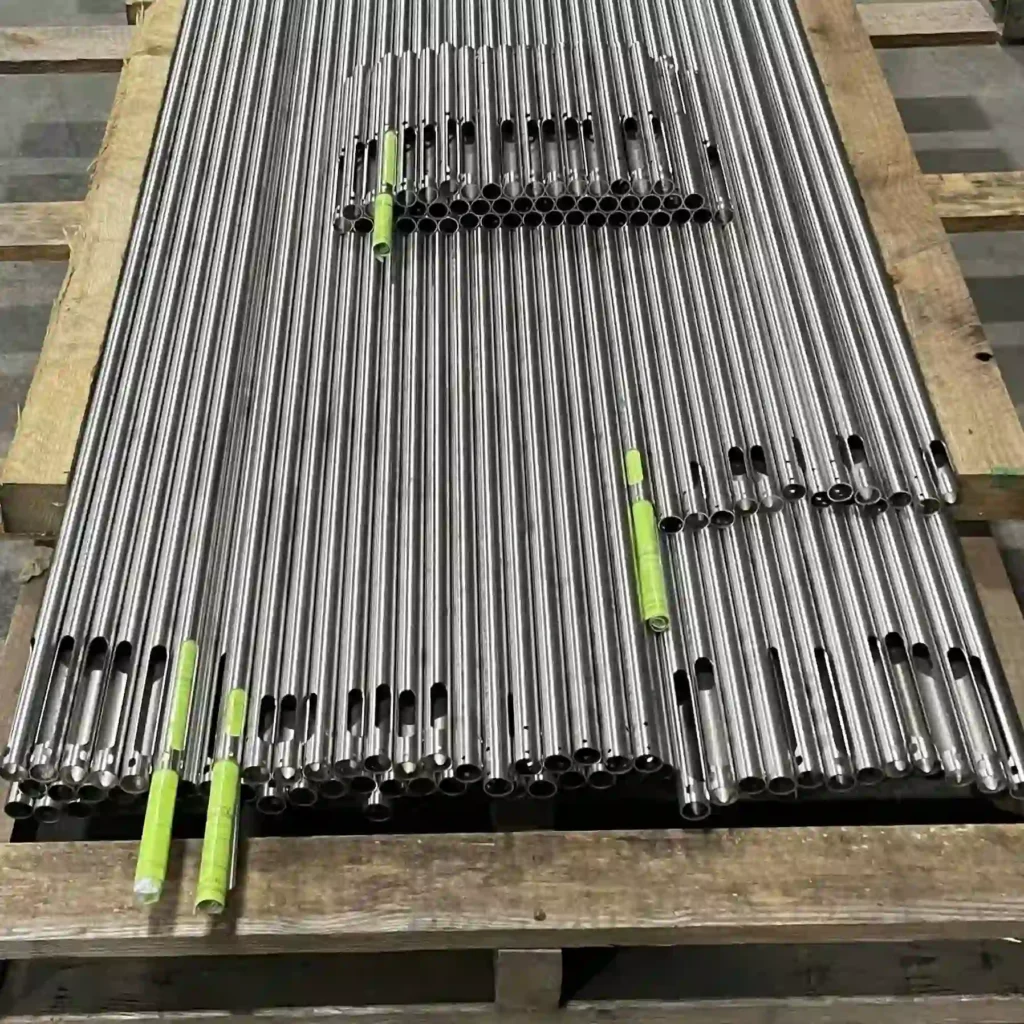
The tube laser cutting machine decision is usually framed as speed versus price. The remnant number reframes it as material recovery versus waste. On a 500-ton stainless operation, that reframing is worth $50,100 per year — enough to cover a $15,000 chuck upgrade in under four months.
Before signing a tube laser purchase order, verify four things: the remnant length the chuck actually achieves on your tube size, the clamping type on thin-wall profiles, the loading method that matches your profile mix, and the factory alignment report on chuck coaxiality. Request a cutting trial on your own tube if the remnant claim is not documented.
For export buyers, delivery and spare-part support across Eurasia is supported through Yihai’s Turkey overseas warehouse. For U.S. buyers, the $15,000 chuck upgrade and the full machine both qualify for Section 179 immediate expensing.
Frequently Asked Questions (FAQ)
How much tube scrap is typically generated by a standard two-chuck tube laser?
A conventional two-chuck tube laser leaves an unclampable remnant tailing of 150 mm to 300 mm (6 to 12 inches) on every raw stick of tubing. Because the rear chuck cannot traverse past the front chuck and the cutting head requires clearance, this remnant cannot be safely cut. Across a standard 6-meter (20 ft) raw tube, a 250 mm tailing represents an automatic 4.2% structural scrap rate before accounting for kerf width and nesting drop-offs.
How does a three-chuck or four-chuck system achieve “zero-tailing” cutting?
Zero-tailing tube lasers utilize a synchronized multi-chuck architecture where the middle and front chucks can traverse along the machine bed and interchange clamping roles. As the raw tube cuts down to its final segments, the middle chuck feeds the material through the front chuck, or the front chuck pulls the remaining stock past the cutting head. By holding the remnant from both sides right up to the nozzle clearance zone, scrap is reduced to 0 mm to 40 mm (pure drop loss), recovering virtually 100% of the raw stock.
In what materials does tailing scrap reduction provide the highest financial ROI?
While cutting mild carbon steel yields consistent scrap savings, zero-tailing systems deliver exponentially faster ROI on high-value alloys—such as 304/316 stainless steel, structural aluminum extrusions, brass, and titanium tubing. Because alloy tube costs $4,000 to $12,000+ per ton compared to $800–$1,100 per ton for mild steel, eliminating a 200 mm tailing per pipe saves $3.50 to $15.00+ in raw material loss on every single processed stick.
Can nested common-line cutting and micro-tabbing further lower tube scrap rates?
Yes. Beyond physical chuck tailing elimination, CAM nesting software employs common-line cutting (where adjacent tube ends share a single laser cut path) and dynamic remnant nesting. Common-line cutting eliminates dual-kerf material loss and reduces overall pierce cycles by 15% to 25%. For small parts prone to falling into the scrap conveyor prematurely, micro-tabbing keeps components structurally stabilized within the skeleton until the full nesting sequence finishes.
What is the payback horizon when upgrading from a two-chuck to a zero-tailing tube laser?
Upgrading from a standard two-chuck machine to a three-chuck zero-tailing system typically incurs an incremental Capex premium of $12,000 to $25,000. For a medium-volume job shop processing 100 to 150 tubes per day on a single shift, saving 200 mm of tailing per stick recovers 20 to 30 meters of prime raw material daily. Depending on material mix (carbon vs. stainless steel), the accumulated raw material savings alone recover the initial chuck upgrade premium within 6 to 11 months.
Список литературы
- ASTM International — Standards for Steel Tube and Pipe, ASTM International
- ISO 9013:2017 — Thermal cutting — Classification of thermal cuts, ISO, 2017
- Раздел 179 Налогового кодекса США (IRS) — Выбор в отношении отнесения на расходы определенных амортизируемых активов предприятия, Налоговая служба США
Дополнительная литература
- Цена станка для лазерной резки труб: руководство по стоимости и срокам окупаемости комплексного решения — Machine category price ranges and combo payback logic.
- Стоимость часа работы лазерного резака: полный учетный журнал эксплуатационных расходов — Your baseline hourly cost before the chuck decision.
- Laser Cutting Gas Cost: Nitrogen vs. Compressed Air TCO — Assist gas cost across production schedules.
- Финансирование волоконных лазеров: аренда оборудования в 2026 году или покупка — Структура ежемесячных платежей и порядок учета в соответствии со статьёй 179.





